Online Reporter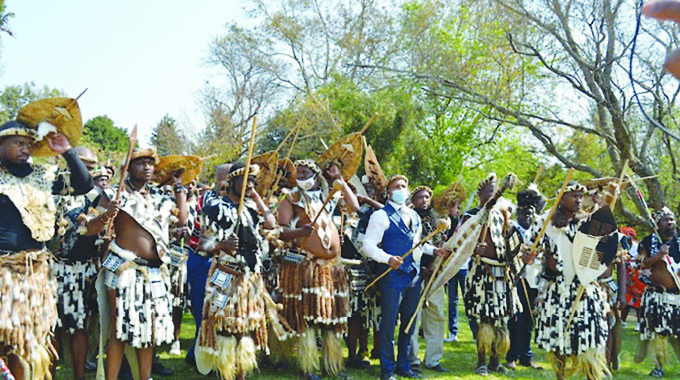
Theseus Shambare, Features Writer
THE rhythmic pulse of the mbira, once the heartbeat of Zimbabwean villages, now struggles to be heard above the insistent ping of notifications.
As Zimbabwe marked Culture Month in May, a dedicated time to celebrate the nation’s rich heritage, the silent battle between tradition and the digital revolution intensified.
It is a contest between the immediate gratification of the digital scroll and the profound resonance of traditions embodying hunhu/ubuntu, the deep-rooted spirit of communal responsibility.
For digital natives, the world often arrives in fragmented, visually arresting bursts.
The nuanced beauty of a mbira song or the deliberate grace of the Jerusarema or isitshikitsha dances often fade into the background noise of the digital deluge.
Yet, amid this constant digital flux, traditional leaders across Zimbabwe stand as steadfast guardians.
In Matabeleland South Province, traditional leaders express growing concern over drug abuse and illicit activities in rural business centres.
Chiefs Mathema and Sebasa are spearheading the “Not in my Village” campaign, calling for stricter enforcement of regulations.
“As traditional leaders, we cannot allow such vices to take root in our communities. An intoxicated village cannot thrive,” declared Chief Mathema.
Chief Sebasa added, “Let us restore our cultural values. It begins with us. You now find a father drinking with his son, consuming foreign drugs we have never known. We are seeing strange cases, and we can no longer sit back.”
In Mashonaland East Province, Headman Luke Gondo listens to both the ancestral call and the digital allure, a deep furrow in his brow.
Can the ancient melodies that speak of lineage and land truly compete with the fleeting viral tunes echoing from a million smartphone screens?
This question hangs heavy in the plain valley dust that swirls across the familiar landscapes, a silent challenge to the very soul of Zimbabwean culture.
Headman Gondo, his weathered hands bearing the map of generations past, understands this precarious balance. From his vantage point in Chief Nyandoro’s domain, he watches youths captivated by digital devices.
He sees the allure of viral dances and fleeting internet challenges, a stark contrast to the enduring wisdom woven into ancestral narratives.
“The screen offers a quick thrill,” Headman Gondo said in an interview at his court in Mahusekwa recently. “But it does not nourish the spirit like the stories of our ancestors.”
Headman Gondo’s quiet authority makes him a tangible link to a cultural inheritance at risk.
During Culture Month, and indeed, throughout the year, traditional leaders’ mission is urgent: to re-root the resilient
spirit of Zimbabwean culture in this digital-native generation.
“We cannot let the whispers of the past be silenced by the noise of the present,” Headman Gondo declared, his gaze solid.
These traditional custodians venture into the heart of youths’ world — their schools. In classrooms, they share tales of hukama/ubuhlobo, the kinship ties that bind communities, and the profound respect for the ancestral spirits.
“These young ones,” Headman Gondo explained, “are the future. But a tree without roots cannot stand strong.”
Across Mashonaland East Province, he engages with young minds in primary and secondary schools under various chiefdoms.
His lessons are captivating storytelling, painting vivid pictures with proverbs and parables.
“Our culture is not just something to be read in a book,” he said. “It is something to be felt, to be lived.”
His goal is clear: to cultivate a profound understanding of cultural heritage.
He speaks of the insidious rise of drug and substance abuse, a threat to these young futures.
He believes a strong foundation in cultural identity, rooted in hunhu/ubuntu, can serve as an unshakeable anchor.
“If they know who they are, where they come from, they will be less likely to lose their way.”
Headman Gondo’s dedicated efforts echo a growing national consciousness.
President Mnangagwa has championed the preservation of Zimbabwean heritage, with the symbolic wearing of the national dress underscoring this commitment.
“Our attire is more than fabric and design,” the President affirmed. “It is a representation of our history, values, and aspirations.”
The annual Culture Month, themed “Celebrating Indigenous Voices,” immerses young Zimbabweans in their traditions.
Elders across the nation are invited to share knowledge, cultural centres host interactive sessions, and even online platforms are leveraged to share Zimbabwean culture in engaging ways.
The spirit of ‘‘a child belongs to everyone’’ underpins this national effort.
The work of traditional leaders is a vital thread in a larger tapestry. Seeking to ensure the vibrant whisper of the mbira is not silenced by the digital storm, but amplified by generations to come.
This commitment extends across the nation, confronting immediate threats to the well-being of young people.
Beyond drug abuse, these chiefs are addressing HIV/Aids, child sexual exploitation, teenage pregnancies, and school dropouts, reaffirming their role as custodians of societal ethos and rural development.
The national scale of the drug abuse crisis underlines the urgency of these local interventions.
According to a 2023 report by the Zimbabwe National Statistics Agency (ZimStat) in collaboration with Unicef, approximately 57 percent of young people aged 15-35 have engaged in substance abuse, with cannabis, illicitly brewed alcohol and crystal methamphetamine being commonly cited.
Given that over 60 percent of Zimbabwe’s population comprises youths, the proliferation of such social ills poses a significant threat to the nation’s human capital and future development.
Traditional leaders in other regions are also intensifying their efforts to use cultural foundations to address contemporary challenges.
In Manicaland, Headman Cosmas Sakupwanya from Chief Mutasa stressed this expanded role.
“We are now making it a daily duty to preserve our culture while simultaneously fighting social ills like childhood marriages and early sexual immorality, which are unfortunately being peddled through digital platforms,” he said.
Headman Sanyamandwe, Mr George Chidawanyika, added that traditional leaders in Mutasa are actively participating in child protection training with stakeholders and development partners, learning about relevant legislation and reporting mechanisms for child protection cases.
“By empowering traditional leaders, we are creating a stronger network of child protection actors who can work together to ensure the safety and well-being of all children in Mutasa,” said Headman Sanyamandwe.
According to the Ministry of Women Affairs, Community, Small and Medium Enterprises, 1 149 cases of gender-based violence (GBV) were reported in Mutasa District in 2024, highlighting the urgency of these grassroots interventions.
Research shows the dual-edged sword of digital platforms in developing nations like Zimbabwe.
A study by the African Centre for Media Excellence (2022) on youth and digital media in sub-Saharan Africa, for instance, points out that while the internet offers unprecedented access to information and education, it also exposes young people to harmful content, risky behaviours and peer pressure that can contradict traditional values and encourage participation in social ills.
In a world increasingly homogenised by digital trends, Russian-British philosopher Isaiah Berlin’s words resonate: “To belong to a nation, have a past, a culture in common, is to possess one of the most valuable and comforting states of being”.
Zimbabwe’s traditional leaders seek to ensure this comfort and belonging remains a birthright for the nation’s youth.
The race against the scroll is on, and Zimbabwe is determined to ensure its ancient stories continue to resonate, forging a future where tradition and modernity coexist in harmonious strength.