Online Reporter
Raymond Jaravaza [email protected]
THE Agricultural and Rural Development Authority (Arda) has incorporated 368 irrigation schemes across Zimbabwe into the Vision 2030 (V30) Accelerator Model as Government intensifies efforts to boost agricultural productivity, strengthen food security and transform rural communities into engines of economic growth.
The initiative forms part of the Second Republic’s broader strategy to modernise agriculture through climate-smart irrigation, commercial farming and rural industrialisation in line with Vision 2030.
President Mnangagwa launched the V30 Accelerator Model at the Bubi-Lupane Irrigation Scheme in Matabeleland North in 2021. Spearheaded by Arda, the programme is transforming traditional subsistence irrigation schemes into commercially viable and professionally managed enterprises driven by modern farming practices.
Under the model, farmers move beyond simply providing labour and become shareholders in registered companies that own and operate the irrigation schemes. Profits generated at the end of each production season are distributed to participating farmers as dividends.
Government plans to roll out the model across all 460 irrigation schemes nationwide.
Speaking on the sidelines of a tour of the Bubi-Lupane Irrigation Scheme by Vice-President Kembo Mohadi last week, Arda chief executive officer Mr Tinotenda Mhiko said the success of the project had inspired the expansion of the model to other parts of the country.
Located in Mpofu Village under Chief Mabhikwa, the Bubi-Lupane Irrigation Scheme has emerged as one of the flagship agricultural transformation projects under the Second Republic.
“Bubi-Lupane Irrigation Scheme was registered as a company two years ago and now operates as a fully-fledged professional agricultural entity with a balance sheet and a board. The board sits quarterly, passes resolutions for the irrigation scheme and has also capacitated it with access to finance for operational expenditure,” said Mr Mhiko.
“A total of 368 irrigation schemes across the country now fall under the V30 Accelerator Model, with the remaining 92 schemes expected to be incorporated before the end of the year. The goal is not only to consolidate but increase productivity of not just winter wheat but other crops produced in all our irrigation schemes across the country.”
Mr Mhiko said the transformation of irrigation schemes, particularly in Matabeleland, had demonstrated the potential of agriculture to drive sustainable rural development and economic empowerment.
“The key takeaway from the success story of the Bubi-Lupane Irrigation Scheme is that villagers now appreciate that farming is a business and a science. It is the science which informs productivity, which in turn also informs the profitability of an irrigation scheme,” he said.
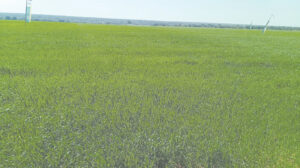
“The health of the winter wheat crop at Bubi-Lupane Irrigation Scheme is excellent and the situation is the same across all eight provinces producing the cereal. I can safely say we are pleased with the progress that we have made in the production of the 2026 winter wheat crop.”
At Bubi-Lupane, 120 hectares have been put under winter wheat production, with the scheme increasingly being viewed as a model for commercially driven irrigation farming in semi-arid regions.
Mr Mhiko said Arda remains focused on improving agronomic practices and strengthening professional management systems to ensure sustained productivity and profitability across irrigation schemes.
Turning to energy supply, he commended the Zimbabwe Electricity Transmission and Distribution Company (ZETDC) for providing reliable power to support irrigation activities.
“We appreciate the work of the Zimbabwe Electricity Transmission and Distribution Company in giving us uninterrupted power to irrigate crops and run irrigation cycles on time and consistently. A steady supply of power is a key enabler for running successful irrigation schemes across the country,” he said.
The Bubi-Lupane Irrigation Scheme has 90 plot holders, comprising 52 women and 38 men, who have steadily increased cereal production over the past four years.
Working in partnership with Arda, the farmers have successfully transitioned from subsistence agriculture to commercial production, improving household incomes while contributing to the country’s Strategic Grain Reserve.
The expansion of the V30 Accelerator Model complements the Government’s wider irrigation development strategy under the National Development Strategy 2 (NDS2), which seeks to increase the area under irrigation from approximately 258 000 hectares to 496 000 hectares by 2030 through the “A Dam is an Economy” programme.
The strategy aims to build climate resilience, improve food and nutrition security, create employment opportunities and drive agro-industrial growth, particularly in drought-prone areas.
The irrigation transformation programme also supports the Second Republic’s rural industrialisation agenda by promoting value addition, community ownership of productive assets and the development of commercially sustainable farming enterprises capable of attracting investment and improving livelihoods in rural communities.