Online Reporter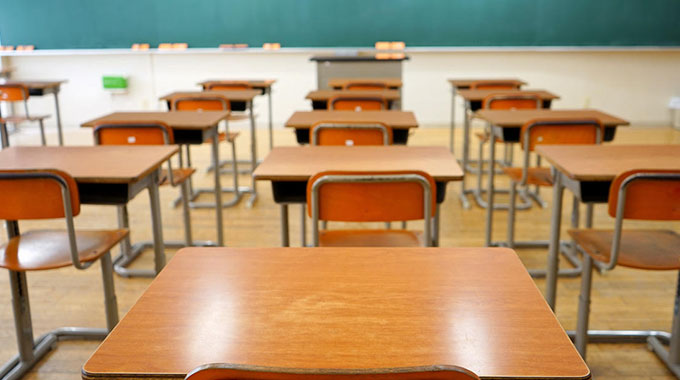
Gabriel Manyeruke
The next decade could fundamentally change what we teach, how we teach and even what it means to be an educated person.
Imagine a 15-year-old Zimbabwean learner walking into a classroom in 2036.
There is still a teacher. There are still classmates. But the textbook may now live inside a tablet, artificial intelligence (AI) may provide instant assistance and examinations may require learners to solve real-world problems rather than reproduce memorised notes.
This may sound futuristic. However, the future of education is already taking shape.
The question is no longer whether our classrooms will change, but whether we are preparing our children for that change.
The classroom beyond four walls
The traditional classroom has always been built around a teacher, textbooks, a chalkboard and a timetable. That model is unlikely to disappear completely, but it will become increasingly flexible. Digital platforms, virtual resources, educational videos and interactive simulations will allow learners to access knowledge beyond the classroom.
A child in rural Zimbabwe could potentially learn from resources created thousands of kilometres away. But this transformation comes with a warning: Technology must not become another source of inequality.
A technologically advanced school in an affluent community and a poorly connected school in a disadvantaged community cannot be allowed to produce two completely different generations of Zimbabwean children.
The future classroom must, therefore, be digital, and also inclusive.
When the teacher has an AI assistant
AI could become one of the biggest forces shaping education over the next decade.
Imagine a learner struggling with a difficult concept and receiving an explanation tailored to their level within seconds.
Imagine a teacher identifying learning gaps earlier and using technology to provide individualised support.
AI could reduce some of the administrative burdens on teachers and give them more time to mentor, inspire and support learners.
But there is a danger: If children allow machines to think for them, technology could produce clever learners who struggle to think independently. The teacher of 2036 may, therefore, become even more important — as the person who teaches children how to question the answers machines provide.
From textbooks to touchscreens
The schoolbag of the future could be considerably lighter. Digital textbooks, electronic libraries and online learning resources will increasingly complement — and in some cases replace — printed materials.
Handwriting may become less dominant as typing and digital communication become everyday necessities.
Yet we should resist the temptation to declare traditional learning methods obsolete simply because technology is advancing.
A book remains a book. A handwritten note can still have value.
The issue is not whether technology should defeat tradition, but whether schools can combine the best of both worlds.
A certificate will no longer be enough
Perhaps the biggest educational shift will occur outside the classroom.
The jobs our children will enter in the 2030s may demand skills that many schools are only beginning to emphasise today.
A certificate will remain valuable, but employers will increasingly want people who can communicate, solve problems, collaborate, innovate, adapt and learn continuously.
This is where vocational and technical education becomes critical. Not every child needs to follow the same academic route to succeed.
The future needs programmers and engineers, but it also needs electricians, technicians, designers, entrepreneurs, farmers and skilled artisans. Our children should not be taught that success has only one route.
When AI can write the essay, what should exams test? This may be one of the most uncomfortable questions facing education.
If AI can produce an essay, solve a problem or summarise a topic almost instantly, exams heavily based on memorisation will face growing pressure.
Future assessment will need to ask deeper questions:
Can the learner explain?
Can they investigate?
Can they apply knowledge?
Can they defend an argument?
Can they create something original?
The purpose of education should never be to produce excellent memory machines. It should produce excellent thinkers.
A smarter school must also be a healthier institution.
Amid the excitement about AI, digital classrooms and future careers, we must not forget the human being at the centre of education.
Children will still experience pressure, failure, loneliness, uncertainty and anxiety. Teachers will still need to notice the learner who suddenly stops participating.
Schools will still need environments where children feel safe, valued and understood.
The school of 2036 should, therefore, not simply be technologically smarter.
It must also be emotionally healthier.
Will our children shape the future?
The next decade will test Zimbabwe’s education system.
We can prepare children to compete for yesterday’s jobs, memorise yesterday’s knowledge and succeed in yesterday’s exams.
Or we can prepare them to navigate a world that is changing faster than any generation before them.
The future of education is not ultimately about tablets, AI or smartboards. It is about the kind of human beings we want our schools to produce. The child sitting in a Zimbabwean classroom today may become tomorrow’s teacher, scientist, entrepreneur, farmer, engineer, journalist, artist or national leader.
By 2036, the greatest measure of our education system will not be how much our children can remember, but how confidently they can think, adapt, create and contribute.
Gabriel Manyeruke is an author and educator at Wise Owl High School in Marondera. Feedback: [email protected]