


 tawandamusarurwa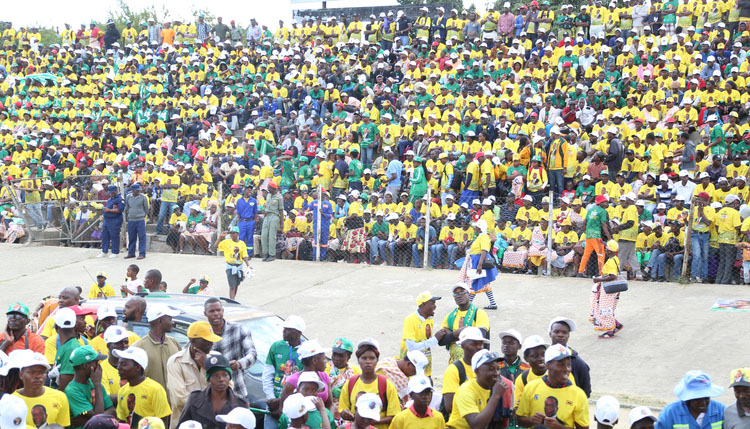
Retired Major Action Mandingo
OVER the past few months, it has become clear the country’s opposition political parties are struggling to penetrate rural areas, which, since the attainment of independence in 1980, have remained a ZANU PF stronghold. As the country marches towards the harmonised elections, indications on the ground show that the script is not about to change.
Reports say the main opposition party, CCC, is failing to find parliamentary and council candidates in quite a number of rural constituencies, while, on the other hand, indications on the ground are that ZANU PF is likely to win more votes in rural areas than ever before.
The fact that ZANU PF continues to enjoy massive popularity in rural areas has always tormented researchers, especially pro-opposition scholars, who, for years, have been trying to push the narrative that rural voters are passive participants in elections.
In addition, the pro-opposition researchers have labelled the rural electorate a “captured constituency.” They claim voters in rural areas are captured by ZANU PF through unorthodox means such as violence, coercion and other unethical means.
However, a critical analysis of developments on the ground show that rural voters are neither passive nor captured by ZANU PF. In an article titled “The Rural Electorate in Zimbabwe’s Elections 1980-2018: Consciousness and Voting Preferences”, published in the Journal of African Elections in 2021, researchers Terence Tapiwa Muzorewa and Mark Nyandoro make very interesting observations.
“In the midst of the ruling party’s multiple election-winning strategies, a line has been drawn to separate the rural from the urban voter. The rural voter has been widely viewed as a victim and captured accomplice of the party’s election victories, while the urban voter has been perceived as a liberal progressive voter seeking a change in Government.
“This paper argues that although ZANU PF is accused of capturing the rural peasantry and employing unorthodox strategies to win elections, rural voters were politically conscious and voted for a party they thought would meet their social, cultural and economic aspirations while at the same time fitting into their liberation ideological conceptions,” noted the researchers.
Quite insightful and on point!
Observations by these researchers clearly explain why the opposition, especially Chamisa’s CCC, is failing to penetrate rural areas. What are the social, cultural and economic aspirations that the opposition can fulfil for the rural electorate? Even though Chamisa has tried to apply lipstick to a frog, CCC remains an instrument the West wants to use to effect regime change in the country so that they sneak in and start plundering the country’s vast natural resources. Whether it is CCC or MDC this or that, the evil machinations remain the same. The opposition does not fit into the liberation ideological conceptions of the rural electorate.
While the majority of researchers have used the “captive constituency effects theory” in analysing voting preferences in the country, Muzorewa and Nyandoro question the applicability of this theory in Zimbabwe.
“The captive constituency theory states that in comparison to their urban counterparts, rural voters are more likely to have less political autonomy when voting,” the researchers noted.
They quoted Dominika Koter (2013), who argues that rural voters are “captive constituencies”, who do not have the freedom to choose how to vote, because of the influence of social power structures.
In addition, Koter asserts that rural areas have a tighter social structure that makes the electorate less autonomous.
According to Muzorewa and Nyandoro, the captive constituency effects theory argues that the poorer, the more remote, the more economically marginalised and less literate an electoral constituency is, the more isolated and less autonomous its voters are likely to be.
“We question the captive constituency effects theory and this ascribed captive status as it relates to Zimbabwe’s elections. Instead, we argue that rural people were not passive voters and were instead responsible for creating the political culture and social structures that inform their voting preferences.
“We therefore, proffer the social group theory of voting behaviours as an alternative, as it explains Zimbabwe voter preferences better than the captive constituency theory. The social group theory we are suggesting shows that social, economic, religious and other forms of identification relating to political interaction inform voter choices . . . According to this theory, the individual learns the partisan traditions of a group. Individuals are joined with others who have shared interests,” the researchers noted.
While under the First Republic, there were concerns, especially from the mid-2000, that some members of this social group (rural electorate) were not happy due to marginalisation, the Second Republic has moved in quickly to galvanise rural voters through policies, programmes and projects that revive their shared interests.
President Mnangagwa’s hugely popular “nyika inovakwa nevene vayo” and “leaving no one and no place behind” mantras have brought the rural electorate together. The rural electorate can easily identify with these mantras because they are steeped in the history of the liberation struggle, which was fought mainly in rural areas.
What is even more exciting for the rural electorate is that President Mnangagwa is walking the talk through devolution and rural industrialisation.
Gone are the days when non-governmental organisations (NGOs) were a threat to ZANU PF in rural areas. Through robust initiatives such as the Presidential Inputs Scheme, Zimbabwe is about to become food self-sufficient at household level. This will leave most NGOs that survived on people’s starvation out of business.
The funeral has not yet been announced, but there is a slow death of NGOs in Zimbabwe. The situation has never looked this good for ZANU PF in the rural areas.


 Bongani Ndlovu
 Online Reporter