Walter Nyamukondiwa
Mashonaland West Bureau Chief
Men in the Zimbabwe National Army (ZNA) have been urged to take an active role in the fight against breast cancer by encouraging early screening and supporting affected family members, colleagues and loved ones.
The wife of Chief of Staff General Staff Major-General Josphat Kudumba, Mrs Catherine Kudumba, said breast cancer was not exclusively a women’s disease, as men could also develop the condition.
Speaking at a Breast Cancer Awareness Campaign for Inkomo-based units at Headquarters Mechanised Brigade, Inkomo Barracks, she said collective responsibility was critical in promoting early detection and supporting those affected.
“Breast cancer awareness is not exclusively a women’s issue. Men can also develop breast cancer,” she said.
“Your role as husbands, fathers, brothers, colleagues and commanders is essential in encouraging timely medical attention and supporting those affected.”
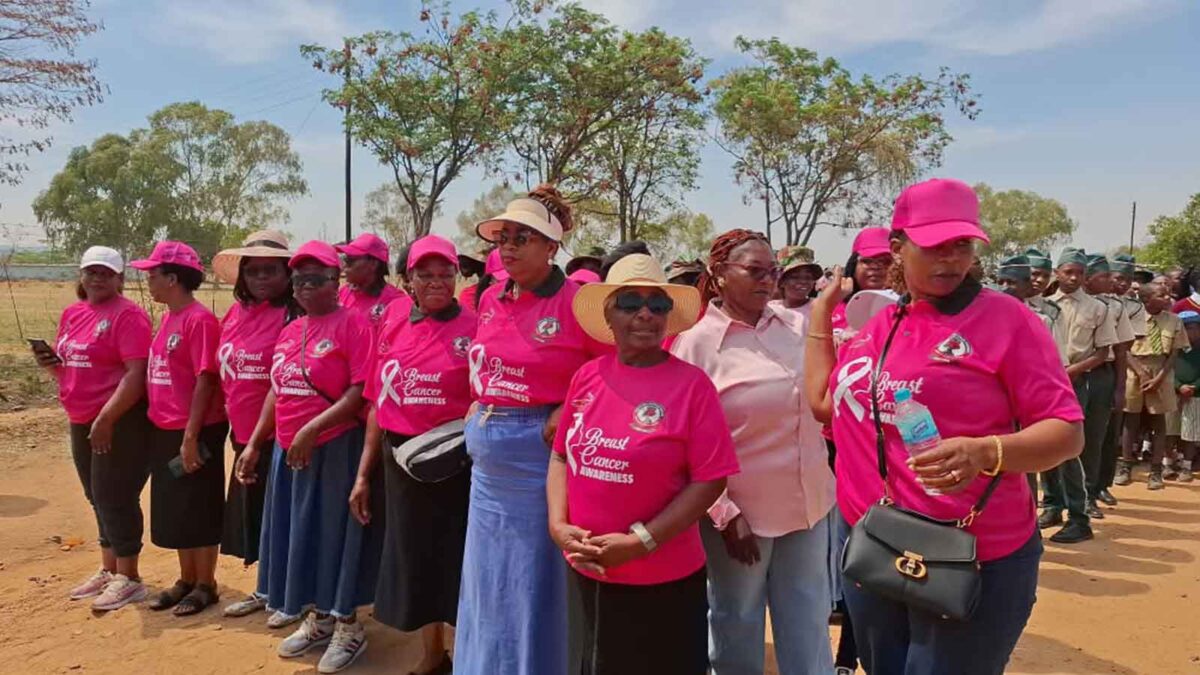
The campaign, organised by the Zimbabwe Defence Forces (ZDF) Women’s Association under the theme, “Every story is unique, every journey matters. We nurture, we rise and we defend”, brought together military personnel, their families and surrounding communities.
It began with a march from Nyabira High School to Nyabira Shopping Centre, involving members of the Parachute, Mounted and Mechanised regiments of the ZNA, wives of serving and late ZDF members and the local community.
Mrs Kudumba said the health and wellbeing of military personnel were integral to operational readiness, effective leadership and national security.
“We cannot build a resilient force while neglecting the physical, mental and emotional health of its members,” she said.
She urged soldiers to undergo regular medical assessments, maintain healthy lifestyles, manage stress and seek professional help when necessary, while remaining alert to breast cancer warning signs.
“Breast cancer awareness calls upon us to rise above fear, silence and misinformation,” she said.
Mrs Jesca Tapfumaneyi, wife of ZNA Commander Lieutenant-General Asher Walter Tapfumaneyi, said cancer was a growing national and global health challenge requiring coordinated action and collaboration.
She urged military personnel and their families to undergo regular screening, dispelling fears and misconceptions surrounding diagnosis and treatment.
“We need people and our members should get tested regularly and should not be afraid, as the condition can be treated at lower cost if detected early,” she said.
“We have support systems that help people get treated and get the necessary shoulder to lean on. Seek treatment early and always examine your body for any unusual changes.”
Breast cancer is the second most common cancer among Zimbabwean women after cervical cancer, with estimates indicating about 2 483 new cases and more than 1 200 deaths annually.
Although the risk increases with age, health experts have raised concern over cases among younger women, including those in their 20s and 30s.
Late presentation remains a major obstacle to effective treatment, as many patients seek medical attention when the disease has advanced, limiting treatment options and chances of survival.
The campaign therefore sought to encourage regular medical checks, early reporting of unusual changes and timely access to treatment, rather than reliance on traditional remedies or spiritual interventions as substitutes for medical care.
Mrs Kudumba also highlighted the importance of maternal health, saying the campaign’s emphasis on nurturing extended to breastfeeding and supporting mothers.
She called on commanders, colleagues and families to ensure mothers were treated with dignity and could access appropriate healthcare.
She said the ZDF Women’s Association would continue championing health awareness, empowering women, strengthening families and promoting the welfare of the military community.
Mrs Kudumba paid tribute to cancer survivors and families who had lost loved ones, calling for compassion and support for those affected.
She urged participants to take the campaign’s message into their homes, workplaces, military units and communities, translating awareness into regular screening and early medical intervention.