admin
admin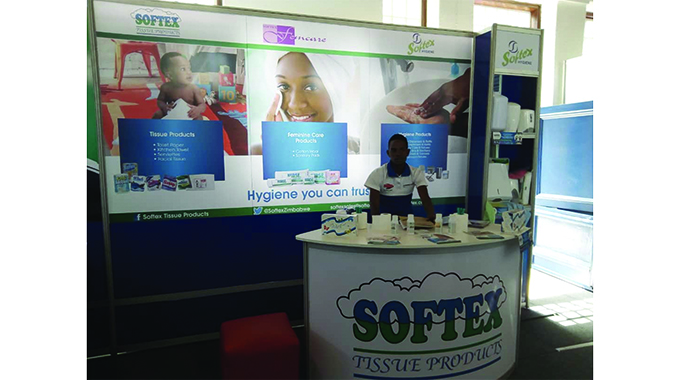
Enacy Mapakame
Business Reporter
Amalgamated Regional Trading (ART) Corporation is confident of maintaining a strong performance going forward on the back of firming demand for its products, which was also experienced in the just ended financial year.
During the year to September 30, 2021, ART registered a 30 percent increase in overall volume performance supported by strong demand across product lines and markets.
Total exports were 12 percent above prior year.
Group chairman, Dr Thomas Wushe, highlighted the group was also focusing on consumers’ changing preferences, which is expected to work in the group’s favour as they continue to consolidate market share both on the domestic and regional markets.
“The underlying demand for our core products remains robust and our focus on the changing consumer preferences and emerging technologies will be key in sustaining the group’s strong performance in the market,” he said in a statement accompanying results for the just ended financial year.
Dr Wushe also indicated the successful completion and settlement of Nampak’s shareholding in Softex as well as the completion of key factory upgrades in Chloride will create much needed liquidity headroom to enable the group to complete the capitalisation of its paper business.
In May this year, ART announced its acquisition of Nampak’s 50 percent stake in Softex for a total consideration of US$800 000, effectively making ART the sole shareholder, in a transaction that should strengthen the paper silo.
“The Group took significant strides in the restructuring of the Paper business with the acquisition of Nampak’s 50 percent shareholding in Softex and the purchase of a Toscotec Tissue Machine from Twinsave (South Africa) Group during the year.
“These investments are a result of the difficult trade off decisions taken to mitigate the long term consequences of delaying critical capital expenditure and mark a pivotal moment in ART’s Paper business restoration initiatives,” said Dr Wushe.
Meanwhile, the installation of the tissue machine in Kadoma is progressing well and is expected to be completed in the second half of the financial year.
Said Dr Wushe: “The group’s financiers supported and enabled these key strategic projects which will enhance competitiveness and create holistic value across the paper chain.”
For the year under review, the group’s total revenue increased by 27 percent to $4,9 billion in inflation adjusted terms as demand recovered. However, the sharp inflation-induced input cost increases could not be aligned to pricing, resulting in a significant decrease of gross margins to 39 percent from 52 percent in the prior year.
Gross profit and operating profit went down 13 percent and 53 percent respectively. A loss after tax of $696 million was recorded from an after tax profit position of $821 million.
Operating expenses increased by 66 percent due to general inflationary increases in costs and the initiatives taken to stimulate demand and cushion employees.
According to the group, significant fair value losses on biological assets and investment properties amounting to $191 million and $54 million respectively were recorded.
Total assets remained flat at $4,9 billion.
Demand in the automotive batteries remained strong resulting in performance for the batteries division ahead of recovery expectations, as volumes rose 39 percent despite supply chain disruptions. Export volumes in this segment were driven by the recovery in Zambia.
Sales volumes for Kadoma Paper Mills and National Waste Collections increased by 27 percent and 13 percent respectively albeit from a low base while Softex volumes reduced by 9 percent.
According to the group, the performance of the paper divisions was affected by the intermittent supply of raw materials and spares. The resultant commercial downtime adversely impacted fixed cost absorption, operating efficiencies and profitability.
At Eversharp, volumes rose 35 percent as restrictions were eased and school calendar disruptions reduced.
For Mutare Estates, the business remained unaffected by the pandemic and capitalised on the firm timber market demand. Saw milling capacity was increased during the year and has enabled the division to increase its milling partnerships.
ART did not declare a dividend.



 Online Reporter