Online Reporter
Mbulelo Mpofu [email protected]
THE opening of the 2026 EU Bushfire Schools Festival at Eswatini’s iconic House on Fire venue last month was not just a celebration of art, culture and youth.
It also became a deeply personal moment for Eswatini-born visual artist Sikhanyiso Khumalo, who reunited with Amagugu International Heritage Centre (AIHC) Director Allington Ndlovu — a meeting he says reflects the future of African cultural preservation and collaboration.
For Khumalo, who is a visual artist, curator and sculptor, the reunion meant more than simply catching up. It represented a shared vision of protecting African heritage, supporting communities and making sure that African stories are told by Africans themselves.
“Reuniting with Allington Ndlovu was more than just catching up — it was a continuation of shared purpose,” Khumalo said.
Now working as a curator at AIHC, Khumalo has grown into one of Southern Africa’s leading cultural figures. His work spans different areas, including visual arts, heritage preservation, education and community development, and has earned him recognition both locally and internationally.
Standing at the lively festival, Khumalo spoke about how his connection with Zimbabwe has shaped his journey, both as an artist and as a person.
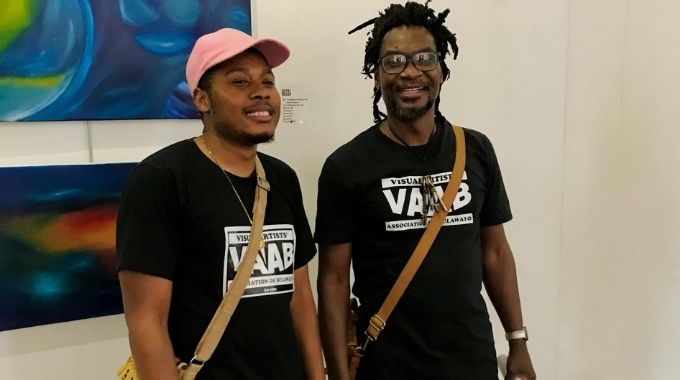
“I first came to Zimbabwe in 2022 as an invited guest artist by the Visual Artists Association of Bulawayo (VAAB), thanks to my good friend Owen Maseko, the chairperson of the association,” he said.
That first visit marked the beginning of a strong bond with the country. He was later invited to curate an exhibition titled Jeki KuBlind, which introduced him to Zimbabwe’s creative community and its welcoming spirit.
“I curated the exhibition and the warmth and vibrant energy from the artists who participated made me feel instantly at home,” he said.
He added that one of the things that stood out was how easy it was to connect with people.
“What impressed me most was how easily I could communicate with everyone. Since SiSwati and IsiNdebele share many similar words, language was never a barrier. That ease of communication quickly deepened my love for Zimbabwe.”
Beyond language, Khumalo said he was touched by the kindness of the people.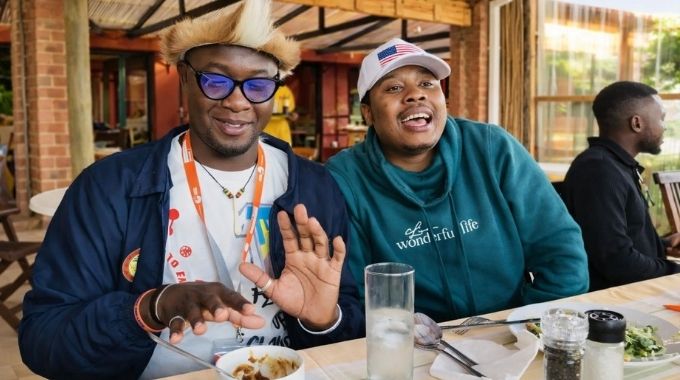
“Zimbabwean people are among the most accommodating and accepting human beings I’ve encountered, which made me feel safe and happy to be there.”
Over time, Khumalo became a regular figure within Zimbabwe’s arts and heritage circles, taking part in exhibitions, training programmes and cultural projects.
His connection with the country grew even stronger in 2024 when he was introduced to AIHC.
“That connection felt almost spiritual, as if we had known each other in past lives. We shared a common vision, and they gave me the opportunity to work with them in their space and across their projects,” he said.
At AIHC, he found an organisation that shares his passion for protecting African history while also creating new learning opportunities through culture.
“As an interdisciplinary artist and curator, I was able to contribute my perspective while also learning immensely from them as an international heritage institution. That exchange cemented Zimbabwe as my second home.”
Meeting Ndlovu again at the festival gave fresh energy to that partnership.
“Reconnecting with him was also one of the most affirming signs of interest from the AIHC because it has always been part of their vision to extend into cross-border intercultural heritage,” he said.
Khumalo believes this kind of collaboration shows how African countries can work together to protect and celebrate their shared history.
“Being in conference meetings together, shaping the preservation and documentation of cultural heritage narratives, gave me a glimpse of hope. It showed me that in the coming years Eswatini will also grow and begin to dive into the vast art categories available to showcase African heritage narratives and even integrate them into the education system, just as Amagugu is doing in Zimbabwe.”
His approach to art has also been shaped by people he has worked with over the years, including the late Zimbabwean historian and cultural expert Pathisa Nyathi.
“Working with the late Pathisa Nyathi was a privilege. He taught me that heritage is alive — not something to be archived but something to be lived and passed on,” Khumalo said.
Nyathi also encouraged him to take pride in African stories.
“He often reminded me: ‘If you don’t tell your story, someone else will — and they may not tell it right.’”
He said Nyathi helped him see Africa as a connected whole, not just divided by regions.
“Mr Nyathi helped me understand that Africa is not just the southern region. It stretches from the south all the way to central, west, east and North Africa.”
This changed how Khumalo approached his work.
“He taught me not to limit myself to only southern African heritage but to seek the links between our cultures. That’s when you realise how much we share in common through traditional practice, spiritualism, symbolism, visual art and performance.”
Through his work, Khumalo brings together tradition and modern ideas, often exploring themes of identity, spirituality and social justice.
He has also worked closely with communities, helping to improve schools and centres through art projects. He has volunteered as a teacher and supported children with disabilities through special programmes.
Even though his work has been shown internationally, including at major exhibitions in Europe and beyond, Khumalo says recognition is not his main focus.
“Having my work recognised internationally is affirming. It tells me that authenticity resonates beyond borders. For me, it’s not about personal fame but about what it says of my work ethic: consistency, collaboration and a refusal to compromise cultural integrity. It proves that when you stay true to your roots, the world eventually listens.”
As his career continues to grow, Khumalo says his mission remains the same — to protect African stories and pass them on to future generations.
And standing at the House on Fire festival, surrounded by young people and fellow artists, that mission felt even clearer. Zimbabwe, he says, is no longer just a place he visits — it is now part of who he is.