admin
admin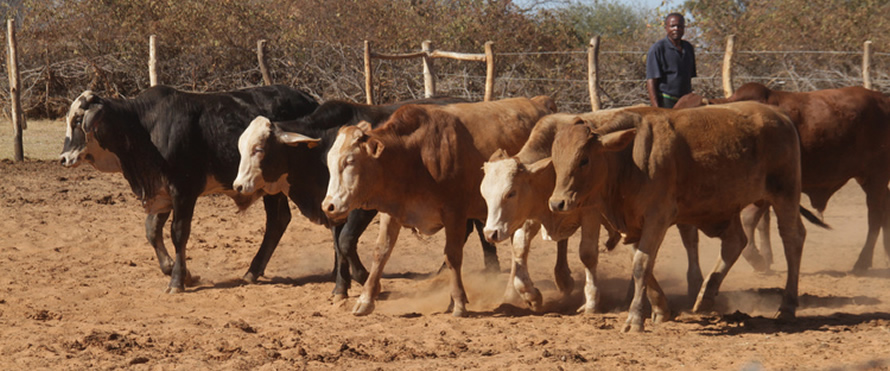
WHEN discussing breed improvement with smallholder farmers in various parts of the country, I am always confronted with the question of how to use artificial insemination as a breeding method. This usually comes after a realisation that good quality bulls are very expensive and are not the kind of investment that an average smallholder farmer is willing to undertake regardless of the size of the herd.
I say regardless of the size of the herd because I have come to appreciate that a smallholder farmer is not always the one with a small piece of land and few animals.
In fact some communal farmers may have as big as a hundred head but they are still smallholder both in mind and in deeds.
So in my well-considered view a smallholder farmer is much more characterised by management practices than land holding or size of the herd.
The smallholder communal farmers always ask about using artificial insemination as an alternative to live bulls and my response has always been lukewarm mainly because of the perception that the process is a very sophisticated practice which has limited feasibility in communal areas.
However after some exposure and careful thought I think artificial insemination is a viable and realistic option for smallholder farmers.
Just to define it a little bit, artificial insemination is a method of manually fertilising cows or heifers instead of the traditional way of using a bull.
It involves injecting cows or heifers that need to be fertilised with a hormone which induces them to come on heat. This is called heat synchronisation. Once the cows or heifers come on heat they are then fertilised with semen which is bought in straws.
Pregnancy diagnosis is then carried out on the inseminated cows to check if they really conceived.
This is done a month after insemination and those that did not conceive start the process all over again.
It is a method that is administered by trained and experience personnel, usually veterinary doctors and technicians.
Special nitrogen containers are required to keep the semen alive and able to fertilise.
After interacting with smallholder dairy farmers in Rusitu and Tsonzo in Nyanga and Chipinge respectively I became more convinced that artificial insemination is a technology whose time has come even for beef production farmers.
Learning that the practice is carried out by locally trained villagers and hearing an old lady saying mombe yangu ingosemitwa muna January (my cow was inseminated in January) made me a converted believer in the method.
Beef farmers need to seriously start thinking of adopting this technology especially those that find the price of a good quality bull punitive.
It is important to note that one of the advantages of using the method is that you get to choose the bull that you want for fertilisation of your cows and this is not a luxury you may not have if you are using a live bull as other inferior bulls form your neighbour may be quicker and service your cows ahead of your bull.
In some cases your bull may be physically over-powered by the inferior bull from your neighbour and it will always be chased away from its females.
Artificial insemination also has the advantage of producing a uniform crop in terms of age and breed and this makes your marketing much easier because your steers or heifers will be attractive.
The challenges with the methods are mostly in getting the required equipment for storing and caring semen as these come at cost. The artificial insemination technician has to be an experienced person because the conception rate that is the number of cows that actually conceive after insemination may be very low and discouraging if the person is not experienced enough.
Also animals may abort due to uterine infection if the process is not properly carried out.
In communal areas the major challenge will also be that of infrastructure in terms of paddocks.
These are needed to keep the heat synchronised animals away from the roaming inferior bulls which will definitely detect heat much faster than a human being and service the animals before you inseminate them.
I am aware that there are trainings that are going on for artificial insemination and farmers need to attend these just for their schooling and appreciation of the technology. It is a technology whose time and use has come for the cattlemen, let’s embrace it.
Feedback: [email protected], cell 0772851275.


 Online Reporter