Godknows Hofisi
Business Law
Artificial intelligence is no longer a general phenomenon. It is reshaping how businesses draft documents, analyse data, write code and serve customers.
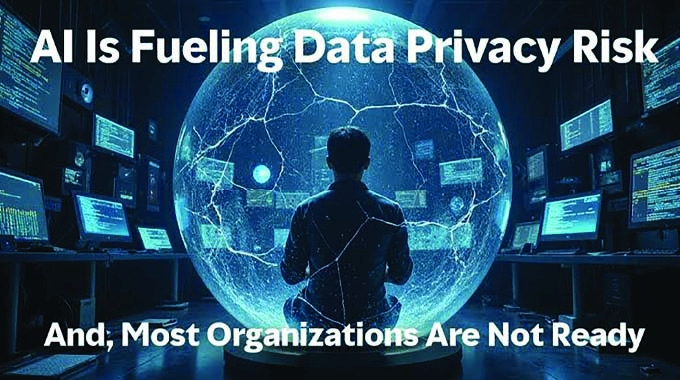
Yet along with the convenience of AI comes a serious threat to the confidentiality of company information that cannot be ignored if AI is to serve the public good.
I have previously written on AI governance and ethics.
In this article, I focus on how AI endangers confidentiality and what organisations can do about it.
How AI threatens confidentiality
Confidentiality means keeping sensitive information from being seen or used improperly.
AI systems, especially generative models, depend on data, and often lots of it.
The more personal or proprietary the data, the greater the risk that people’s information or trade secrets will be collected, processed, or shared without proper consent or protection.
The most visible incidents involve direct user input.
Company employees can accidentally leak sensitive data using AI applications or tools. The leaked information may include confidential source code related to new programs, notes from internal meetings and other proprietary data.
Leakage is not limited to copy-and-paste.
Integrations and connectors that link AI assistants to internal repositories can unintentionally expose sensitive content if access controls and data filters are weak.
AI tools can be tricked into leaking data from private channels.
Why confidentiality matters in business and at law
Confidentiality differs from general privacy because it protects competitively significant information — source code, pricing models, mergers and acquisition plans, customer database, and internal strategies — whose disclosure can cause immediate commercial harm.
When such material is shared with third-party AI vendors, companies risk losing trade secret status or waiving legal privileges, especially where terms of use grant broad rights to process or retain inputs.
A fundamental of trade secret law is that the information for which protection is claimed must not only be secret; the secrecy must be proven by the reasonable measures taken to keep it so.
Feeding sensitive information into a publicly available model is a clear case and it is common.
There is also the issue of data protection. AI systems may rely on personal and sensitive data, which makes compliance with privacy laws essential.
Businesses and public bodies must ensure lawful collection, secure storage and responsible use of data.
Law firms and healthcare organisations have inadvertently fed client-privileged documents and patient data into public AI models, triggering compliance and ethical reviews.
Practical safeguards for businesses
Organisations can reduce confidentiality risk without abandoning AI’s benefits by combining policy, technology, and culture.
Some of the ways include the following.
Establish clear AI use policies:
Define what data classes must never enter public AI tools, and require use of approved, enterprise-grade platforms with data residency and retention controls.
Deploy technical guardrails. Use data loss prevention tools and AI-specific gateways to scan prompts and block sensitive patterns before they reach external models.
Prefer controlled environments. Where feasible, run models in private clouds or on-premises, or use vendor offerings that guarantee no training on customer inputs and provide audit logs.
Restrict integrations. Limit connectors to vetted repositories, enforce least privilege access and regularly review which data sources AI agents can reach.
Train and monitor. Conduct short, scenario-based training on shadow AI risks and monitor usage analytics to detect anomalous data flows or repeated policy violations.
Update contracts and governance. Review vendor terms for data use rights, add confidentiality clauses specific to AI inputs and outputs and embed AI risk into board-level cyber and privacy oversight.
Conclusion
AI will continue to expand, and with it the need for sound governance. Countries and institutions that succeed will not be those that simply adopt AI fastest, but those that adopt it wisely.
Disclaimer
This simplified article is for general information purposes only and does not constitute the writer’s professional advice.
Godknows (GK) Hofisi, LLB(UNISA), B.Acc(UZ), Hons B.Compt (UNISA), CA(Z), ACCA (Business Valuations), MBA (EBS, Heriot- Watt, UK) is the Managing Partner of Hofisi & Partners Commercial Attorneys, chartered accountant, insolvency practitioner, commercial arbitrator, registered tax accountant and advises on deals and transactions. He has extensive experience in industry and commerce and is a former World Bank staffer in the Resource Management Unit. /He sits on the Board of the Council of Estate Administrators in Zimbabwe. /He writes in his personal capacity. He can be contacted on +263 772 246 900 or ghofisi@ hofisilaw.com or gohofisi@ gmail.com. Visit www//:hofisilaw.com for more articles.