admin
admin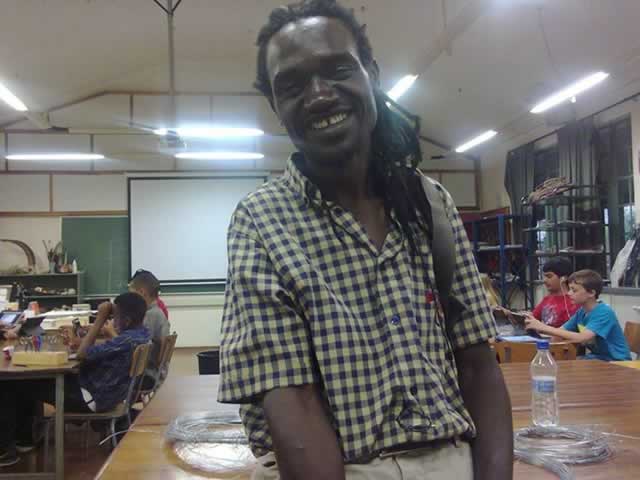
Reckson Mandizvidza Entertainment Reporter
Mabvuku-based visual artist Royd Bisiwasi has extended a helping hand to the Mabvuku community by passing on his artistic skills to disabled and disadvantaged people.
Bisiwasi who is the director and founder of Mabvuku Disability Arts and Craft Centre has been helping disabled and disadvantaged in the community by enrolling them at his arts centre and giving them the necessary skills to take up arts as a profession.
“I realised that there were a number of people in need in my community with some of them having to rely on begging because they are disabled.
“When you are disabled the community usually tends to make you feel that you cannot do something by your own but there is still life beyond disability.
“We started the project here in 2011 and we have had a number of people who have graduated here and began working on their own. Some are doing quite well on their own.
The artist, who got disabled in 2001 following a car accident said he had realised the need to help those who are sometimes shunned by the community because of disability.
“I have always been a passionate artist but it was after an accident in 2001 that I realised disabled people need help.
“Living from begging is not an ideal life and here we want the world to see that being disabled does not mean inability,” said Bisiwisi.
Currently Bisiwisi is helping six people cut their artistic teeth at the centre and has broadened up his reach also help those who are not disabled but have the passion for arts.
“Those who need help in society may not only be the disabled so we have made it a point here at Mabvuku Disability Arts and Crafts that we help anyone who is willing to be an artist,” he said.
Bisiwisi, however, said his desires were to make the centre assist as many people as possible but at times financial resources limit this dream.
“We have quite a number of problems but chief among them are financial constraints and bigger open spaces to do our art as well as readily available markets to sell our products.
“Although we usually use ‘waste’ as part of our raw material, at times we are short of that raw material as well and that also affects our work.
“Another problem that I have also realised is that many places where we showcase our products are not friendly to the disabled especially in terms of accessibility.
The centre specialises in recycling products such as bottle tops, old vinyl records, paper and many other materials that are usually thrown away by society to make their pieces.


 Online Reporter