Online Reporter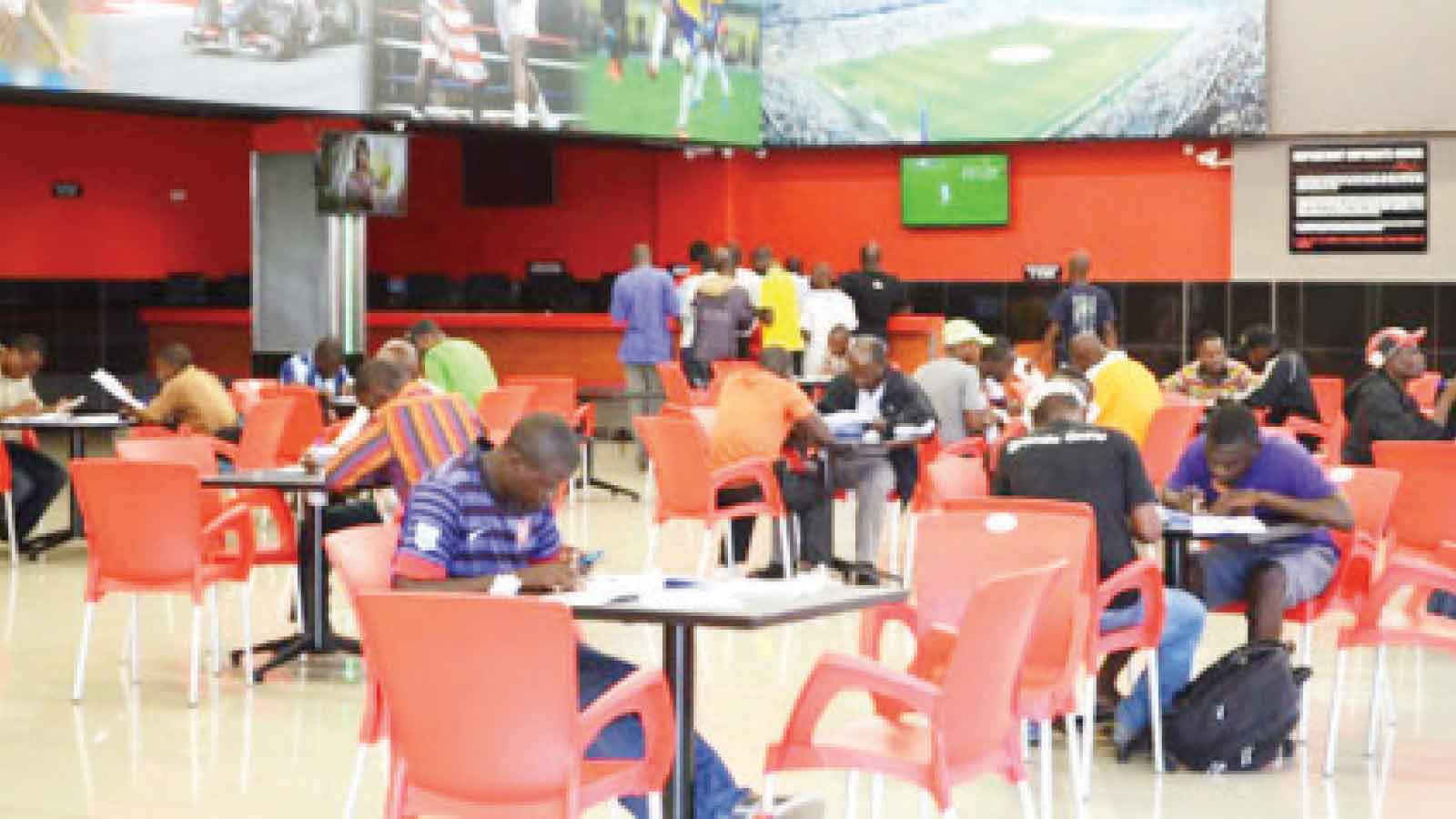
ZIMBABWE has seen a massive surge in the money which is being spent, on a daily basis, on the gambling and betting industry.
This has also seen a rise in the number of betting companies, which are now operating in this country, and the outlets which are now spread all over Zimbabwe.
The biggest rise appears to be in sports betting where punters gamble on football matches – from those played in the domestic Premiership to those played in the top-flight leagues across the world.
The AFCON finals, which get underway in Morocco this weekend, will provide the punters with a host of matches for them to try their luck – with some winning and the majority of them losing their savings.
While the exact amounts, which are being gambled in this country are not known, a report about activities in South Africa yesterday gave a frightening picture of how the vast amounts being spent on gambling.
It’s not what is happening here but, in many aspects, it gives a picture of how gamblers, including those in Zimbabwe, even end up not spending money on important issues, like education, and pouring money into this high-stakes industry.
The authoritative Moneyweb website reported yesterday that South Africa’s post-pandemic economy has seen a surge in gambling and betting activity, transforming a once-niche pastime into a mainstream industry.
Recent data from the National Gambling Board (NGB) and Statistics South Africa (Stats SA) point to a sustained increase in both formal-sector turnover and household spending on gambling-related activities.
While this expansion of the sector supports employment and contributes to tax revenue, it also reflects deeper structural and financial dynamics – from shifting consumption patterns and digital monetisation to household vulnerability and regulatory lag.
What was once a niche pastime has become a mainstream economic force and now, increasingly, a social concern in South Africa.
According to the NGB, gross gambling revenue surged to R59.3 billion (about US$3,5 billion) in 2023/24, up 25.7% from R47.2 billion (about US$2,8 billion) the previous year.
This marks a sharp rebound from the Covid-19 pandemic trough of R23.3 billion (about US$1,38 billion) in 2020/21 – itself an increase of over 150% in just three years.
The NGB further notes that R1.1 trillion was wagered across the industry in 2023/24 (up 40% year on year), while total gambling turnover in 2024/25 reached an estimated R1.5 trillion.
Shift from casinos
The composition of the industry has changed dramatically.
The pandemic accelerated a historic reversal: betting has since dethroned casinos to become the dominant form of gambling, fuelled by the rise of digital platforms, mobile accessibility, and sports sponsorships that blur the lines between entertainment and wagering.
A recent Stats SA report on the personal services industry showed that bookmaker and online gambling services recorded the fastest income growth of all tracked activities between 2018 and 2023.
Income from these services rose from R10.1 billion in 2018 to an astronomical R152.6 billion in 2023.
This expansion underscores the increasing integration of gambling within SA’s digital payments architecture.
From a financial market perspective, this has bolstered transaction volumes for banks and payment processors, contributing to liquidity within the formal financial system.
However, it also channels a growing share of consumer liquidity into non-productive, speculative activities, raising concerns about longer-term household balance sheet health.
As such, this transformation is not just a consumer story; it represents a significant redistribution of discretionary spending within the local economy.
What was once spent on entertainment, travel, or leisure is increasingly being channelled into betting platforms, both domestic and offshore.
The latest consumer price index (CPI) basket revision for 2025 reflects the growing importance of gambling in household spending patterns.
Classified under “recreation, sport and culture”, gambling now accounts for 1.6% of total household expenditure, ranking as the 12th-largest weighted category – ahead of several durable goods and just below beer.
Within its group, gambling constitutes over 50% of all spending, far exceeding other recreational activities such as gym fees or cultural participation.
To put this into context, the following is worth noting:

• More than half, about 54,5%, of what was spent by South Africans on consumer products and services in recreation and sport went to gambling.
• Only 1% was spent on tickets for sporting events, 1% on newspapers, 1,4% on text books, 3,6% on cat food, 5,9% on gym fees, 4,9% on dolls, 4,9% on toy cars, 5,2% on dog food and 2,9% on holiday packages.
• Only 1,7% was spent on books (exam and writing pads), 1,7% on pens and 1,4% on text books.
Employment
Approximately 14 000 formal jobs have been created in the sector, with spillovers into advertising, telecommunications, and information technology services. Yet, these gains come with critical caveats.
The same digital accessibility driving growth is also amplifying social risks, particularly as a source of financial strain among vulnerable groups such as the youth and low-income households.
The sector’s inclusion and growing weight in the CPI basket introduces a non-trivial link to inflation dynamics, as price changes in gambling-related products and services can now influence overall headline inflation.
This rise in spending also signals behavioural displacement under tight economic conditions: households appear increasingly willing to allocate discretionary income toward gambling despite elevated living costs and stagnating real wage growth.
From a macro-financial standpoint, this suggests a reallocation of liquidity away from savings and investment, which could weigh on long-term capital formation and financial resilience.
From a financial market perspective, the gambling boom illustrates broader shifts in household liquidity utilisation, consumer leverage, and sectoral earnings patterns:
• Liquidity flows and payments: The surge in online betting supports transaction activity across payment intermediaries, fintechs, and commercial banks. This contributes positively to service-sector turnover but does not translate into productive investment.
• Consumption substitution: Increased gambling expenditure may suppress spending on durable goods and savings products, indirectly affecting retail and consumer credit portfolios.
The National Gambling Act (2004), enacted before the emergence of online platforms, has not kept pace with online betting’s evolution.
Sports and entertainment
Prominent figures such as Siphiwe Tshabalala and Dricus du Plessis have promoted betting brands like Betway, which also sponsors SA Rugby (Springboks) and the Premier Soccer League (PSL).
Similarly, Hollywoodbets sponsors high-profile sporting events such as the Durban July.
These partnerships highlight the extent to which gambling has become embedded in South African sports and entertainment ecosystems, complicating regulatory oversight and ethical standards.
A future tightening of advertising standards or online gaming restrictions could materially affect profitability and valuation for firms exposed to gambling-linked revenues.
Economic and social implications
SA’s gambling boom encapsulates a broader tension in the modern economy: the collision between digital innovation, consumer aspiration, and weak regulation.
It also signals deeper structural challenges intrinsic to the domestic economy, from fragile financial literacy to the commercialisation of vulnerability.
Balancing these forces will require updated regulation, stronger financial education, and a renewed focus on responsible gambling as a matter of both social policy and economic stability. − Moneyweb/H-Metro Reporter