admin
admin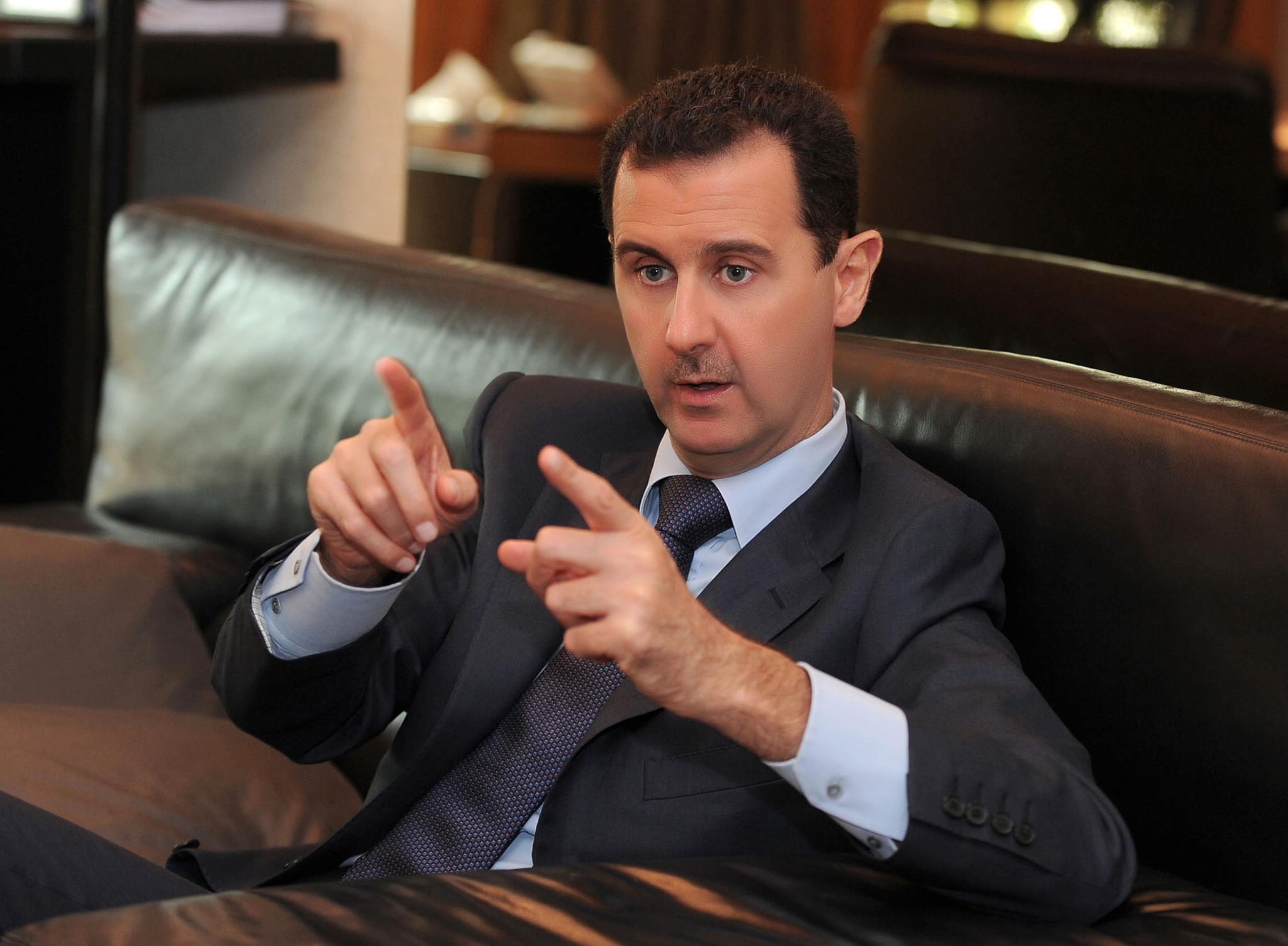
Damascus — President Bashar Assad insisted in a meeting on Wednesday with visiting UN-Arab League envoy Lakhdar Brahimi that Syrians alone will decide on the fate of an initiative for Geneva peace talks. The encounter came a day after the Red Crescent evacuated hundreds of civilians from a besieged town near Damascus, in an operation that saw rare co-operation among the regime, its opponents and the international community.
Brahimi has been travelling the Middle East since mid-October to muster support for proposed peace talks dubbed Geneva II.
Yesterday he met opposition members in Damascus tolerated by the regime and travel to Lebanon today.
The Syrian leg of the tour is the most sensitive, as the veteran Algerian diplomat needs to persuade a wary regime and an increasingly divided opposition to attend.
During his last visit to Damascus in December, Brahimi was heavily criticised by Syrian media for asking Assad if he intended to step down at the end of his presidential term in mid-2014.
Wednesday’s meeting with Assad lasted less than one hour, and the President criticised foreign interference in his country.
“The Syrian people are the only ones who have the right to decide on Syria’s future,” state media quoted Assad as telling Brahimi.
“Putting an end to support for the terrorists and pressuring the states that support them is the most important step to prepare for dialogue,” he said, using his regime’s term for rebels.
“The success of any political solution is linked to putting an end to support funnelled to terrorist groups.”
Brahimi’s spokesperson earlier said he hoped Saudi Arabia, a main backer of the rebels, would take part in the proposed talks.
State television reported that Brahimi agreed with Assad that Syrians themselves need to find a solution to the conflict that has been ravaging the country since March 2011.
In an interview, Assad cast doubt on the possibility of his regime attending, saying he would not negotiate with any group tied to the rebels or to foreign states.
The main opposition National Coalition has said it will refuse to take part in any talks unless Assad’s resignation is on the table, and some rebel groups have warned participants will be considered traitors.
Meanwhile, Russian Foreign Minister Sergei Lavrov, whose country is a key backer of the Assad regime, blasted critics of the talks.
“Open objections have surfaced against holding this Russia-US meeting, not only among Syrian sides but also among capitals, both in neighbouring and non-neighbouring states,” Lavrov said in Athens. “We must not allow this initiative to fizzle out,” he added.
In an interview with Russian business daily Kommersant French Prime Minister Jean-Marc Ayrault said everything should be done to make the planned Geneva talks a success that will usher in a transition government.
Speaking ahead of his visit on Thursday to Moscow, Ayrault said he was “pleased that Russia took the initiative” to push for the dismantling of Syria’s chemical weapons arsenal. “The objective now is to make Geneva II a success,” said Ayrault. “This implies that conditions are created that the Syrian National Coalition can take part in it and that the conference leads to a transitional government wielding full executive powers including the presidency.”
More than 115 000 people have been killed in the 31-month armed uprising against the Assad regime triggered by his forces’ bloody crackdown on Arab Spring-inspired democracy protests.
The war has also triggered a massive humanitarian crisis, with millions of people displaced internally and more than two million who fled the spiralling violence.
On Tuesday, some 800 women, children and elderly civilians were evacuated from Moadamiyet al-Sham, said Wassim al-Ahmad of the council in the town south-west of Damascus. But Ahmad said around 6 000 civilians remained trapped.
Television footage showed the evacuees clutching a few personal belongings as they streamed out of the town along a dusty road, with Red Crescent staff carrying an elderly man and assisting another too frail to walk.
On the ground, six people were killed in army shelling of southern Damascus and 11 others in a rebel attack in central Syria, a monitoring group said.
Meanwhile, Syria has destroyed all of its declared chemical weapons production and mixing facilities, meeting a major deadline in an ambitious disarmament programme, the international chemical weapons watchdog said in a document seen by Reuters news agency.
The Organisation for the Prohibition of Chemical Weapons (OPCW) said in the document its teams had inspected 21 out of 23 chemical weapons sites across the country. The other two were too dangerous to inspect, but the chemical equipment had already been moved to other sites which experts had visited, it said.
“The OPCW is satisfied it has verified, and seen destroyed, all declared critical production, mixing, filling equipment from all 23 sites,” the document said.
Al Jazeera’s Omar Al Saleh, reporting from Istanbul, said “by November 1, Syria will no longer have the capacity to make new chemical weapons, bringing an end to phase one and phase two”.
“Phase three will last to June 2014 and will involve United Nations mission support to monitor all destruction of 1,000 tonnes of chemical weapons. The UN/OPCW has no mandate to destroy them so a UN member state will have to provide technical and operational support.
“But also, we have to be a bit suspicious about the second phase as this is what Syria has declared, and see that other states will agree with Syria on the amount it said it has. Other countries may have their own intelligence,” the Al-Jazeera correspondent said.
Under a Russian-American arranged deal, Damascus agreed to destroy all its chemical weapons after Washington threatened to use force in response to the killing of hundreds of people in a sarin attack on the outskirts of Damascus on 21 August 21.
The United States and its allies blamed Assad’s forces for the attack and several earlier incidents. The Syrian President Bashar al-Assad has rejected the charge, blaming rebel brigades.
Under the disarmament timetable, Syria was due to render unusable all production and chemical weapons filling facilities by November 1 – a target it has now met.
By mid-2014 it must have destroyed its entire stockpile of chemical weapons. — Al Jazeera



 Online Reporter