admin
admin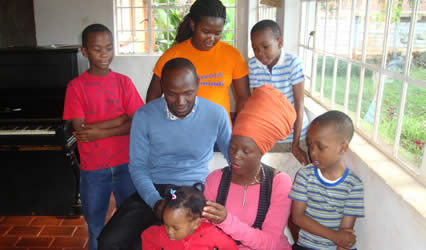
A few kilometres from the city centre, in the leafy suburb of Vainona, it is a different story all together. A fairly modern house makes up the residence of one of Zimbabwe’s well-known songstresses, Dudu Manhenga.
She paces up and down as she makes the finishing touches in preparation of her big album launch that is on in less than 24 hours away.
Just as she begins to give instructions to one of her band members who have come for the final rehearsal before the big day, her phone rings again.
A lot needs to be done before the much anticipated day; there is the media and other stakeholders to deal with. It is her fifth album and a number of people, most of them musicians, are eager to witness what Dudu and The Color Blu are made of. They are doing well in business and that reputation has got to be maintained so everything needs to be perfect.
“Noluthando, please play our guest your favourite song on the piano. Mommy needs a second to prepare for the photo shoot,” she says to her five-year-old boy who like her is a ball of charisma.
In a flush, she is slightly composed and turns her attention back to this reporter.
“I have managed myself for the last 16 years and have done a great job of it. I am yet to find a manager who edifies me and is not obsessed with 20 percent they will get out of my shows,” she said.
From her voice tone and posture, it is obvious that the Queen of Afro-Jazz is humble but clear on what she wants.
“From the time I was 16, I have always known that I wanted to do music and become a successful singer. Since then everything has been falling into place and I thank God for that,” she said.
The songbird was discovered by veteran guitarist Handsome Mabhiza during a rehearsal at Amakhosi Arts Theatre. By the time she was 17, she was singing professionally leading the group “Siyeza”.
In those days, Motown Films where the best thing to ever grace television and while girls her age drooled over films by Prudence Mbofana, then Miss Katomeni, her goals were beyond that.
“Every time, I would watch films like “More Time” or videos of people like Oliver Mtukudzi and Miriam Makeba, I knew that was where I belonged. I was born to perform and it was only a matter of time before it was my turn,”
At 19, Dudu found her big break when she decided to trek to Harare; the initial plan was to attend a workshop for female artistes that had been organised by the likes of Busi Ncube and Dolorosa Mubvumbi.
“I wanted to be in Harare but there was no way my mother was going to let me just leave into the wildness with no specific goal. So during that time, I enrolled at the Zimbabwe School of Music,” she said.
True to the adage that all things work for good, a series of events began to unfold and the ambitious girl from Makokoba was soon to realise her dream.
“One day during rehearsal, I attracted the attention of a young man who had to come into our rehearsal room just to find out who was the person behind the voice. He had listened to me while waiting for his brother who I was working with at the time,” she said.
“I had just broken into the show business myself but I knew a lot of artistes then, but that voice was like no other,” said Blessing Muparutsa, a guitarist who ended up being the love of Dudu’s life.
For some minutes the couple jokingly argued about who was swept off their feet the first time, obviously exaggerating the extent to which the other had immediately fallen for the other until Dudu finally came out with the true version of their first encounter.
“We both liked each other from the first time we met but for three months, we remained friends. The moment we started dating we took no time before discussing marriage and the names for our children,” she said.
With Muparutsa’s musical background, Dudu was immediately introduced to influential people in the arts industry. Chamu Muparutsa, Blessing’s brother, was Sam Mataure’s childhood friend and in no time he had connected her to back music legend Oliver Mtukudzi, whom she said has been like a father to her.
“After that there were countless gigs and I shared the staged with the likes of Tanga wekwa Sando, Ray Phiri, Lovemore Majaivana and many more. In 2001, Blessing and I formed our own band,” she said.
The rest, as they say, is history. From that time, Dudu has crossed the length and breadth of the continent holding shows.
Now an influential artiste, a gender activist and an active player in the arts sector Dudu’s pride is in her family. A proud mother of four, she says keeping her family together has been one of her greatest accomplishments. The couple is blessed with four children – Roleka (12), Mongameli Tatenda (10), Dumoluhle Kudzayiishe (9) and Noluthando Tinashe.
“In raising my kids I am guided by the pan-African values that make me who I am. I, however, do not like to impose things so I give them room to be independent. Even in terms of music, they have shown some artistic traits but I want it to come naturally to them,” she said.
While on the topic of pan-Africanism, the songstress shed light on the history of her signature headgear which has been a part of her for as long as she can remember. In fact, some people pass her in the streets as they fail to recognise her without her “dhuku” as she calls it.
“It all started off in Bulawayo as a cover-up when my hair was in a mess before a show years back. Since we could not afford to get my hair done, my mother was quite creative and worked this unique ‘dhuku’ style with a bed sheet,” she giggled.
Dudu revealed that the positive response she got from people who admired her for her unique style gave her the confidence to go a step father.
“I do remove the headgear at times but only when I am not making an appearance as Dudu Manhenga, the singer. I will remove it for anyone who makes a donation to charity,” she said.
As the curtain came down on her album launch at her second home, the Book Café, it was clear that her destiny was nothing short of success — and a new career — as a pastor that is. She hinted but that is a story for another day.
Her husband, partner and band member of the Color Blu was once again pleased with a job well done. How they do it, Muparutsa’s solution is quiet simple.
“We do not mix boardroom and bedroom issues.”


 Online Reporter