Andrew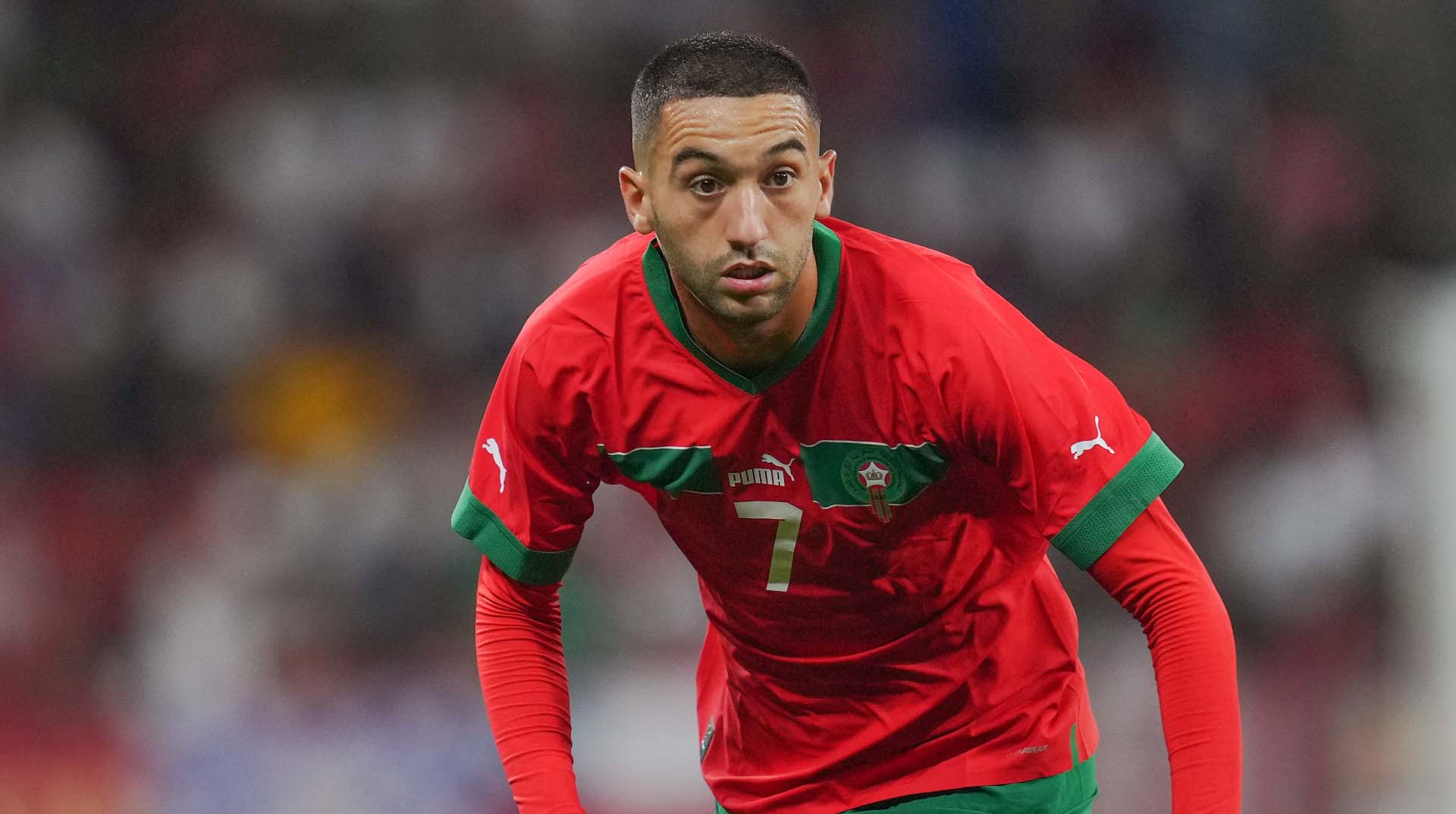
Langton Nyakwenda
Sports Reporter
WIDELY regarded as the “quiet godfather” of Moroccan football, Nasser Largeut was “the happiest man in the world” after watching Youssef En-Nesyri score the goal that knocked highly fancied Portugal out of the 2022 FIFA World Cup.
En-Neysri’s brilliant header propelled Morocco to the semi-final, becoming the first African side to achieve such a feat at the quadrennial global football extravaganza.
Although the Atlas Lions went on to lose to France in the semis, their success story had captured global attention.
Morocco’s astronomical rise is a result of massive investment into the game by the Royal Moroccan Football Federation (FRMF).
The establishment in 2009 of the Mohammed VI Football Academy, a centre that nurtured En-Nesyri and others who starred at the World Cup finals in Qatar, has also been credited for Morocco’s transformation.
Little-known Larguet was instrumental in the formation of the Mohammed VI Football Academy some 14 years ago.
And the 64-year-old Larguet was vindicated as he watched the likes of En-Nesyri and Azzedine Ounahi shine on the biggest stage.
“To watch this revolution with these players and this coach was extraordinary,” he told “The Athletic” last week.
“And when I watched Youssef En-Nesyri score the goal with a fine header, I was the happiest man in the world,” Larguet said.
In 2008, at the request of the King of Morocco, Larguet went about establishing a centre of football excellence.
He spent most of his time moving across Morocco in search of the most promising boys whom he would recruit for the academy.
According to “The Athletic”, Larguet watched 15,000 children between the age of 10 and 15, before whittling them down to select the first intake.
The famous Mohammed VI Academy, whose construction required about US$15 million, was then inaugurated in 2009, and the nursery has been churning out stars.
Named after the King of Morocco, the state-of-the-art Mohammed VI Academy is the largest in Africa.
The centre has four five-star hotels, and eight FIFA standard pitches, one of which is indoors in a climate-controlled structure.
It is used by all of Morocco’s national teams, and by teams from other countries.
Four players who were groomed there were part of the Morocco squad at the World Cup.
One of the breakout stars of the 2022 World Cup Ounahi, who wore jersey number 8, is a product of this academy.
According to the “Daily Mail”, the 22-year-old attacking midfielder has attracted interest from three Premier League sides – Leicester City, West Ham and Wolves.
Former Arsenal star player Ray Parlour is also convinced the Gunners should sign Ounahi, who has also reportedly been placed on the Barcelona radar.
Morocco’s performance in Qatar was a result of meticulous planning.
It has been a gradual rise that has also seen their domestic clubs dominate African inter-club competitions.
Wydad AC of Casablanca are the CAF (Confederation of African Football) Champions League title holders, while RS Berkane have the CAF Confederation Cup.
Morocco’s senior women side will make their debut at the FIFA World Cup next year.
According to FIFA, Morocco defied the odds when they staged the 2022 CAF Women’s Africa Cup of Nations, in which they finished runners-up behind South Africa.
The North African nation has become a case study for football development across the continent.
Celebrated South African coach Pitso Mosimane hailed Morocco’s vision back in June and sensationally revealed that he felt his country was “20 years behind” the North Africans.
“The difference between South Africa and Morocco is big.
“Morocco have been aggressive in their development, and I have no doubt they will dominate African football soon,” the former Al Ahly coach told “IOL” soon after the Egyptian side’s defeat by Wydad Casablanca in the Champions League final.
“They have the biggest vision on the continent, and they take their football very seriously,” Mosimane said.
If South Africa are 20 years behind Morocco, as Mosimane thinks, where then does Zimbabwe stand in the football development pecking order in Africa?
Just two years before the establishment of the Mohammed VI Academy, Zimbabwe were good enough to hold Morocco in a World Cup qualifier.
The two nations drew 1-1 at Rufaro on March 25, 2007.
Zimbabwe and Morocco also played a goalless draw in a Group B game at the 2014 African Nations Championships (CHAN) in South Africa.
The Warriors went on to finish fourth, while the Moroccans bowed out in the last eight.
Six years later the tables have turned.
Morocco are now good enough to reach the World Cup semi-finals, while Zimbabwe are as directionless as they are unsure about what it is they seek to even dream of a place at the global showpiece.
The Warriors are still to find a way to go beyond the group stages at the Africa Cup of Nations finals.
And the ZIFA Village, which was supposed to be developed into Zimbabwe’s centre of football excellence, resembles a ghost house.
Dreamers Academy director and former CAPS United defender Charles Manjera blames Zimbabwean football administrators for “talking and talking without action”.
“The biggest lesson from Morocco is that in football, everything is achievable,” says Manjera.
“But it is all about planning and how you implement a roadmap.
“There are a lot of ideas that we talk about but when it comes to implementation, we have a major challenge.
“We must have a roadmap on how we are going to get to 2026 and how we are going to get to 2030.”
Manjera thinks Zimbabwe could do well if they tapped most of the country’s football brains scattered across the globe.
“Patrick Daka and Charles Mhlauri are in the United States. We have got people like Mubariki Chisoni and Young Pep (Samkeliso Paradzai Ncube) who can add value to our football.
“We must have a sound junior development programme, and ZIFA should come to the party to support these programmes.
“As long as we do not have the Under-15s, Under-17s and Under-20s taking part in international competitions, we still have a long way to go.
“We have to treat football as business. If we don’t do that, we will continue to lag behind,” said Manjera. In Morocco, it is mandatory for all 16 teams in the top-tier league to run youth development programmes.
Morocco are also coached by a local gaffer Walid Regragui.
In fact, all five African teams at the World Cup had local coaches.
Otto Addo took charge of Ghana, Rigobert Song led Cameroon, Aliou Cisse guided Senegal into the last 16 and Jael Kadri was in charge of Tunisia.
“Sometimes, it is about believing in our local coaches as well, and upgrading them, taking them to Europe, and furthering their comprehension game,” says Manjera. George Dhliwayo, a former Gunners and Chiredzi team manager, has implored football leaders to start planning now, despite the FIFA suspension.
“If FIFA were to admit us back tomorrow, what is our plan?” he questioned.
“Is there a roadmap to success?
“We don’t even have a stadium that can host international matches, so, a lot needs to be done starting now.
“There should be a holistic approach regardless of our differences.”
Dhliwayo also believes in local coaches, but wants them to expand their horizons.
“We have good coaches like Norman Mapeza and Kalisto Pasuwa, but they should graduate from being local champions into international winners.
“But they can only achieve that if they are exposed to high-level courses. As much as we have to export players, we also need to export coaches.”
He added: “We have seen amazing football at the World Cup and of interest is the establishment of Africa in the hall of fame through Morocco.
“In 2009, Morocco went on a robust plan through the Mohammed VI Academy, the major reason being to go out and identify all the talent across Morocco.
“They also identified key resource people, some from France, who were able to manage these young players.
“So, when there is a vision, there is prosperity.”
Former Warriors coach Wieslaw Grabowski hopes the issue of Zimbabwe’s suspension will be dealt with expeditiously “so that football can start to move again”.
“A lot of things are not moving in the right direction.
“We have no stadium to play international football yet there is a lot of bickering among the administrators.
“It’s not healthy for our football. As I have said before, football should be the winner at the end of the day, and I expect some form of compromise between the SRC (Sports and Recreation Commission) and ZIFA (Zimbabwe Football Association) with regard to their impasse,” Grabowski said.
Legends Football Academy coach Farai Dhliwayo is advocating the adoption of “clear football policies”.
“These policies will help ensure higher standards in our football and also ensure we develop regardless of changes in administration.
“These policies ensure continuity as it takes eight to 12 years of planning to qualify for a World Cup, within which time there can be an elective change of leadership at ZIFA,” said Dhliwayo.
He added that the Royal Moroccan Football Federation have based their success on three clear pillars – facilities, talent and qualified personnel.
“If we are to learn any lessons from Morocco, then we should see we are lacking on all three fronts.
“Our history of player welfare is poor, especially to junior national team players and women’s teams.
“Until the player is considered of higher importance than the administrator, this will not change.”
On Zimbabwe’s lack of qualified personnel, Dhliwayo said: “This is the seventh year in a row that coaches in Zimbabwe cannot advance their CAF coaching qualifications.
“No courses are available and no substitute international courses have been made available.
“Our hope is that our future ZIFA administrators will be inspired by Morocco’s success and plant seeds so that the future generations can enjoy the shade rather than searching for quick wins.”
Morocco have not only relied on home-grown talent, but have also turned to their diaspora players, drawing talent from those based in France, Spain, the Netherlands, Belgium and Italy.
One of their stars, Achraf Hakimi, was born in Madrid and passed through the youth setup at Real Madrid.
Skipper Romain Saiss was born in France, and Chelsea wide man Hakim Ziyech was raised in the Netherlands, where he was groomed at Ajax.
In their bid to uncover talent in the diaspora, the Moroccans employed scouts across Europe, who identify eligible youth players.
This blend has been described as a perfect mix by various international publications in their attempt to explain Morocco’s success story.
To put the icing on their fairy tale run at the World Cup, Morocco will host the 2023 Club World Cup in February.
* Twitter: @LangtonGuraz


 Online Reporter