Online Reporter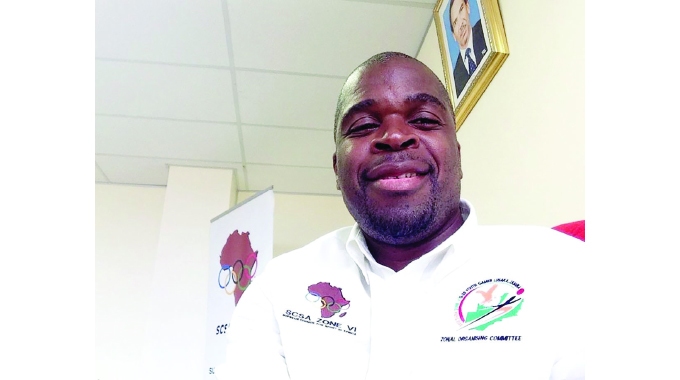
Ellina Mhlanga
Zimpapers Sports Hub
AFRICAN union Sports Council (AUSC) Region 5 are stepping up their efforts on inclusivity with the forthcoming edition of the Youth Games to feature more disciplines for people with disabilities.
The Games are due to take place from December 4 to 13 in Maputo, Mozambique, with 12 sport codes on the programme.
The selected disciplines are athletics (including wheelchair racing, athletics for the visually impaired in T11 – T13 categories and Special Olympics), basketball (including 3×3), boxing, football, judo (including Refugees), karate, netball, swimming (including para-swimming in S8 – S10 categories), table tennis, taekwondo, tennis and volleyball (including beach volleyball).
But of note is the addition of wheelchair racing under athletics and para-swimming.
Previously the Games featured visually impaired athletes in athletics.
“The Games in Maputo continue with the trajectory of us trying to carry the message of inclusive Games.
“We maintain for the second year running the Special Olympics category but also in that drive of inclusion we have expanded our inclusion to also bring in more disciplines for people with disabilities.
“We only used to have visually impaired athletes in athletics alone for T11 to T12 categories.
“But I am happy to say that this time around we are bringing wheelchair racing, we are bringing in for the first time as well wheelchair basketball so that we ensure that there is an expanded version of people with disabilities.
“We are also bringing in swimming, para-swimming S8 to S10 categories which will also expand our scope for people with disabilities,” said AUSC Region 5 chief executive, Zimbabwean Stanley Mutoya.
This is in line with the resolution made in 2022 to expand sport codes for people with disabilities.
The ultimate goal is to introduce regional games for people with disabilities.
“This is in response to what our Council of Ministers also resolved in 2022 that we must expand more sport codes for people with disabilities.
“We are on a drive for this inclusion revolution to slowly go towards and ultimately what is going to be regional disabilities games.
“That’s what we are trying to look at by 2028. We want to then introduce a regional disabilities games.
“We are deliberately calling them disabilities games because we are going beyond just para-games. There is blind sport, there is Deaflympics and so on and Special Olympics of course.
“So, we want to ensure that all the classifications of disabilities have a home in Region 5. That prepares them for major championships as well,” said Mutoya.
The regional Games already serve as a platform to prepare athletes for major international events in the various disciplines.
“We also want a similar platform for our athletes with disabilities to also use the Games at a regional level. So that we are indeed a leading home.
“A home is where everyone has got space and love and care. And therefore, we want every athlete, every person with a disability to have a sense of belonging in Region 5,” added Mutoya.