Online Reporter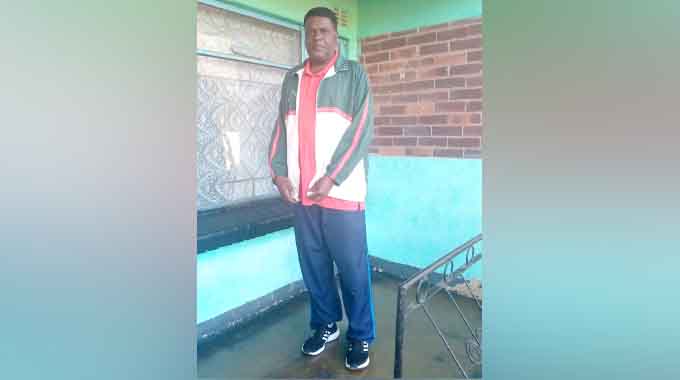
Robin Muchetu, Health and Gender Editor
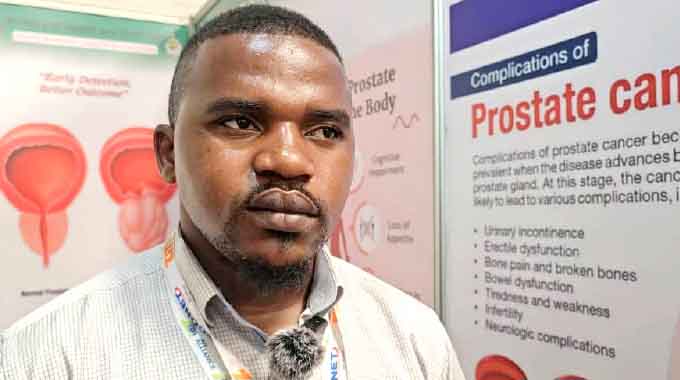
DR Nicholas Wazadza, a Urology Registrar at the United Bulawayo Hospitals, says prostate cancer is becoming a menace and elderly men must take action to get screened early before any symptoms start to show as that prevents severe complications.
This menace, however, can be treated if identified on time.
He was speaking in an interview on the sidelines of the just ended Zimbabwe International Trade Fair (ZITF) where the Ministry of Health and Child Care dedicated, for the first time, one exhibition to prostate cancer screening and information dissemination.
“Prostate cancer affects men of an older generation usually, starting from age 40 going up. It’s quite a forgiving cancer though, because the majority of our prostate problems are non-cancerous. However, there are some people who are predisposed or are at risk of getting cancer,” he said.
People at risk include those people who have a history of prostate cancer in the family such as a brother, father or grandfather and there are also some hereditary cancers like breast cancer and ovarian cancer.
“These people should be screened earlier; early detection starts at 40 years of age. If detected early we can do some interventions and be able to treat the condition, those are the people we are targeting,” said Dr Wazadza.
He highlighted some of the key signs and symptoms of prostate cases.
“It’s a slow growing cancer, and quite silent, so in most cases when someone comes and they have symptoms, it is usually a late presentation and they have complications. Blood in the urine, which might make the urine look pink or red coloured, blood in the semen, needing to urinate more often, trouble getting started when trying to urinate and waking up to urinate more often at night.
“We are saying, let us screen early if you are at risk before you start having complications,” he said.
He explained the screening process.
“We use a prostate specific antigen, which is an antigen produced by the prostate gland. That antigen has ranges, which we check and see any further tests that need to be done to confirm if the person has (prostate) cancer or not.
We start from that simple test, which tells us if we can go further with tests.
“This is done at all central hospitals in Zimbabwe for free, whether you have symptoms or not, we screen you. We also give you awareness on how things can unfold if you do not seek help early and what you need to look out for as an elderly man or aging man,” he added.
Most of our men present late with complications, this is why we are saying let us screen early before you start having symptoms. We will be able to intervene and know where you are,” he said.
The Minister of Health and Child Care, Dr Douglas Mombeshora, also raised some awareness on prostate cancer during ZITF.
“I am happy that we have for the first time at ZITF, screening for males. Usually, we have women being screened for cervical cancer and breast cancer but now people are being screened for prostate cancer. I would have loved to see a rapid test being taken for screening, but still blood is being taken and the turnaround time is quite fast,” he said.
For Mr Max Moyo, a football coach, who was based in Botswana when tragedy struck, he never assumed it could be prostate issues coming up.
“I would have the urge to pass urine but fail to do so, I had no knowledge of what it was. So, I tried to find remedies and I noticed when I drank warm water, I would sometimes be able to pass urine. This would work for about a week or so and I fail again. It then got worse one time on our way from Gaborone and slept the whole night without passing urine. I was only assisted the following day at 10am by the officials from the team I worked for as they took me to the hospital,” said Mr Moyo.
At the hospital, the doctor inserted a catheter to help him pass urine as he had identified that it was an issue of the prostate.
“The catheter assisted me to pass 2,5litres of urine that was trapped in my bladder, my stomach had swelled up already and the urine had changed colour. I stayed there for three months receiving treatment. When I recovered, I asked to return to Zimbabwe in 2023 as I had no one to take care of me in Botswana with this new illness. I was treated at Mpilo Central Hospital where they saw that I had prostate enlargement,” he said.
He paid tribute to the doctors at Mpilo, who he said nursed him back to good health as he had his catheter removed every month, assisting him to pass urine.
“This was me for a period of one year, I had that catheter on until I started passing urine the normal way. I took all the medical advice the doctors gave me and here I am today. I still go for check-ups every three months, I am happy that I am back to normal,” he said.
While men’s poor health seeking behaviour has been widely criticised, Mr Moyo had some words of advice for them.
“Do not be afraid of disease, when you are not well, visit a hospital and seek professional advice when it is still early.
Men must desist from mixing remedies from doctors and traditional healers. If you want treatment from sangoma’s go there and if you want medical help, see a doctor. At times mixing the two can cause challenges and you do not get good outcomes regarding treatment. I know some people believe in traditional healers and it is their choice but the best is to visit a health facility where there are doctors who are trained to treat such conditions,” he added.
Echoing Dr Wazadza’s words on prostate enlargement and the cancer being hereditary, Mr Moyo said it runs in his family.
“This disease is also hereditary, in my case its in our lineage, my father died in 2002 with this disease, my brother got operated on with the same condition, I am the third in the family who had it too, my other brother who is 45 has the same challenge and the last born is 35 and already has the problem. It is in our blood and now that we know, we are seeking help early,” he said.
Mr Moyo urged elderly men to exercise regularly as this improves their health. —@NyembeziMu