Chronicle Editor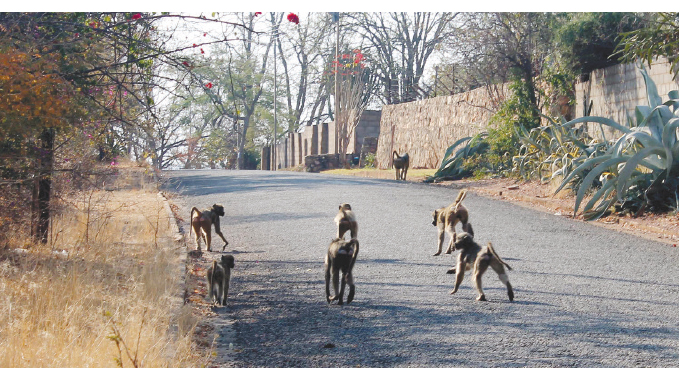
Thandeka Moyo-Ndlovu, Senior Health Reporter
PUMULA South residents in Bulawayo are living in fear of contracting zoonoses following over three years of contact with baboons that have taken over some parts of the suburb.
A zoonosis is an infectious disease that has jumped from an animal to humans.
Despite health-related risks that these residents find themselves in, they have had to involuntarily share their food with these wild animals.
The World Health Organisation (WHO) states that people living adjacent to wilderness areas or in semi-urban areas with higher numbers of wild animals such as Pumula South are at risk of contracting diseases from animals.
“Zoonotic pathogens may be bacterial, viral or parasitic, or may involve unconventional agents and can spread to humans through direct contact or through food, water or the environment. Urbanisation and the destruction of natural habitats increase the risk of zoonotic diseases by increasing contact between humans and wild animals,” said WHO in a statement.
“Zoonoses comprise a large percentage of all newly identified infectious diseases as well as many existing ones. Some diseases, such as HIV, begin as a zoonosis but later mutate into human-only strains. Other zoonoses can cause recurring disease outbreaks, such as Ebola virus disease and salmonellosis. Still others, such as the novel coronavirus that causes Covid-19, have the potential to cause global pandemics.”
In separate interviews yesterday, Chronicle established that baboons had been stealing food, fruits and vegetables from Pumula South residents.
Mrs Sithulile Mhlophe said making reports had proven fruitless as no action had been taken to stop the baboons from invading their homes.
“Responsible authorities have turned a deaf ear to our pleas and now we are at the mercy of these wild animals as if we live in a jungle. We can’t walk freely on our streets as women because they harass us. My neighbour suffered a broken arm last week when she tried fighting off a baboon which wanted to snatch her bread,” said Mrs Mhlophe.
“Our children are no longer free to go and play on the streets as they used to because these baboons even snatch food without remorse. It’s like we live within a game park and I feel the local authority should have notified us before we bought properties here because we are suffering. One of these days we are going to develop a serious disease just from the constant interaction we have with these baboons.
“Keeping fruit trees is now useless as these baboons live to harvest all the fruit. We have spent the past four years without eating mangoes, guavas, and oranges. These creatures also evade our small fields to clear our produce, it’s like we live to feed these baboons. We are not even sure if these fruits are safe for eating any more since baboons have tampered so much with our fields and trees.”
Mr Charles Maphosa said Pumula South residents could no longer keep broiler chickens for business as baboons are also in the habit of snatching them.
“These baboons terrorise us; they jump from one roof to the next leaving a trail of disaster. I have had to fix my geyser and satellite dish more than five times this year. As they jump our asbestos roofs are destroyed, a number of my neighbours have leaking roofs because of baboons,” said Mr Maphosa.
“Besides stealing food, baboons also like eating chickens, it’s now impossible to keep broilers for business as they are likely to be eaten before they mature. We have failed to scare them away and sometimes they intimidate us especially when it’s a troop.”
Mr Maphosa said residents, especially women and girls, were now scared of carrying food around as baboons easily snatch these from passersby.
“They have a timetable, at 8AM we know that they move from the nearby bush to our homes and in time they can be easily spotted from everywhere. Some steal pots with cooked food and we have had to recover some of our utensils from the bush. We can’t continue sharing pots and plates with baboons as this exposes us to unknown diseases.”
Another resident, Ms Melody Ndlovu, said she had tried in vain to use pieces of red cloth to scare baboons that come for her fruit trees and mealies.
“We are used to having baboons around us; it’s like we live in a jungle yet we are in Bulawayo. I heard that baboons are scared of red items and tied them to my mealies and trees with no luck. These baboons are out of control and we are not sure if we are safe because they steal our dry foods and then destroy our fields and trees,” she said.
Ms Ndlovu called on Zimparks to be diligent in getting rid of the baboons in the area before residents take drastic measures.
“We know that some diseases have emanated from wild animals interacting with people and we now live in fear of an unknown disease that we may contract just by having these baboons come to our houses daily. This has gone on for three years and I wonder if those responsible care enough.”
Contacted for comment, Ward 27 Councillor Alderman Siboniso Khumalo said Zimparks officials were aware of the problem as a number of reports had been made.
“It’s unfortunate that I do not have recent pictures of these baboons but it has become normal. Sometimes we have rangers that come to attend to the menace but the baboons disappear and it has become so difficult to manage. The number of baboons in the area is growing and we fear that one day, they will injure our children.”
Zimparks spokesperson Mr Tinashe Farawo had not responded to questions sent to him regarding the baboon menace by the time of going to print. @thamamoe



 Online Reporter