Online Reporter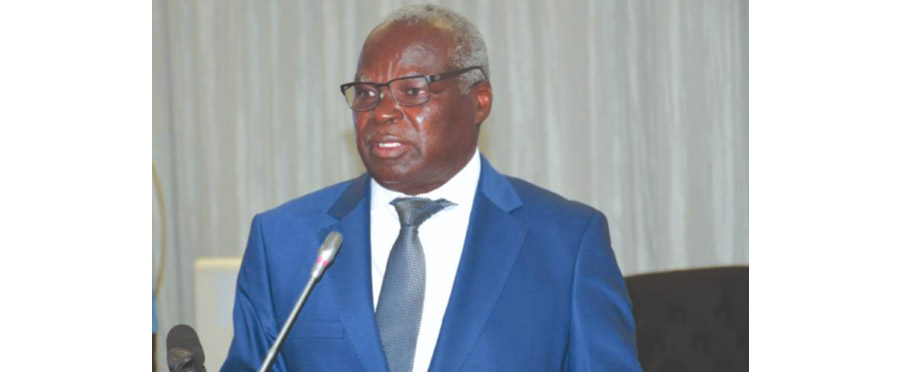
Zvamaida Murwira
Senior Reporter
AFRICA must strike a correct balance between scaling up renewable energy and maintaining conventional baseload plants that guarantee energy availability and reliability if the continent is to achieve its industrialisation and modernisation agenda.
This was said by Energy and Power Development Minister, July Moyo, while delivering remarks at the Powering Africa’s Industrial Revolution round table discussion being held on the sidelines of the ongoing Africa Energy Week in Cape Town, South Africa, on
Wednesday.
“Recent years have witnessed an encouraging trend, the rise of renewable energy technologies—solar, wind, small hydro, and in some regions, geothermal,” said Minister Moyo.
“These provide the promise of clean, affordable, and locally available energy. At the same time, our heavy industries—steel, mining, cement, and manufacturing—require constant, predictable, and high-capacity electricity.
“Herein lies Africa’s challenge: how to strike the right balance between scaling up renewables and maintaining conventional baseload plants that guarantee stability and reliability.”
He said renewable energy alone, while important, cannot take the continent to full industrialisation.
“We must be candid—renewable energy alone, especially in its current technological maturity, cannot yet carry the entire burden of industrialisation in Africa,” Minister Moyo said.
“Solar power, while abundant, remains intermittent. Hydropower is vulnerable to climate variability and drought cycles.
“Wind resources are often location-specific. This is why conventional baseload capacity—coal, natural gas, and increasingly, nuclear—remains vital.”
He noted that the theme of the conference seeks to enhance collaboration between the State and the private sector.
“The theme before us—“How state representatives and private industries can collaborate to develop and implement scalable energy solutions”—resonates strongly, not only with Zimbabwe’s national priorities, but with the entire continent’s developmental
aspirations,” the Minister said.
Minister Moyo noted that Africa was at a decisive moment in terms of harnessing energy for industrialisation.
“Africa is at a critical juncture. Our economies are growing, our populations are young and dynamic, and our industrial sectors are poised for significant expansion,” he said.
“Yet, energy remains both a constraint and an opportunity. For every factory, every mine, and every processing plant, reliable power is the difference between competitiveness and stagnation.”
Minister Moyo called for complementary policies supporting both renewable energy and conventional sources of energy.
“Our task, therefore, is not to frame renewables against conventional plants as competing options,” he said.
“Rather, it is to design complementary policies and investment frameworks that allow both to thrive in balance. Industrial growth requires predictability, but climate goals and financing realities demand sustainability.
“Baseload plants must provide the backbone, while renewables expand access, diversify supply, and gradually displace less efficient sources.”
Governments, said Minister Moyo, must provide clear guidelines, a transparent price framework and stable contracting systems to inspire confidence in investors.
“State institutions can de-risk projects through guarantees, concessional finance, and the creation of energy funds, while industry invests in technology, efficiency, and infrastructure,” he said.
“Large industrial users, particularly mining houses and smelters, are increasingly investing in their own renewable plants.
“Governments must create enabling laws allowing these projects to interconnect to the grid and sell excess power, without undermining system stability.
“Regional Integration – Electrification is not bound by borders. Through the Southern African Power Pool and other sub-regional interconnections, cooperation ensures that no country has to face demand or supply shocks alone. Collaboration between governments and private players, both domestic and transnational, is essential here.”
Minister Moyo said there was a need for collaboration on technology transfer and skills development, the creation of training, innovation, and technology transfer mechanisms so that African talent builds, maintains, and eventually leads in energy technologies,
rather than merely consuming imported solutions.
“Powering Africa’s industrialisation is not an abstract ambition—it is a practical necessity if we are to create jobs for our youth, add value to our resources, and achieve economic sovereignty. But this will not be possible without well-structured partnerships between
the state and the private sector,” he said.
Zimbabwe has a clear energy regulation framework that allows both renewable energy and conventional baseload plants to thrive as it pushes its industrialisation and modernisation agenda in line with its economic blueprint, National Development Strategy 1.