admin
admin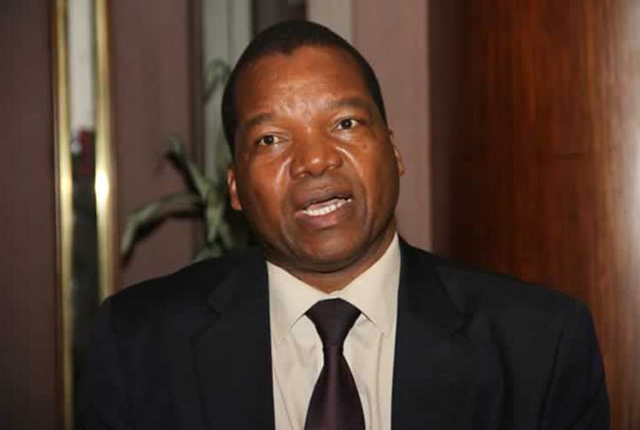

Joram Nyathi Spectrum
PRESIDENT Mugabe on Monday this week signed Statutory Instrument 133 of 2016. It amends the Reserve Bank of Zimbabwe Act to make the soon-to-be-launched bond notes legal tender.The same day the central bank launched a nationwide campaign to explain the new fiat money, which will trade at the same value as the United States dollar.
The two processes, while they will not immediately end people’s anxiety about the bond notes, at least they bring to an end six months of uncertainty about which direction Government was going. Those six months since central bank Governor John Mangudya announced plans to introduce the surrogate currency have been filled with intense speculation about its implications for the Zimbabwean economy.
Why bond notes?
Since the beginning of the year Zimbabwe has faced a debilitating cash crisis, mainly of the anchor United States dollars. The Reserve Bank attributes this in part to lack of proper planning when the country dollarised in 2009. Mangudya and Finance minister Patrick Chinamasa argue that it was a mistake to use a strong currency such as the US dollar as a trading currency.
This has rendered the country’s exports less competitive, thus earning less and less forex.
Traders, vendors and artists of all description now come to Zimbabwe to sell their trinkets so they can harvest American dollars on the streets of Harare. As Chinamasa once put it, Zimbabwe has become a regional fishing pond for American dollars.
Mangudya also argues that there has been massive externalisation of foreign currency over the past few years. This is not matched by increased inward investment in the economy. The bond notes are being introduced as fiat money for daily transactions in Zimbabwe while the United States dollar assumes its proper place as a reserve currency to be used to meet critical imports such as medicines, capital equipment and raw materials, food and fuel imports.
This way the Reserve Bank hopes to limit the externalisation of foreign currency and cut down on non-essential imports. This late discovery is commonsensical elsewhere. Bond notes are the way to go in the absence of a credible alternative to a local currency.
We know there is the default, lazy option. Biting the rand bullet. Maybe our economists are not being helpful here. How do we go about adopting or joining the rand? Do we just grab it the way we did the US in 2009 and claim it’s now the official currency of Zimbabwe?
Countries currently constituting the Rand Monetary Union have their own currencies for local use; we have none. Do we simply walk in there naked and ask South Africa to print for us some R100 billion? What obligation does South Africa have to find the gold to back up this neighbourly splurge?
And bizarre as it might seem, how is it possible for ZNCC and CZI to purport to support indigenisation and economic empowerment policies, only without an indigenous currency? In other words “our” economy has no local value, we can only reckon our GDP in terms of an exchange rate set at the whim of the Federal Reserve or the governor of the Reserve Bank of South Africa?
In perpetuity gentlemen, just because we are afraid to be independent? Like we are the only people with a past so painful it can never be forgotten, or whose lessons should be the best teacher! It doesn’t speak well of our education that our technocrats can’t help solve the nation’s problems. They are content to adopt what fellow technocrats have created. Just a thought.
For its part the central bank also mishandled the introduction of the bond notes. It has not given reasons for the inordinate time lag between the announcement in May and the lack of a launch date up to now. And Mangudya himself gets irritated when asked about the delay.
He doesn’t appreciate why people want to know, telling one reporter recently; “It’s terrible in this economy. You give them information in good faith and they use it as ammunition. You need to have equilibrium of the information you give and what you will not give.”
That may well be true, but it has left a large information gap which has been occupied by those with fertile imaginations for ill-will. They have used the dead weight of distorted historicism to de-campaign the bond notes, arguing Mangudya wants to re-introduce the Zimbabwe dollar. This is immediately linked to the hyperinflation experience of 2007 /8 to persuade Zimbabweans against talk of a local currency.
Lack of trust and confidence in the Reserve Bank are now metaphors for this negative campaign. Which means the Reserve Bank will have a lot of catching up to do before it can undo the damage inflicted on this otherwise brave initiative to inject liquidity into a parched economy.
Success or failure will depend on how the central bank applies the carrot and stick for Zimbabweans to learn new experiences from the bitter memories of 2008. It needs to demonstrate that it will not print bond notes beyond the US$200 million limit reportedly guaranteed by Afreximbank.
(Although in these days of irresponsible use of social media it is not inconceivable for a malicious rumour monger to quote “sources” claiming $6 trillion worth of bond notes have been printed!)
The proposed independent board to exercise oversight over the printed notes must be seen to be independent. Not that there will be no critics, but that it can report impartially and where an explanation is required, give one.
Producers who need to import essential inputs must be able to access foreign currency without undue delays. This is not anything unique to Zimbabwe. It is the procedure everywhere that people apply for foreign currency when going out of their country because most regional currencies are not readily convertible.
We lost it in 2009 when we dollarised and allowed American dollars to be used to buy tomatoes and tissue paper on the streets. We must unlearn those bad habits.
Linked to the above is the stick. The country must fight the scourge of corruption. Those who genuinely want to import must not be subjected to bribes and onerous taxes. That means commercial banks, the Reserve Bank and Zimra officials must be exemplary in their behaviour by facilitating business rather than demanding personal gain.
It is not enough for Zimra officers at points of entry to merely demand duty for trade goods being brought into the country. There must be a paper trail of how much money was withdrawn from a bank against the value of the goods. We are a nation now used to a casino or kiya-kiya economy and people always try to break the rules. We have to unlearn those habits if we are to grow.
While this might not be easy in practice, it is worth trying. People must convert to the practice of using plastic money or electronic transfers. The primitive pride in carrying foreign currency in a wallet or boot of a vehicle should be frowned upon. It’s one habit unique to Zimbabwe.
(The ridiculous side is that someone spends five hours standing in a queue to get $50. They immediately rush to spend it in a supermarket which has five swiping machines. And even fuel service stations, bars and butcheries now have swiping facilities. We are such a conservative lot.)
That said, if the Reserve Bank were to act with resolute decisiveness and integrity and win the support of commercial banks, traders, Zimra officials and law enforcement agencies, the resistance against bond notes should be easy to break. A majority of ordinary citizens have no access to foreign currency.
They are ready to try anything to lead normal lives, including expecting miracle money from Pentecostal pastors. Let them have access to a currency they don’t have to bury in the pillow case or mattress.
A rare positive comment on the prospects of bond notes came from a local economist, Kipson Gundani, who told a weekly newspaper last week that resistance was reflexive and emotional. He pointed out that once the bond notes were “accepted by major companies, especially public utilities and retailers and the central bank sticks to its promises, confidence will return due to the power of demonstration”.
He continued: “It is important to note that bond notes make a lot of economic sense and what we are seeing are emotional responses from the people. Emotions are emotions. They will heal with time.”
That is possible, he pointed out, provided the authorities adhere to “policies that enhance incremental income to people and avoid previous blunders that killed value”.
Dr Mangudya, the ball is in your bank.



 Online Reporter