admin
admin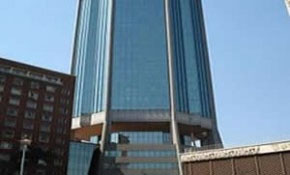
Golden Sibanda recently in Victoria Falls
At least a third of banks have not yet complied with the Reserve Bank’s minimum capital requirements, reflecting the fragility and limited capacity of banks to support efforts to turnaround the economy, the Reserve Bank of Zimbabwe has said. RBZ deputy governor Dr Kupukile Mlambo made the revelation in his presentation at the Chamber of Mines’ 75th Annual general meeting held at the Elephant Hills Resort in Victoria Falls last week.
“About a third of the banking institutions are not in compliance with prescribed minimum capital requirements (of the Reserve Bank of Zimbabwe). (Most) banks are struggling to attract foreign investors,” Dr Mlambo said.
Banks were required to have met $25 million minimum capital threshold by December last year while they are expected to submit a compliance plan for the $100 million minimum capital level by next month, although it will be effective in 2020.
He said that while the financial sector had a huge role to play in supporting economic recovery, with the government’s Zimbabwe Agenda for Sustainable Socio-economic Transformation requiring $27 billion over the period 2014 to 2018, banks had little capacity to support the economy.
The fragility of banks, which cannot fund major projects in mining, also reflects in the poor financial performance of the institutions, which posted a combined after tax income of $20 million in the year to December 2013, with five of the banks recording losses while two slumped to a $60 million loss.
More graphically, Dr Mlambo said, local banks’ combined total capitalisation of $800 million was smaller than the capital of South Africa’s fifth largest bank, Capitec, which has a balance sheet of $900 million.
While banks had played a major role financing the economy after dollarisation in 2009, credit to productive sectors drastically fell in line with the decline in growth in deposits to the detriment of economic recovery.
Loans to productive sectors stood at $263 million in June 2009, growing exponentially to $3,7 billion in September 2013, but have come down to $3,6 billion at December 2013 with the bulk of it going to individual borrowers.
Dr Mlambo said the growth in non-performing loans in the banking sector was reflective of how firms are struggling to repay loans, which further strains banks’ capacity to keep supporting productive sectors of the economy.
Economic challenges in this country have resulted in the liquidity situation deteriorating. This has been worsened by the transitory nature of deposits, low depositor confidence, non-existent interbank market, while the RBZ currently cannot perform its lender of last resort function.
Against this backdrop, Dr Mlambo said there was need for additional sources of funding that includes foreign direct investment.
Furthermore, it was important that the country taps into Diaspora funds, with remittances more than doubling from $198 million in 2009 to $454 million in 2013. He said unrecorded Diaspora inflows were estimated at $1,6 billion.
The RBZ deputy governor also said it was key to religiously implement the International Monetary Fund’s staff monitored programme, to open up avenues for possible debt forgiveness by international lenders. Zimbabwe owed foreign lenders about $6,4 billion as of December 2013.
As Government battles a myriad of challenges militating against the economy, Dr Mlambo said it was important that the multicurrency regime adopted in February 2009 continues, to provide stability for recovery.
The Chamber of Mines of Zimbabwe’s annual meeting ran from May 22 to May 24 under the theme “Resetting the Role of the Mining Sector as the Cornerstone of the Zimbabwe Agenda for Sustainable Socio-economic Transformation Blueprint.”


 Online Reporter