admin
admin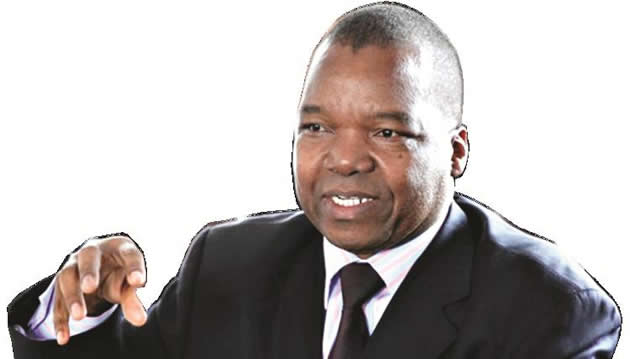

Prosper Ndlovu Business Editor
THE country’s banking sector remained profitable with an aggregate net profit of $52.8 million for the year ended December, 31, 2014 – well above the $3.4 million reported for the same period in 2013. Reserve Bank of Zimbabwe (RBZ) Governor John Mangudya yesterday said 14 banks out of 19 operating banking institutions recorded profits for the year ended December 31, 2014.
He attributed losses made by the other banking institutions to high levels of non-performing loans, liquidity constraints and incapacity to generate sufficient revenue to cover the high operating expenses.
The RBZ boss said in order to enhance revenues, banks were instituting revenue enhancing measures coupled with cost containing measures to bolster their earnings capacity and maximize profits.
“Despite the deceleration in economic activity and adverse external sector developments, annual broad money (bank deposits excluding interbank deposits) grew by 13.6 percent from $3.9 billion in January 2014 to $4,4 billion by December 2014,” said Mangudya while presenting the 2015 monetary policy statement yesterday.
“The growth in money supply during the year is partially attributed to the liquidity inflows related to the tobacco selling season earlier in the year. The 2014 tobacco selling season realised over $600 million from sales of 216 million kilogrammes of the crop.”
He said aggregate core capital for the banking sector grew from $790.4 million as at December 31, 2013 to $811.2 million on the back of improved profitability.
Mangudya said 13 out of 19 operating banks had complied with the prescribed minimum core capital requirements by end of December 2014 while non-compliant ones were instituting various measures to ensure compliance.
“Most banking institutions have since submitted plans indicating the preferred strategic group in which they will operate effective December 2020 and the accompanying recapitalisation plans, which are currently being evaluated by the Reserve Bank,” he said.
According to Mangudya, CBZ Bank is the only banking institution that has already surpassed the $100 million minimum capital requirement for the Tier 1 strategic group, which is effective in 2020 while four other banks – BancABC, Standard Chartered, Stanbic and Cabs – have capital levels above $50 million.
Going forward, boards and senior management of banking institutions are expected to work in close collaboration with the shareholders in order to meet the banks’ own interim capital growth targets, said Mangudya.
He said the banking sector generally remains stable despite challenges that mirror the macro-economic constraints in the economy.
“Credit risk remains the most significant challenge facing the banking sector, whilst liquidity constraints also compound the smooth operation of some banking institutions,” said Mangudya.
He said the closure of Capital Bank and Allied Bank Limited has reduced the country’s banking sector to 19 operating institutions, comprising 14 commercial banks, one merchant bank, three building societies and one savings bank.
In addition Zimbabwe has 147 registered money lending and credit-only microfinance institutions.
Mangudya also reported that mid-last month the Reserve Bank issued the first deposit taking microfinance institution licence to African Century Limited, which has met the stipulated minimum requirements.
“The institution will commence deposit-taking microfinance business upon the successful completion of a pre-opening inspection. The coming on board of deposit-taking microfinance institutions is envisaged to enhance access to financial services particularly by the lower income groups of our society, thereby promoting a savings culture in the economy,” he said.



 Online Reporter