Online Reporter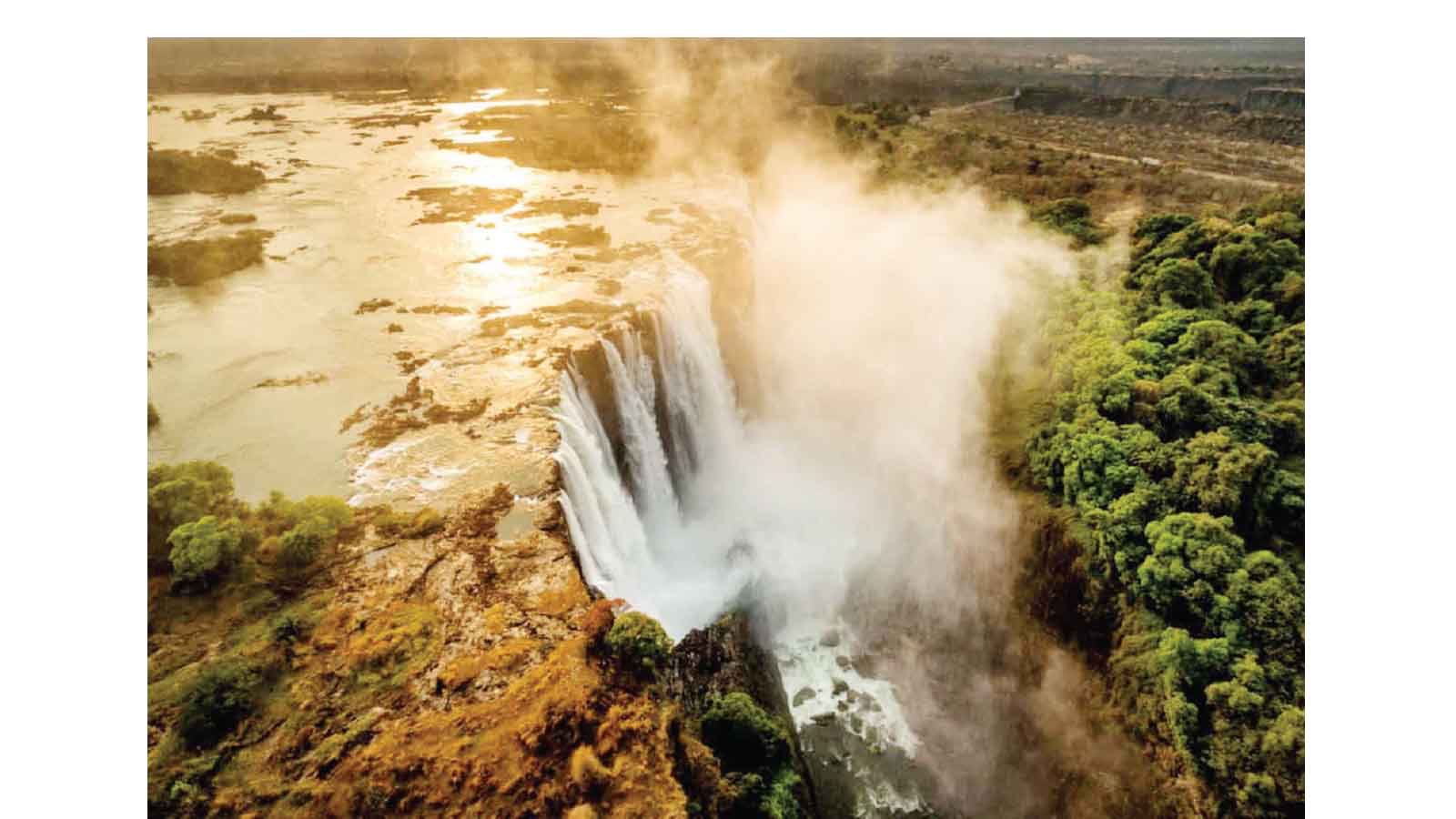
Charles Mavhunga
Tourism Branding
For decades, the Zimbabwean tourism pitch has followed a familiar script: come see Victoria Falls, come see the granite ruins of Great Zimbabwe, come see the wildlife.
It is an invitation to spectate. What it rarely offers is an invitation to know: to sit inside Shona and Ndebele frameworks of meaning long enough to understand why a waterfall is called Mosi-oa-Tunya, “the smoke that thunders”, rather than simply photographed as one.
The Colonial Library and Its Grip on Tourism
This is where VY Mudimbe’s concept of the “Colonial Library” becomes indispensable.
Mudimbe argued that much of what the world “knows” about Africa was never authored by Africa: it was assembled by explorers, missionaries, and colonial administrators who catalogued the continent as an object of curiosity, using European categories to describe African realities that those categories were never built to hold.
The result is a library of Africa written largely by people who had never lived inside its logic.
Tourism inherited this library wholesale. The brochure, the guidebook, the safari itinerary: these are Colonial Library artefacts in miniature, packaging Zimbabwe as scenery rather than as a coherent system of thought.
Reversing the Direction of Authorship
A rebrand worth taking seriously does not just add cultural content to the itinerary. It reverses the direction of authorship. It asks: what if the Shona concept of hunhu/ubuntu: personhood constituted through relationship: organised the traveller`s entire experience, rather than appearing as a footnote on a lodge wall?
What if a n`anga`s explanation of the relationship between ancestral spirits (vadzimu), land and healing was presented as a legitimate epistemology: a coherent theory of the world: rather than as “folklore,” the very word the colonial library invented to demote African knowledge to entertainment?
Apprenticeship Over Observation
Practically, this means building tourism products around apprenticeship rather than observation.
A visitor to Domboshava or Matobo Hills should not merely view rock art from behind a rope; guided by community custodians, they should learn why particular sites are sacred, what protocols of respect they require, and how oral tradition-not a laminated sign: has carried that meaning across generations.
A traveller interested in traditional medicine should sit with a n`anga or herbalist as a student of a knowledge system with its own diagnostic logic, not as a tourist collecting an exotic anecdote. Oral historians, praise-poets (imbongi in Ndebele tradition) and griot-like custodians of genealogy and clan praise names (zvidawo/madlozi) should be positioned as the primary faculty of this experience:
Zimbabweans as co-authors of the narrative, not local colour inside someone else’s story.
The First Lady’s Role in Rebranding Zimbabwean Culture
This is precisely the terrain the First Lady of Zimbabwe, Dr Auxillia Mnangagwa, has been quietly and effectively cultivating and her contribution deserves clear recognition.
As Patron of the Tourism and Hospitality Industry, she has made traditional Zimbabwean cuisine: sadza, traditional grains, indigenous vegetables, wild fruits and their derivative juices: into a national tourism strategy rather than a side dish.
Programmes such as Amai’s Traditional Cookout Competition, now rolled out across all ten provinces and drawing in professional chefs, rural communities, students and people with disabilities alike, have done something the colonial library never permitted: they have declared Zimbabwean foodways worthy of being a headline attraction rather than an afterthought on a hotel buffet.
Her Agrotourism4She initiative goes further, turning rural women’s agricultural knowledge into an economic and touristic asset in its own right, linking the farm-to-market programme to genuine community-level value creation.
Through these efforts she has earned recognition, including being described internationally as a “Queen of Gastronomy”: precisely because she has treated culture as infrastructure: something to invest in, protect and export on Zimbabwe’s own terms.
Refusing the Export-As-Folklore Trap
What makes this approach significant, from a Mudimbe standpoint, is that it refuses the export-as-folklore trap.
The First Lady’s initiatives do not ask indigenous practice to shrink itself into a curiosity for foreign consumption; they ask the world to see Zimbabwean culinary and cultural logic as a serious, exportable body of knowledge: a value system, not a novelty act.
That is the harder and more valuable rebrand and it is one that a broader “Zimbabwe as Epistemology” tourism strategy can build directly upon: extending the same dignity given to traditional food towards traditional healing, cosmology, oral archives and sacred-site custodianship.
The Commercial Case for Epistemic Tourism
The commercial case is straightforward. Every destination on earth can offer scenery. Only Zimbabwe can offer entry into Shona and Ndebele cosmology on Shona and Ndebele terms, mediated by the people who actually hold that knowledge.
This is not “authenticity” as a marketing buzzword: a term the Colonial Library also invented, to reassure outsiders that what they were consuming was the real, primitive thing.
It is closer to reciprocity: tourists as guests inside a knowledge system, obligated to its protocols, rather than consumers extracting content from it.
Conclusion: Arriving Differently
Decentering the Colonial Library, in the end, is not an act of exclusion. It does not ask foreigners to stay away from Zimbabwe’s sacred sites, its healers, or its oral historians.
It asks them to arrive differently: as students rather than spectators and it asks Zimbabwe’s tourism architecture, increasingly shaped by leaders like the First Lady who insist that African cultural logic belongs at the centre of the offering rather than at its margins, to keep building the infrastructure that makes that kind of arrival possible.
Charles Mavhunga, co-author of textbooks in Business Enterprising Skills and current PhD candidate in Management at Bindura University, is the scholar behind the landmark publication on AMAZON: Mbira Virtuosos: Stories of Zimbabwean Mbira Legends. For inquiries, he can be contacted at [email protected] or 0772989816.