Online Reporter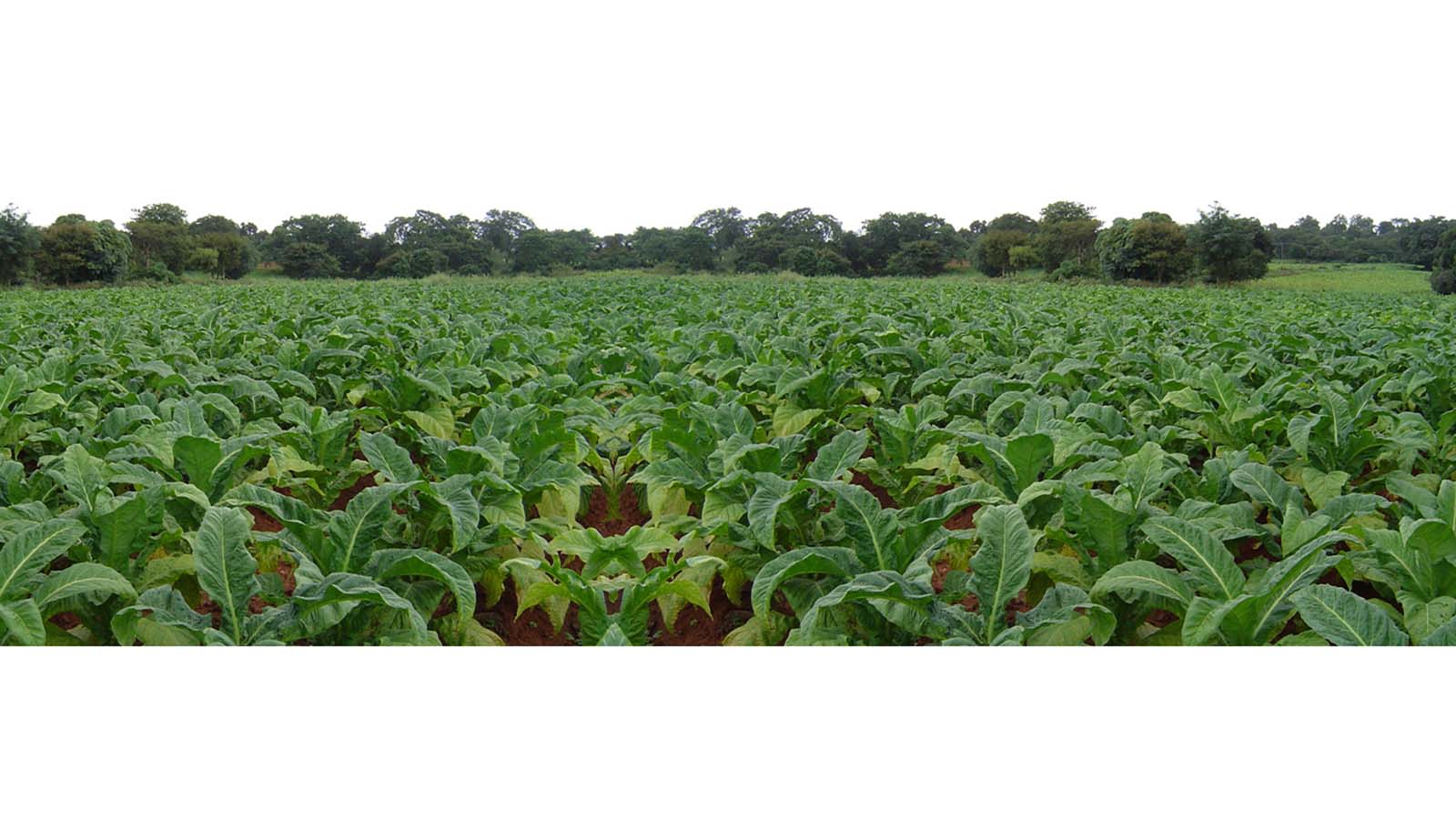
Theseus Mauruki Shambare [email protected]
“After testing the father, the mother and the child, the probability of paternity is zero percent. Muchidimbu tirikuti, baba, hapana chenyu chirikuwanikwa mumwana uyu.”
For many Zimbabweans, those words have become instantly recognisable, introducing millions to the science of Deoxyribonucleic Acid tests (DNA) through television and social media.
DNA, once confined to laboratories and courtrooms, has become part of everyday conversation.
Yet recently, inside a conference hall in Harare, DNA found an entirely different purpose.
It was no longer about proving fatherhood.
It was about protecting tobacco.
Delegates attending the inaugural Joint Illegal Tobacco Varieties Indaba had expected presentations filled with genetics, breeding techniques, seed certification and legislation.
Instead, the first images projected onto the giant screen were not tobacco leaves, microscopes or laboratory charts.
They were animals — an elephant, lion, monkey and a zebra.
Animals many Zimbabweans instantly recognised — not from a wildlife documentary, but from totems that have defined family lineages for generations.
The room fell into an intrigued silence.
Scientists looked at farmers. Farmers looked at merchants. Even seasoned researchers appeared curious.
For a brief moment, the scientific conference no longer felt like a technical gathering.
It felt like a family discussion.
Standing before the audience, Kutsaga Tobacco Research Board Senior Plant Breeder Dr Chenjerai Kashangura smiled before delivering a lesson few had anticipated.
“In terms of maintaining the genetic health of the human population, it is important to consider the concept of totems, which represent a lineage,” he said, addressing the delegates.
“Our tradition and culture mandate that people of the same totem do not marry each other.”
It was an unexpected opening.
But it was also one of the most effective explanations of plant genetics many in the room had ever heard.
Instead of overwhelming farmers with scientific terminology, Dr Kashangura reached for something deeply rooted in Zimbabwean culture.
He used the idea of family lineage to explain genetic integrity.
Then came the twist.
“The same principles apply to our current discussion,” he said.
“If we do not follow certain principles in our seed sector, there are consequences.”
Suddenly, the presentation was no longer about people.
It was about tobacco.
For decades, Zimbabwe has built its reputation as one of the world’s leading producers of premium flavour-style tobacco.
Behind every successful variety lies years of painstaking scientific work that few outside research institutions ever see.
Dr Kashangura peeled back that curtain.
A registered tobacco variety, he explained, does not simply appear on the market.
Before a single farmer plants it, scientists spend between 13 and 20 years developing and refining its genetics.
The process begins with pre-breeding and laboratory research before moving into greenhouse work, field trials, agronomic assessments, disease screening, curing evaluations, chemistry analysis and grower testing.
Only after surviving years of scientific scrutiny does the variety undergo distinctness, uniformity and stability testing before Seed Services considers whether it qualifies for national release.
Merchants then assess whether the tobacco meets the quality demanded by international buyers through smoking tests, while growers evaluate its field performance under Zimbabwean conditions.
Only after passing every stage does the variety receive approval for open release.
“It is a lot of capital investment,” Dr Kashangura said.
“It is also intellectual property that has been produced.”
Illegal germplasm, he explained, skips every one of those steps.
Often smuggled into the country unlabelled and undeclared, the seed may appear identical to certified seed because tobacco seed is almost impossible to distinguish with the naked eye.
But genetically, the difference can be enormous.
Unlike certified hybrid varieties developed specifically for Zimbabwe’s conditions, illegal germplasm frequently consists of open-pollinated or inbred lines whose performance deteriorates as farmers save seed and replant it season after season.
The consequences, he warned, extend far beyond individual farms.
The Tobacco Research Board has spent 75 years steadily improving tobacco genetics, pushing potential yields to around 4,5 tonnes per hectare.
Unchecked proliferation of illegal germplasm, Dr Kashangura warned, threatens to erode decades of scientific progress that has produced higher-yielding, disease-resistant and premium-quality tobacco varieties tailored for Zimbabwean conditions.
He said the gains achieved through years of research could be undermined if growers increasingly turned to uncertified seed that had not undergone the rigorous breeding, testing and regulatory processes required before release.
The warning resonated across the room.
In many tobacco-growing communities, names such as Kamuzambia and Kamtombeni have become increasingly familiar.
Through word of mouth and informal trading networks, the unregistered varieties have gained attention among some farmers amid claims that they offer better performance, earlier maturity or higher returns.
Tobacco farmer Ashton Munaki acknowledged that those claims had spread widely.
“Kamuzambia was becoming more popular,” he said.
“There were theories that it performs better.”
Like many growers, he acknowledged that farmers had often heard about the supposed advantages of unregistered varieties without fully appreciating what scientists meant by illegal germplasm or understanding the long-term implications of bypassing certified seed systems.
Throughout the day, speaker after speaker dismantled those misconceptions.
Village heads representative, Mr Stewart Mubonderi echoed.
“The testimonies we are getting from farmers are that these seeds are performing better. Additionally, they are cheaper in Zambia, with a packet going for only US$3 vis-a-vis the local one which is sold at US$30 for the same quantities,” he said.
While Dr Kashangura explained the science, Tobacco Industry and Marketing Board (TIMB) Company Secretary Mrs Tariro Mukoko explained the law.
Science, delegates heard, is only one line of defence.
The other is legislation.
“The mandate of the TIMB in terms of our Act is to control and regulate the marketing of tobacco and to promote, protect and maintain the sale of tobacco,” she told delegates.
That mandate, she said, begins long before tobacco reaches the auction floor.
Under Zimbabwe’s Tobacco Industry and Marketing Act, every grower must first register with TIMB and cultivate only prescribed varieties approved by TIMB and the Tobacco Research Board.
“Only registered growers are allowed to produce tobacco and sell it,” Mrs Mukoko said.
For those who ignore the law, the consequences can be severe.
Growers found producing tobacco without registration, or cultivating non-prescribed varieties, risk prosecution, fines, imprisonment or both.
Where inspectors determine that tobacco originated from illegal varieties, the crop itself can also be destroyed.
“TIMB can then order the grower to destroy the tobacco,” she said, explaining that the law allows action whether the crop is still standing in the field, has already been cured or has reached the sales floor.
Even after tobacco arrives at auction or contract sales floors, inspectors have powers to suspend sales while investigations establish whether the tobacco originated from approved varieties.
Mrs Mukoko said the existing regulatory framework already provides tools to combat illegal varieties, but acknowledged that the ongoing review of the Tobacco Industry and Marketing Regulations presents an opportunity to strengthen procedures.
“It is also an opportunity for TIMB and Kutsaga to work together in the amendment of the policies, the regulations that are in place and to come up with notices and rules that can be used on a day-to-day basis,” she said.
The discussion then shifted from legislation to biosecurity.
Officials from the Plant Quarantine Services Institute warned that illegal tobacco seed is not merely a regulatory concern—it also poses a phytosanitary threat.
“Our borders are porous,” one presenter noted, warning that unauthorised and uncertified seed can be smuggled through unofficial entry points concealed in undeclared baggage.
Such seed, delegates heard, may bypass critical phytosanitary screening designed to prevent the introduction of devastating pests and diseases capable of threatening tobacco production.
The institute proposed stronger collaboration between Plant Quarantine inspectors, TIMB, Kutsaga, the Zimbabwe Republic Police and the judiciary, including joint field operations, rapid genetic testing, visible destruction of illegal crops and expedited prosecution of offenders.
Representing Seed Services Institute head Mr Edmore Mtetwa, seed inspector Ms Patience Takundwa reminded delegates that certification is far more than an administrative process.
“Our mandate as Seed Services is to make sure we produce seed of good quality and to uphold the integrity of the seed supply chain,” she said.
Every new tobacco variety, she explained, must undergo rigorous testing before it can reach farmers.
Inspectors assess its distinctness, uniformity and stability, conduct repeated field inspections from nursery to field, and perform laboratory tests for purity, germination and moisture content using internationally recognised standards.
“For tobacco, it must have a purity of 99 percent and germination above 90 percent to pass,” she said.
She added that only licensed dealers are permitted to sell seed, while breeders are protected under Zimbabwe’s Plant Breeders’ Rights Act to encourage continued investment in developing improved varieties.
As the presentations unfolded, one message became impossible to ignore.
Protecting Zimbabwe’s tobacco genetics is not the responsibility of one institution.
Scientists breed improved varieties; Seed Services certifies them while Plant Quarantine protects the country’s borders.
TIMB regulates production and marketing, law enforcement investigates offences and the judiciary administers justice.
Ultimately, farmers decide what seed goes into the soil.
By afternoon, delegates had travelled an extraordinary journey —from Zimbabwean totems and family lineages to DNA markers, intellectual property, international seed standards, biosecurity and legislation.
Yet during the tea break, conversations kept returning to the same slide that had opened the day’s discussions.
The totems.
Perhaps that was because Dr Kashangura had accomplished what every science communicator hopes to achieve.
He had transformed a complex lesson in plant genetics into a story everyone in the room could understand.
He had shown that genetics is not simply about what happens in a laboratory.
It is about protecting identity, preserving lineage and safeguarding what generations have carefully built.
Long before tobacco becomes Zimbabwe’s golden leaf.
Long before it reaches the auction floors.
Long before it earns foreign currency.
It begins with a seed.
And like every family, that seed has a lineage worth protecting.



 Bongani Ndlovu