admin
admin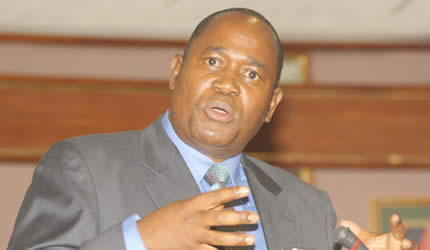
Gideon has said.
The banks are required to meet phased minimum capital thresholds for each respective class of banking in six-monthly periods, starting this month until June 2014.
Briefing journalists at the weekend, Dr Gono said that while it was still premature to make conclusive assessments, he had no reason to doubt that most banks would be able to meet the new capital thresholds.
“The process is that post-31 December 2012, we will then go into the banks and find out how they have complied or failed to comply,” he said.
“But I would like to say that most institutions did submit viable proposals for consolidations, mergers and for outright introduction of new capital.”
Dr Gono said there was no reason “for me to believe that the programme is off track”.
But he pointed out that those that failed to meet this month’s deadline and had viable plans to fulfil compliance requirements would be given more time.
Commercial and merchant banks are expected to have minimum capital thresholds of US$100 million by June 2014, from the current levels of US$12,5 million and US$10 million, respectively.
The new minimum capital thresholds for building societies were increased from US$10 million to US$80 million, while for finance and discount houses minimum capital requirements were set at US$60 million and US$5 million from US$7,5 million and US$1 million, respectively.
Each respective class of banking is required to meet 25 percent compliance by the end of this month, 50 percent by June 2013, 75 percent by December 2013 and full compliance by June 2014.
Announcing the new capital levels in June this year, Dr Gono said the increase was necessitated by the dynamic nature of the financial landscape, regulatory requirements, increasing competition and economic uncertainties, which put pressure on banks to be adequately capitalised.
Zambia has already implemented the programme, increasing capital requirements for banks to US$100 million and giving them only 12 months to comply.
Speaking at the weekend soon after attending an Afreximbank extraordinary general meeting in Harare, Zambia’s central bank governor, Dr Michael Gondwe, said the higher levels of capital were critical for the banks to achieve economies of scale.
“It is in our best interest to grow the financial sector, because when the financial sector is strong it can now raise more money for lending. Equally, in Zambia we decided to increase minimum bank capital levels, way back in January 2012, to ensure that the banks were strong enough,” he said.
“We also increased to US$100 million primary capital for every foreign bank. We were not as generous in terms of the deadlines — our deadline was December 31, 2012.”
Dr Gondwe said the banks would not be able to raise funding and respond to the needs of the private sector if they had weak capital levels, which would also compel them to lend at high rates of interest.



 Online Reporter