

 Online Reporter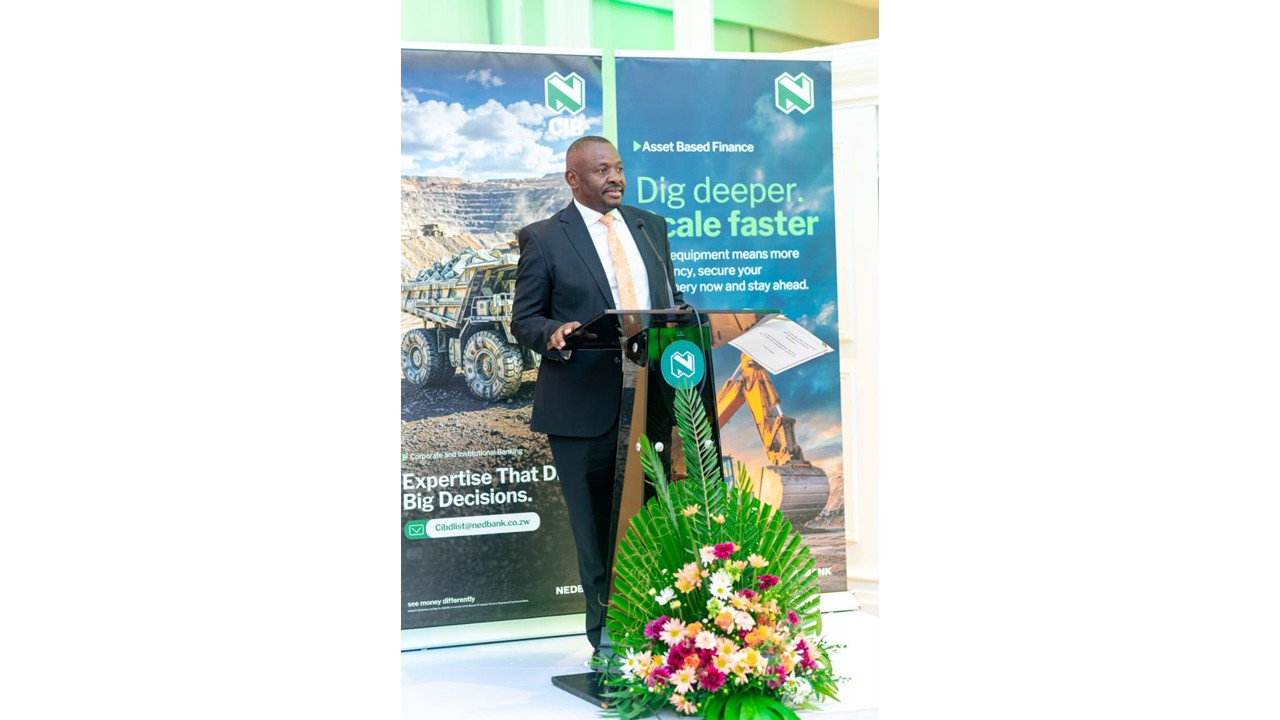
Online Reporter
The Permanent Secretary for Mines and Mining Development, Dr Thomas Utete Wushe, has outlined a decisive shift in Zimbabwe’s mining strategy, with a strong emphasis on beneficiation, industrialisation, and deeper collaboration between government, financiers, and industry players.
Speaking at a mining sector engagement hosted by Nedbank Zimbabwe, he said mining remains the backbone of Zimbabwe’s economic recovery and industrialisation agenda, describing it as a key driver of value addition, infrastructure development, and inclusive growth rather than a purely extractive industry.
He highlighted Zimbabwe’s rich mineral base, including gold, platinum group metals, lithium, chrome, coal and diamonds, noting that the sector’s contribution of about 14.5% to GDP and over 70% of export earnings demonstrates both its strength and its potential to drive deeper economic transformation.
The Permanent Secretary explained that government is deliberately shifting policy toward beneficiation and value addition, moving away from raw mineral exports in order to build domestic processing industries. He pointed to rising investment in lithium processing as evidence of this transition and reaffirmed that the planned restriction on exporting unprocessed minerals, including lithium concentrates from February 2026, is aimed at accelerating industrial development within Zimbabwe.
On governance reforms, he noted ongoing efforts to modernise the sector through the digital Mining Cadastre System, which will digitise more than 60,000 mining titles to improve transparency, efficiency, and investor confidence. He also referenced progress on the Mines and Minerals legislative framework and the development of Environmental, Social and Governance standards aligned with international best practice.
He further stressed the importance of formalising and transforming the artisanal and small-scale mining sector, which involves an estimated 600,000 miners. He said formalisation is critical for both productivity and safety, drawing comparisons with the national driver licensing system as a model for structured certification. He added that institutions such as the Zimbabwe School of
Mines will play a central role in training and capacity building.
On financial mobilisation, he challenged banks and financial institutions to play a more aggressive role in unlocking international capital flows into Zimbabwe’s mining sector, particularly targeting at least US$1 billion in exploration financing. He said this level of capital injection is necessary to unlock new mineral discoveries, expand production pipelines, and position Zimbabwe competitively in global resource markets. He commended Nedbank Zimbabwe for its continued support and urged deeper collaboration between government, financiers, and mining operators to mobilise large-scale project finance.
He concluded by reaffirming government’s commitment to maintaining an enabling investment environment through policy clarity, improved ease of doing business, strengthened infrastructure, and reliable energy supply. He said Zimbabwe’s mining sector is entering a new phase defined by value addition, regulatory reform, and strategic partnerships aimed at ensuring mineral wealth translates into sustainable national development.




 Blessing Chizhande