

 admin
admin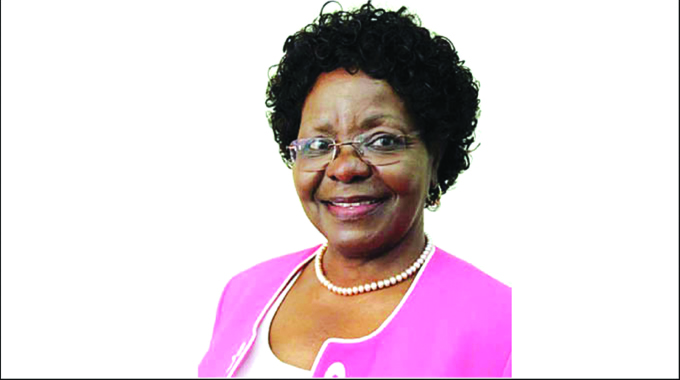
Africa Moyo in SHARM EL-SHEIKH, Egypt
Financial institutions and development partners should provide finance and technical support to ensure the satisfactory implementation of the Zimbabwe Climate Change Gender Action Plan, Women’s Affairs, Community, Small and Medium Enterprises Development Minister, Dr Sithembiso Nyoni, has said.
She said this last week while launching the Gender Action Plan at the Zimbabwe Pavillion on the side-lines of the COP 27, which is underway in Egypt.
The launch of the gender action plan is consistent with the realisation by parties to the United Nations Framework Conference on Climate Change (UNFCCC) that involving women and men equally in the development and implementation of national climate policies is critical.
From 2020 to 2021, Zimbabwe crafted its Gender Action Plan that suits the local situation.
Gender mainstreaming in climate change interventions is crucial in strengthening communities’ resilience to climate change effects, protecting livelihoods particularly for women, youth and groups in vulnerable situations, especially people with disabilities and the elderly whose livelihoods heavily depend on the climate and the environment.
Under the Second Republic led by President Mnangagwa, gender mainstreaming is one of the key enablers towards attainment of Vision 2030 of becoming a prosperous and empowered upper middle-income society by 2030.
In her address, Minister Nyoni applauded the collaboration between her ministry and the Ministry of Environment, Climate, Tourism and Hospitality Industry, together with the United Nations Development Programme (UNDP) for their efforts in the crafting of the Gender Action Plan.
“The action plan seeks to support the country’s Vision 2030 towards a transformed, more effective, inclusive, resilient and sustainable economy that leaves no one behind through addressing climate change vulnerabilities,” said Minister Nyoni.
“Climate change and gender are both cross-cutting development issues which need to be mainstreamed across all sectors in order to build the resilience of communities to the effects of climate change and to promote sustainable socio-economic growth.
“As I launch this Gender Action Plan, I hereby call upon development partners and financial institutions to support the full implementation of this plan so as to achieve our objective of fully integrating gender in climate change mitigation and adaptation as well as in its governance structures both at local and international levels.”
Minister Nyoni said her ministry has been responding to climate effects to the constituencies it has been mandated to focus on and the Gender Action Plan, would further strengthen and upscale the interventions.
In 2020, the Ministry of Women’s Affairs, working with the Ministry of Environment and the UNDP, carried out a gender analysis to establish gender issues in the four Nationally Determined Contributions (NDCs) sectors namely agriculture, forestry, land use, energy, industrial process and products use and waste management.
The gender analysis informed the crafting of the Gender Action Plan on climate change.
It also resulted in a gender training manual being crafted to enhance capacity building of mainstreaming gender in the four NDCs sectors that Zimbabwe is focusing on.
Minister Nyoni said her ministry has supported eight pilot solar-powered community gardens in eight rural provinces in 2018 through the Zimbabwe Community Development Fund.
The community gardens are now thriving despite the harsh effects of climate change as they are using sustainable smart technology, solar-powered boreholes and irrigation facilities. Women and men are benefitting from the initiative, helping them to improve their living standards, as the pilot gardens are producing horticultural products that are being sold for a profit.
Said Minister Nyoni: “This intervention is both an adaptation and a mitigatory measure which has motivated the ministry to initiate this pilot in comparison to the diesel-powered engines they were using in drawing water from rivers and upon engine breakdowns and limited accessibility of diesel, the women and girls used to bear the brunt of fetching water from the rivers using buckets and this was labour intensive and a health hazard to them.
“This model can be scaled up through partnerships and it can end up providing solar energy for both productive use and household use which assists children to study at night in rural areas and also provides clean lighting for the households.”
Ms Anne Songole, the climate justice coordinator with the African Women’s Development and Communications Network of Kenya, the NCDs equity programme manager from the United States Ms Ruth Hollands, and Ms Yolanda Mulhuini, an executive director at Grupo Para o Desenvolvimento da Mulher e Rapariga of Mozambique, saluted Zimbabwe for launching the climate change Gender Action Plan.


 Online Reporter