Sunday Mail Reporter
GLOBAL footwear giant Bata Group is considering expanding its manufacturing capacity and retail footprint in Zimbabwe, citing improved macroeconomic stability and the country’s strategic position within regional and international trade markets.
Speaking to The Sunday Mail during his inaugural visit to the company’s local operations, Bata Group chief executive officer Mr Panagiotis Mytaros said Zimbabwe offered significantly greater opportunities for the group than he had previously anticipated.
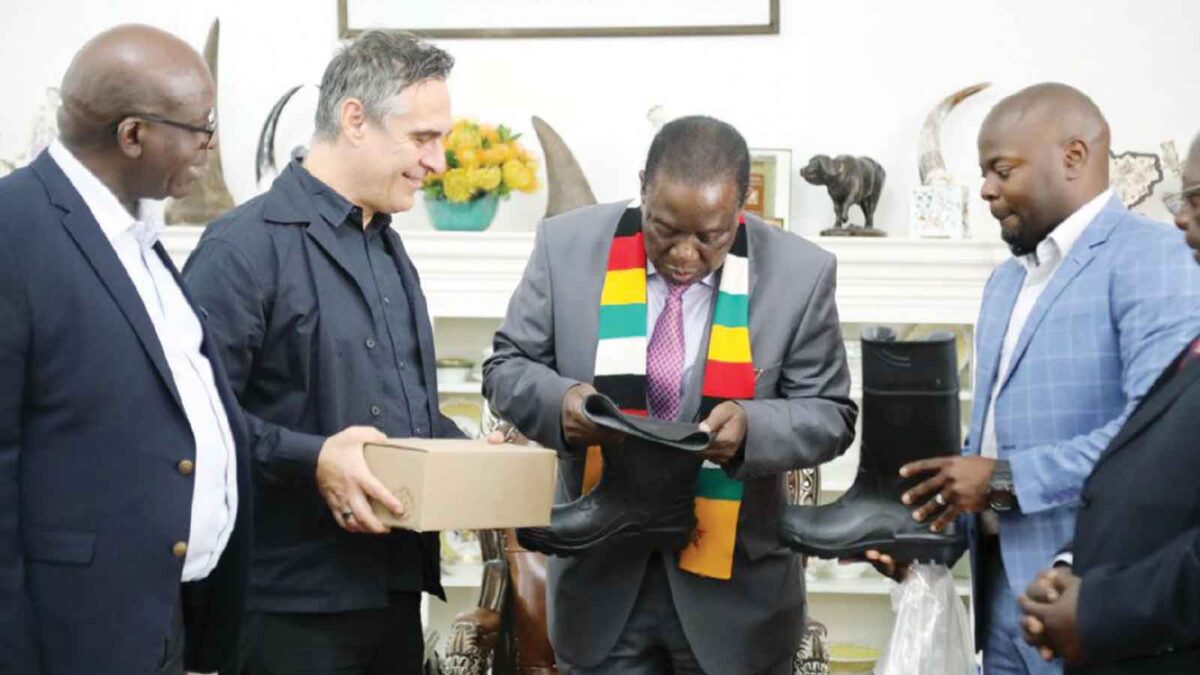
His visit included a tour of the company’s main manufacturing plant in Gweru and a courtesy call on President Mnangagwa at State House in Harare.
“My overall assessment is that Zimbabwe is a country with more possibilities for Bata; way more than I thought previously,” he said.
“Bata means a lot in Zimbabwe and to its people. We have been here for 87 years, and that comes with a big responsibility. At the same time, Bata could do even more in Zimbabwe, and Zimbabwe could mean more to the global Bata business.”
Mr Mytaros said the improving economic environment was already translating into better business performance, with the company recording stronger results in 2026 compared to previous years.
He said the stability presented an opportunity for carefully considered investment to increase production and strengthen the company’s market presence.
“After visiting Zimbabwe, my belief is that there are more opportunities here and that Bata should invest carefully,” he said.
During his tour of the Gweru factory, Mr Mytaros assessed production operations, workplace health and safety standards, as well as the condition of existing machinery.
He identified equipment modernisation, employee retention and skills advancement as key priorities for the company’s future growth.
“We need to modernise our machinery and production fleet while continuing to educate and develop our people. A lot has already been done to improve health and safety, but there is more work ahead,” he said.
He said Bata would continue strengthening its brand reputation, product quality and consumer confidence while engaging with the relevant authorities to promote fair competition.
Mr Mytaros also highlighted Zimbabwe’s strategic position within regional trade frameworks, saying the country could become an important export hub serving markets across Africa and beyond.
Zimbabwe’s location and trade agreements, he added, presented an opportunity to complement Bata’s existing regional operations in Zambia, South Africa and Kenya.
“Zimbabwe is in a very good position, with opportunities to export to major African markets and beyond. To achieve this, we need the right materials, components, skills, factory infrastructure and machinery,” he said.
Mr Mytaros confirmed that expansion was part of his vision for the local business.
“My intention and the message I will take back to management is that I believe in Zimbabwe. I believe we should make more shoes and have more shops. That means expansion.”
During a company-wide town hall meeting in Gweru, Mr Mytaros also engaged employees and management, encouraging workers to remain confident in the company’s future.
He reassured staff that Bata had no intention of scaling down its Zimbabwean operations, emphasising the importance of improving skills, competencies and productivity.
“I felt there is competence and a good vibe among our people. They should believe in themselves. To build a better Bata Zimbabwe, we must continue improving our skills and capabilities.”
His visit also included discussions with President Mnangagwa on Bata’s future business road map, factory modernisation and opportunities arising from regional trade policies.
Founded in the Czech Republic in 1894 and headquartered in Lausanne, Switzerland, Bata Group is among the world’s largest footwear manufacturers and distributors.
The company serves more than one million consumers daily across over 70 countries through a network of more than 5 000 retail stores.
Bata has maintained continuous manufacturing and retail operations in Zimbabwe since 1939, making it one of the country’s longest-serving multinational businesses.
The company has increased capacity utilisation from 27 percent to 42 percent in recent years and is targeting 65 percent, supported by improved currency stability, a more predictable operating environment and growing demand.
Beyond its workforce of more than 1 000 employees, Bata supports approximately 400 indirect jobs across its supply chain.
The company is also expanding partnerships with small and medium-sized enterprises across the leather value chain to promote skills development, entrepreneurship and broader economic empowerment.