Chronicle Editor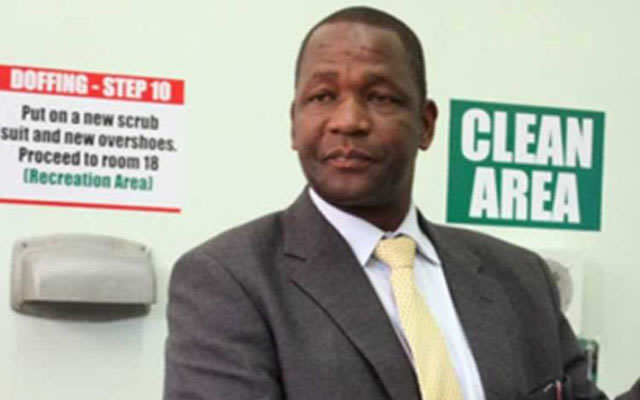
Mbare, one of Harare’s oldest and most populated suburbs has been hit by another typhoid outbreak that has so far seen over 150 people screened and at least 23 of them treated of the bacteria. Our Senior Health Reporter, Paidamoyo Chipunza (PC) spoke to director of health services in the City of Harare Dr Prosper Chonzi (Dr PC) to understand more on why the City was failing to effectively end typhoid and what it takes to completely address the challenge.
PC: Harare has been hit by another typhoid outbreak, this time in Mbare, one of the city’s oldest and most populated area. The city has also had sporadic suspected cases in different suburbs throughout the year, what are the key drivers of these outbreaks?
Dr PC: Let me start by defining typhoid. Typhoid is a bacterial infection caused by Salmonella typhimurium, whose natural habitat is sewage. By natural habitat we mean where the bacteria stay. This bacterium can also live in the intestines and bloodstream of humans.
It is spread between individuals by direct contact with the faeces of an infected person or if someone drinks or eats food that is contaminated. If untreated, one in four cases of typhoid end in death. If treatment is given, less than four in 100 cases are fatal.
So any outbreak of typhoid is caused by nyaya yetsvina. Here we are talking of poor sewer reticulation, inadequate provision of clean and safe water, uncollected garbage and this is very important — personal hygiene. So when you see the city having a typhoid outbreak, it means one of those determinants of health or all are missing in between.
Unfortunately, most of these drivers are outside the jurisdiction of the Department of Health. It only becomes a health issue when people start getting sick as is in the Mbare situation.
PC: Noting that most of these drivers are outside the jurisdiction of the Department of Health, how then are you working with relevant departments to address these challenges?
Dr PC: Absolutely, most of these things are outside the jurisdiction of the Department of Health and the fact is if certain things are not addressed, we end up having outbreaks. The Department of Water should provide safe and adequate water at all times. The Division of Waste Management (under Department of Works)should make sure garbage is collected at all times, those responsible for attending to sewers must do so all the time. We have as a department tried from time to time to advocate for provision of these essential services to suburbs, where these outbreaks normally occur and this has been happening.
The city has also tried to rehabilitate the sewer and water reticulation system so that it is able to provide clean and adequate safe water to its citizens. But what we are seeing now is basically beyond the city.
Take for instance, Matapi flats, where we are currently having the outbreak. Those flats were condemned a long time ago, but up to now people are still staying there. The system there is very old and cannot support the number of people staying there. There are about 2000 people staying in a block of flats and this is totally unacceptable as it is a disaster for disease outbreaks. The department of works must make sure that it builds new homes and destroys those flats. People should be allocated land somewhere.
PC: What has been the major hurdle in the implementation some of your recommendations as a department?
Dr PC: When we talk, people do not necessarily understand what we mean, but when things begin to happen the way they are happening now, they begin to see that really we were brewing disaster.
PC: The public feels the council has now adopted a reactionary approach to water-borne disease outbreaks rather than a proactive approach, how do you respond?
Dr PC: To some extent yes, especially when you are looking at how we have been responding to these outbreaks when it is clear that proper sanitary facilities and adequate and clean water supplies leads to a healthy nation.
But also it would be important to look at what else the council has done in areas of water and sewer reticulation systems, garbage collection and timely attendance to sewer bursts. You realise that people now appreciate that the more time they take to attend to sewer bursts, the more they are exposing people to bacteria, so in a way, the city council has played its part.
PC: You mentioned that Matapi hostels were long condemned for health reasons but people are still staying there, what efforts have you made as the health department to ensure that this resolution is implemented?
Dr PC: We do not have the authority to remove people from the flats, but we continue advocating their removal and allocation of land elsewhere and destruction of these flats, unfortunately this is taking so long because of resource constrains.
Ideally, these people should be allocated alternative land to stay, the flats are destroyed and new blocks are constructed, resources permitting. The good thing is we all agree that those flats are not fit for human habitation, but the main hurdle is resources.
PC: Zimbabweans are still nursing wounds from the 2008/ 2009 cholera outbreak, what measures has the Department of Health put in place to avoid the current typhoid outbreak from spreading to the 2008/ 2009 levels?
DR PC: We have been doing a number of awareness campaigns on importance of personal hygiene and presenting oneself early for treatment once one start exhibiting symptoms of typhoid. We hope it doesn’t get to the 2008 /2009 levels if people present themselves early for treatment and maintain personal hygiene to avoid further spread, especially now that the rainy season is upon us. All faecal matter is going to be washed away into those shallow and unprotected water sources and if people consume that water without treating or boiling it, they will surely get diarrhoeal diseases such as typhoid.
We also urge relevant authorities to work on these key drivers of typhoid in areas where we do not have typhoid at the moment so that it does not spread there.
PC: How is the situation in Mbare at the moment?
Dr PC: Because of the awareness campaign that we have had, we are screening a lot of people for typhoid. We are saying anyone having symptoms of typhoid such as headache, fever, abdominal discomfort and diarrhoea should present oneself at the nearest clinic for screening. So it’s a very loose case definition hence a lot of people are coming through, but might not necessarily be having typhoid. We are admitting plus or minus 20 people at a time. It is too early to say the cases are declining because cases that we are seeing now might have been infected two weeks ago so maybe after about three-weeks that is when we will start talking about a reduction.
PC: Your advice to Zimbabweans as far as diarrhoeal diseases are concerned, considering that we are entering the rainy season, which provides a conducive environment for spreading of water-borne diseases quickly?
Dr PC: Typhoid has to do with personal hygiene. People should be wary of the food they take and the water they drink. They should wash fruits and vegetables with safe running water before eating them. People should also cook food thoroughly and eat them whilst hot or reheat it thoroughly before eating.
The public should also avoid foods and beverages from street vendors.
It is difficult to be kept clean on the street and many travellers get sick from eating food from such places and most of all, people should wash their hands before and after visiting the toilet and before and after handling food. Responsible authorities should also make sure that they provide essential services to the communities.
It is everyone’s responsibility.


 Online Reporter