Chronicle Editor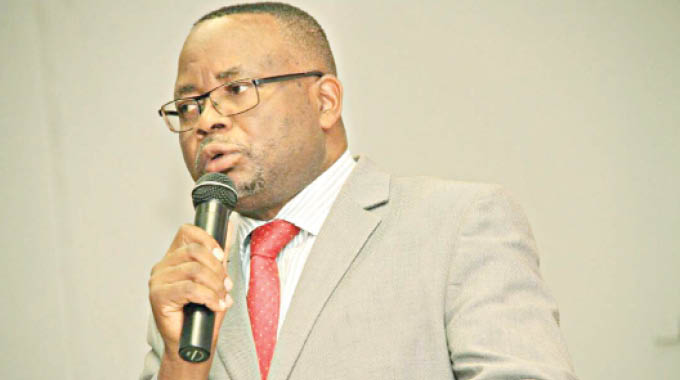
Nqobile Tshili, Chronicle Reporter
THE Basic Education Assistance Module (BEAM) programme is targeting to pay school fees and provide stationery for 1,5 million vulnerable pupils this year as Government commits to ensuring that education becomes accessible to all.
A total of 1,5 million pupils constitutes a third of the country’s 4,5 million learners in primary and secondary education.
Government started the BEAM programme in 2001 to retain vulnerable pupils in schools by paying their tuition.
In the 2021 national budget, Treasury allocated $2 billion towards the BEAM programme.
The increased number of learners benefitting under the BEAM programme is part of the Government’s initiative of implementing its free education policy.
Responding to questions in the National Assembly’s Question and Answer Session on Wednesday, Public Service, Labour and Social Welfare Minister Professor Paul Mavima said the revised BEAM programme shows Government’s programme towards making education accessible.
“The main assistance programme that we have in primary and secondary education, is the BEAM Programme and that programme assists learners with tuition payment. It used to be only the tuition payment but now we have extended it to cover all the needs for the learners, including exam fees, uniforms, stationery and other requirements. So, the BEAM programme which this year is targeting 1,5 million learners is the one that comes to mind with those grants-in-aid,” said Minister Mavima.
He said while BEAM is meant to support the under privileged children, it was now worrying that even parents and guardians who can afford were no longer paying fees.
Prof Mavima said parents were taking advantage of the Government’s policy that learners should not be sent away from school when their fees are not paid up.
“It is a dilemma that we have lived with for quite a while because once Government indicated that no learner’s rights to education should be violated on account of parents not being able to pay, we found that a lot of parents reneged on their responsibilities to pay knowing that learners are not sent back home for non-payment. We have used quite a number of approaches including persuading parents to make payment arrangement where they are failing to pay the full amount and we have also encouraged the schools to accept such payment arrangements,” said Prof Mavima.
He said despite efforts being made by Government to encourage parents to pay fees, some of them still do not pay.
Prof Mavima said Government should now start moving towards income generating projects to make education free for all.
“I think that the onus is on Government to try and find ways in which we can generate enough resources to make good our policy for free basic education. I know it might take a while. We have legislated for it but now Government needs to work to generate enough resources so that we can make good that policy of free basic education with schools that are well supported with infrastructure and teachers. That is a matter that is of urgent importance in all parts of our country, especially where we have vulnerable communities,” said Prof Mavima. — @nqotshili


 Online Reporter