

 admin
admin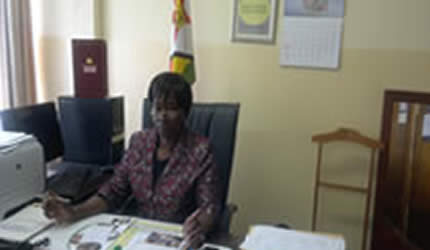
Speaking at the presentation of Zimbabwe’s 2012 MDGs progress report in Harare yesterday, Education, Sports, Arts and Culture secretary Mrs Constance Chigwamba said Beam currently covers about 500 000 children yet the actual need of educational assistance is more.
Mrs Chigwamba said this has contributed to low levels of children completing primary education despite the high enrolment rates.
Under the AAP Government seeks to raise US$60 million from Treasury and development partners to assist the two million school children.
Statistics from the latest MDG report shows that although the net enrolment ratio for primary education is 81,4 percent, the ratio of those who actually complete the education up to Grade 7 is now lower than before.
This proportion of pupils starting Grade 1 and reaching the last grade of primary education stands at 82,4 percent. Literacy rates among 15 to 24 year-olds has risen from 91 percent in 2009 to 99 percent in 2011.
Read More…
“This target is likely to be achieved if efforts continue, hence the Accelerated Action Plan (AAP),” Mrs Chigwamba said.
She said the AAP would focus on four areas namely, Beam, the school feeding programme, second chance education and school improvement grants.
Mrs Chigwamba said the 2006 Zimbabwe’s Vulnerability Assessment Committee established that between 20-40 percent of Zimbabwean families suffer from food shortages impacting negatively on completion of pupils with their studies. Under the AAP, Government seeks to source and supply food in targeted districts and schools.
The second chance primary education strategy is meant to allow access to education to drop outs, with an aim to achieve universal primary education. Children targeted under this program include those heading a family, those on farming and mining towns among others.
The last focus area under the AAP is the school improvement grant which is aimed at infrastructure refurbishments among others.
“The AAP does not replace existing educational frameworks or plans, rather it draws upon them and seeks to complement them by identifying actions and actors who could work together to speed up progress towards the identified MDGS,” Mrs Chigwamba said.
Economic Planning and Investment Promotion Secretary Dr Desire Sibanda said all key ministries would be expected to develop the AAPs.
He said the education sector’s AAP is the first of its kind in the country and is expected to see the country achieving MDG2 of universal Access to primary education.



 Online Reporter