Chronicle Writers
FOR many inmates, the real test begins when they leave prison. Finding employment, rebuilding broken relationships and earning an honest living can be difficult after serving a sentence. At Bulawayo Prison, however, a vocational training programme is helping inmates prepare for life beyond the prison walls by equipping them with practical skills that can create new opportunities.
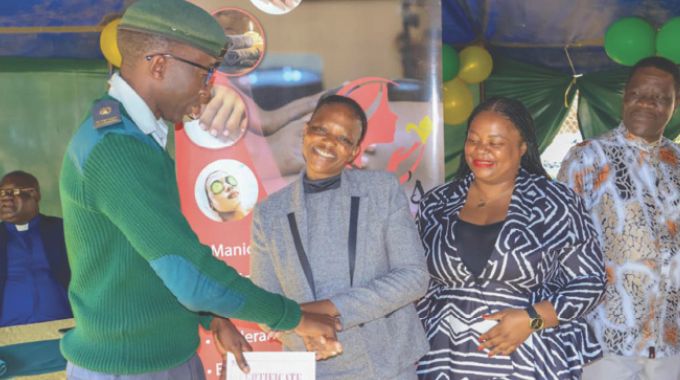
On Friday, 10 inmates graduated after completing an eight-week beauty therapy course offered through a partnership between the Zimbabwe Prisons and Correctional Service (ZPCS), Que’s Beauty Spa and other stakeholders.
The course covered manicure, pedicure, massage therapy, nail technology and make-up application, providing participants with skills they can use to earn an income after their release.
Among the graduates was 28-year-old Simon Makhalema, who said he almost missed the opportunity because he doubted his ability to learn.
Makhalema, who is serving a sentence for robbery, said his limited education and difficulty understanding English left him lacking confidence when the programme was introduced.
“I was arrested for robbery and I was sentenced. I only knew how to do a general haircut, and came to Madam Q who said they have a programme for us on beauty therapy. I joined but I’m one person who told himself that I can’t learn anything because I dropped out of school when I was young,” said Makhalema.
He said fellow inmates played a crucial role in encouraging him to persevere and helping him understand the coursework.
“I then got encouragement from my inmates who then pledged to assist me, I then joined the eight weeks course, and they then assisted me a lot especially in understanding things which we learnt in English. Now I can safely say I am a nail tech, I can also do massage but it needs a lot of equipment, which I might not afford, but the programme has assisted me a lot.”
The graduation reflects the ZPCS’s growing focus on rehabilitation through skills development and economic empowerment. In addition to vocational training, the service also runs programmes in agriculture, detergent manufacturing and cultural empowerment aimed at preparing inmates for successful reintegration into society.
Speaking at the graduation ceremony, the guest of honour, ZPCS Bulawayo Metropolitan Province Officer Commanding Commissioner Mkhulunyelwa Ngwenya, represented by Acting Chief Staff Officer Superintendent
Tymon Moyo, said rehabilitation was a shared responsibility that required support from the wider community.
“Today we are witnessing this collective responsibility through the partnership with Que’s Beauty Spa. As we strive to achieve our vision of becoming a leading correctional service provider in the region and beyond, strategic partnerships such as this remain crucial in complementing our rehabilitation programmes and creating opportunities for offenders,” he Ms said.
He said vocational training remained a critical part of rehabilitation as it gave offenders practical skills that could help them become self-reliant after release.
“Through this programme, Que’s Beauty Spar has equipped the graduates with valuable knowledge and practical skills that can be used for both self-employment and formal employment. These skills create opportunities for income generation and increase confidence as graduates prepare to reintegrate into society,” he said.
Commissioner Ngwenya said such programmes also support the implementation of Zimbabwe’s National
Development Strategy 2 (NDS2) and Vision 2030 through skills development, employment creation and human capital growth.
Que’s Beauty Spa founder and chief executive officer Ms Qhakazisile Nyathi said the initiative was part of the company’s efforts to give back to the community and support rehabilitation programmes.
“These are inmates yes but they are people just like us, we are going to be partnering with ZPCS in other programmes and now we are going to Gwanda Prisons where we have been approved to give the same courses,” said Ms Nyathi.
Life coach Marylinn Magaso, popularly known as Coach Marylinn, who also took part in training the inmates, said rehabilitation efforts would only succeed if society was willing to accept former offenders after they had served their sentences.
“Why am I emphasising this? Because when somebody comes in for correction, we should be ready to accept that they’ve been corrected,” she said.
She said the programme went beyond teaching beauty therapy, focusing on personal development and helping inmates see new possibilities for their future.