Online Reporter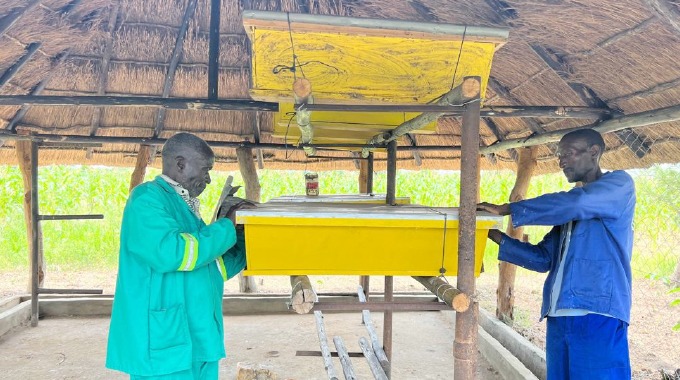
Gibson Mhaka
IN the heart of Insiza District, located in Matabeleland South Province, communities are facing a fate of forest depletion shared by regions worldwide.
Like many others, this traditionally semi-arid area, situated within Zimbabwe’s climatic region five and known for its below-average rainfall, is experiencing the consequences of human overexploitation.
Just as forests are shrinking globally, primarily due to humans pursuing livelihoods by over-exploiting timber and non-timber products, Insiza District is also witnessing the same pattern of resource depletion.
However, demonstrating the resilience of the human spirit, a community-driven conservation project is being initiated.
This project aims to enable local people to derive a sustainable livelihood from their vital ecosystem without further causing its destruction.
To provide for their families, villagers in Montrose 4A in Ward 19 under Chief Maduna are turning to a “sweet” enterprise that also protects the forest: Beekeeping, also known as apiculture.
Beekeeping plays a vital role in forest conservation, supporting agriculture, sustaining livelihoods, and ensuring food security.
The Forestry Commission is promoting beekeeping as part of sustainable forest management and is rolling out training programmes in rural communities to improve incomes for rural entrepreneurs.
However, studies have shown that its potential remains underutilised in forestry and development programmes due to a lack of awareness among stakeholders.
While conservation scientists and foresters view it as a practical tool for raising community awareness about the importance of forests and engaging them in conscious protection, conservation, and sustainable forest resource management, for Leonard Skapane (66) from Montrose 4A village beekeeping has become a transformative tool for both income generation and forest conservation.
Skapane stated that beekeeping is a greener alternative for making a living, and also an innovative way to protect forests.
“Bees are generally very important in all aspects of life. Beyond their role in producing honey, beekeeping offers a sustainable and profitable livelihood due to the high domestic demand for honey as food, and for other products such as cosmetics and beeswax, which is used to make candles.
“In the environment, they play a crucial role in pollination, as they are the primary pollinators of most tree species, vegetables, and crops.
“This contributes to the sustenance of floral diversity and improves crop yields in the farming sector by strongly influencing ecological relationships, ecosystem conservation, and stability, thereby promoting genetic variation in the plant community.
“Therefore, as beekeepers, we are also protecting the environment because beekeeping depends on good water sources and ample forage for pollen,” said Skapane.
Skapane learnt beekeeping through a government programme. This initiative, led by the Ministry of Lands, Agriculture, Fisheries, Water and Rural Development, is being implemented in partnership with the Green Climate Fund (GCF) and the United Nations Development Programme (UNDP) under the Building Climate Resilience of Vulnerable Agricultural Livelihoods in Southern Africa programme.
The programme is aimed to strengthen the climate resilience of vulnerable communities in southern Zimbabwe, with a special focus on women.
It also seeks to enhance farmers’ access to climate-resilient inputs, practices, and markets, and to improve access to weather, climate, and hydrological information.
“We began in November 2023. I’m the chairman of our group, Stars of Tomorrow, which consists of 27 members, both men and women. We have 10 beehives.
“Initially, we faced a challenge due to insufficient water sources and a lack of pollen-rich forage, some of the bees left the hives.
“However, with the improved rainfall patterns we’ve recently experienced, they are now returning. We are optimistic that this will lead to a successful honey harvest, allowing us to generate income. This income will be crucial in enabling us to send our children to school,” said Skapane.
Memory Mpofu (38), another project member, echoed Skapane’s sentiments, stating that beekeeping, beyond providing a livelihood, helps protect their forests.
“As you can see, our area is semi-arid, characterised by infrequent rainfall and sparse vegetation. We discovered that beekeeping, besides being a source of livelihood, can also help protect our forests.
“Through training from the extension officers who are assisting us with this project, being rolled out by the Government in partnership with GCF and UNDP, we are also being advised against cutting down trees, ensuring the project’s success,” she said.
Montrose 4A village head, Benjamin Ncube, stated that his community is actively exploring ways to incentivise forest conservation through beekeeping.
“Recognising the delicate balance between environmental preservation and economic opportunity, we aim to establish a sustainable model where beekeeping not only provides a viable income stream but also fosters a strong community commitment to protecting local forests.
“This initiative includes plans to provide training and resources to community members, enabling them to establish and manage beehives effectively,” he said.
Agriculture extension supervisor for ward 19, Christerbert Moyo, emphasised the dual benefits of the beekeeping project.
“We have observed first-hand how this initiative not only provides a crucial income stream for these communities, but also acts as a powerful tool for forest preservation.
“By encouraging beekeeping, we are fostering a symbiotic relationship between people and their environment.
“The need for healthy, flowering ecosystems to support bee populations directly incentivises the protection of our forests.
“This project demonstrates that economic development and environmental stewardship can go hand-in-hand, creating a sustainable future for both the community and the natural resources they depend on,” said Moyo.
Climate Smart Agriculture Expert for the GCF Project, Dr Nelson Chanza, also emphasised the significance of beekeeping in promoting climate-smart agriculture.
“Beekeeping represents a vital component of climate-smart agriculture, as it directly contributes to ecosystem resilience and biodiversity conservation. By fostering healthy pollinator populations, it enhances the reproductive capacity of indigenous flora, which is crucial for maintaining forest health and overall ecosystem stability.
“Furthermore, beekeeping provides a sustainable livelihood option that reduces reliance on environmentally damaging practices. The honey and other bee products offer a valuable source of income, encouraging communities to actively participate in forest protection.
“In essence, beekeeping aligns perfectly with the principles of climate-smart agriculture: it increases productivity, strengthens resilience, and reduces greenhouse gas emissions, all while empowering local communities to become stewards of their environment,” said Dr Chanza.
According to Fortunes Matutu, a forester with the Forestry Commission, beekeeping (apiculture) plays an important role in sustainable agriculture, environmental management, and the enhancement of livelihoods in rural communities.
He stated that it is an ideal, eco-friendly, and non-land-based enterprise, which does not burden farm resources.
It intersects various sectors, including forestry, horticulture, agriculture, the natural environment, animal husbandry, and entomology.
Research also shows that when enough bees are present in a forest, they provide a better pollination that leads to improved regeneration of trees and conservation of the forest’s biodiversity.