


 Online Reporter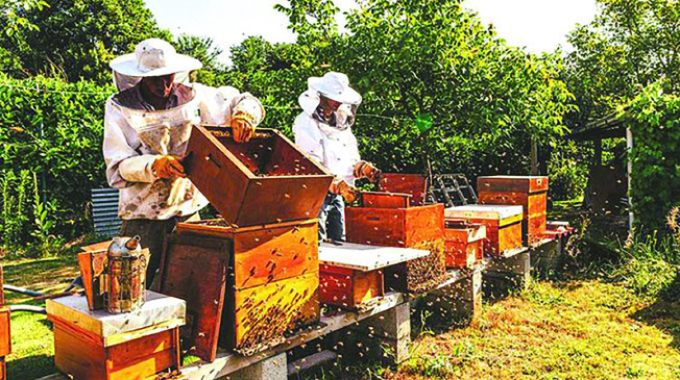
Word From The Market-Tina Nleya
LAST WEEK, we explored how fish farming can be a good way to diversify income for farmers.
As farmers continue to adapt to unpredictable weather patterns and market dynamics, turning to beekeeping as a way of diversifying their activities can be a good option.
The need to diversify is aptly described by the adage “Don’t keep all your eggs in one basket”. With this in mind, beekeeping presents a smart and sustainable way to diversify income.
The demand for raw honey, both locally and internationally, is on the rise. Its appeal as a natural sweetener and immunity booster during cold seasons has created growing markets, while its long shelf life makes it an excellent product for small-scale producers.
Rising demand for
raw, natural honey
Health-conscious consumers are increasingly substituting sugar with honey. Locally, supermarkets, health shops, restaurants and pharmacies are stocking raw honey to meet this demand.
In cities like Bulawayo, informal honey vendors report selling out buckets of organic honey by midday, an indicator of strong urban demand.
Internationally, Zimbabwe’s honey exports remain modest. There is huge potential for raw honey exports.
According to data from TradeMap, leading importers include the United States, Germany, France, Japan and the United Kingdom.
Beekeeping thrives where crops fail. One hive can yield 33-35 litres annually, and with prices averaging US$3,20 per litre for wholesale, and US$4 for a 400ml bottle on the retail market, there is huge potential for substantive profits.
The raw honey market
Honey is naturally antimicrobial; if stored in airtight, clean containers, it does not spoil. This makes it a reliable product for long-term sales and off-season income. There are opportunities in both local and export markets.
Local markets include supermarkets and retail chains like Food Lover’s Market, Pick n Pay, and Spar.
Farmers can also approach restaurants, cafés and pharmacies. Globally, the honey market is booming.
As of 2024, it was valued at approximately US$8,94 billion and is projected to reach US$15,6 billion by 2032.
In 2024, the US alone imported honey worth over US$584 million, followed by Germany at US$228 million.
This clearly reflects growing demand, particularly for natural, organic and traceable honey products. Zimbabwe has the floral diversity and climate to position itself competitively in this space.
Markets like the US, Germany and Japan prize distinctive types of honey such as manuka or wildflower varieties for their flavour profiles and wellness stories.
Quality assurance and traceability can unlock premium prices.
Ethiopia leads Africa in honey production. This is largely due to its community-driven production models and the use of indigenous bee species.
Other notable producers include Tanzania and Kenya.
Zimbabwe can learn from Ethiopia by establishing structured producer groups and focusing on export quality standards.
Practical steps to
start beekeeping
Acquire knowledge and training
Learn safe, modern methods (using bee smokers and protective gear)
Choose the right hive design: Kenyan top bar hives offer better yields and easier harvesting
Start small: Begin with a few hives, monitor performance and demand, then scale up
Harvest safely: Use proper extraction methods to maintain quality
Leverage by-products: Beeswax has value in cosmetics and candles
Packaging and branding
essential to success
Protect quality: Use sealed jars to keep honey pure
Preserve purity: Avoid adulteration
Use good labelling: Clearly state honey type, origin and production method
Build a brand story: Highlight your unique flora or ethical practices
Conclusion
Beekeeping offers Zimbabwean farmers a drought-resilient, low-input income stream. With the right training, quality control, packaging and branding, even small-scale farmers can tap into new revenue paths.
Tina Nleya is the Agricultural Marketing Authority (AMA)’s marketing and public relations manager. She can be contacted on email: [email protected]. Word From The Market is a column produced by AMA to promote market-driven production.



