
Theseus Mauruki Shambare
A family spat escalates into a viral sensation.
A neighbourhood dispute morphs into trending content.
A traditional court ruling — once witnessed only by a handful of villagers — is suddenly dissected by thousands of online spectators across the globe.
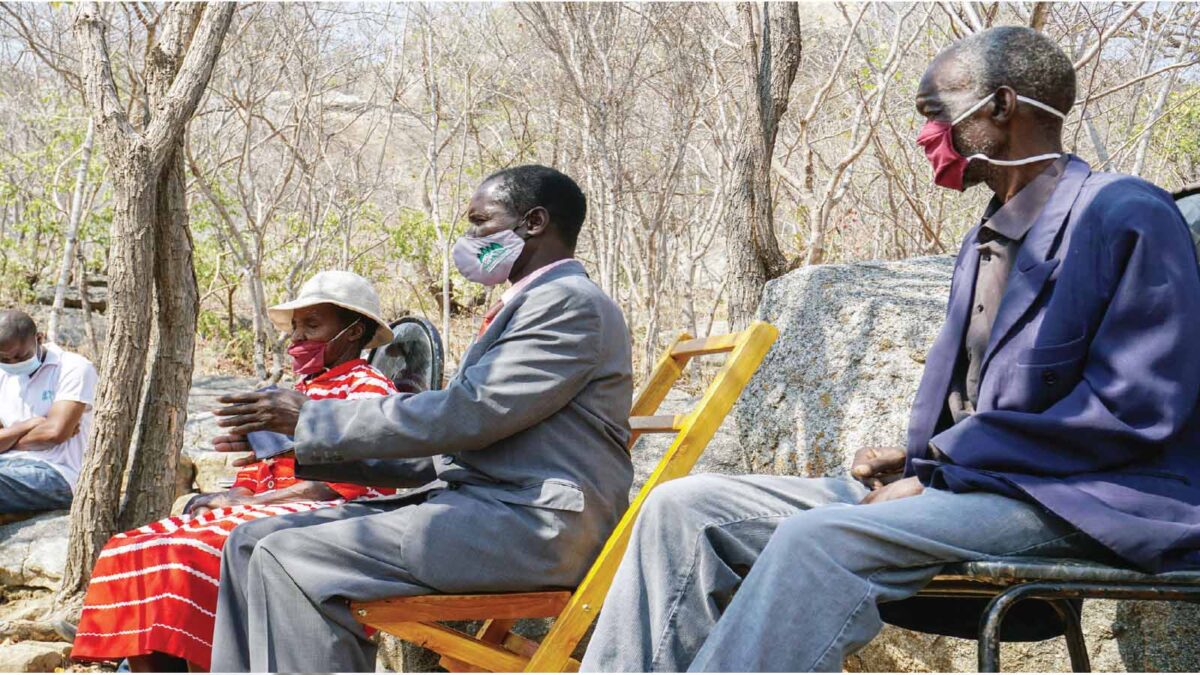
In the age of social media — TikTok, Facebook and WhatsApp — the village chief’s courtroom has acquired a digital gallery far beyond its geographical borders.
But is this sudden visibility fortifying customary justice or is it degrading sacred traditions into cheap public entertainment?
In Manicaland, proceedings involving Joshua Chabodo and Freddy Mwatutsa at Headman Chigodora’s court illustrate both the civic value of documenting traditional justice and the peril of unrestricted recording. The two men, then aged 48 and 46, stood accused of sexually assaulting a 22-year-old married woman living with an intellectual disability.
Footage of the village trial went viral on social media, triggering public outrage.
Exposure of the case naturally promoted law enforcement agents to intervene.
The matter was moved to the formal justice system, where the Zimbabwe Republic Police (ZRP) arrested the suspects.
Appearing before Mutare regional magistrate Pathekhile Msipa, both men were convicted of rape, with Chabodo sentenced to 20 years’ imprisonment and Mwatutsa receiving 17 years. Yet, this high-profile case leaves behind a troubling dilemma: can smartphone cameras expose local wrongdoing and educate the public without simultaneously degrading the dignity of vulnerable victims seeking justice?
Addressing a high-level gathering of Provincial Assemblies of Chiefs, Local Government directors and district development coordinators in Harare, Permanent Secretary in the Ministry of Local Government and Public Works Engineer Tafadzwa Muguti raised concern over the spectacle surrounding trials in traditional courts.
“People are recording things being said in the chief’s court; we should not be allowing cellphones into the chief’s court where cases are being heard in confidentiality,” said Engineer Muguti.
“The moment you start filming cases under ruling, when someone has a problem, they are scared to come because they fear being filmed and appearing on social media. Let us respect the chief’s court . . . why are we now trying to be celebrities by going on social media, recording?”
His comments have reignited a fierce national debate over whether smartphone bans should be enforced in traditional courts to restore decorum and protect judicial integrity.
Between transparency and humiliation
The Zimbabwe Human Rights Commission (ZHRC) has previously raised concerns about recordings of traditional court proceedings circulating on social media.
In its 2025 Human Rights Situation Report, the commission warned that litigants could suffer verbal and emotional abuse as private disputes become public spectacles.
It recommended policies regulating or prohibiting the recording and dissemination of proceedings, alongside public education on privacy and dignity. For someone appearing before a chief over a marriage breakdown, an inheritance dispute or a family disagreement, being filmed could mean having an intimate matter permanently preserved online.
However, Media Institute of Southern Africa (MISA) regional director Dr Tabani Moyo believes a blanket ban could violate constitutional protections.
“Number one, the blanket ban is, of course, in violation of Section 61 and Section 62 of the Constitution. If it is put under Constitutional Court test, I do not think it will pass,” he said.
Section 61 protects freedom of expression and media freedom, while Section 62 guarantees access to information.
He, however, acknowledged there could be exceptions insofar as sensitive proceedings are concerned.
“On a case-by-case basis, a court can limit outright media access to its proceedings, and it needs to define those parameters,” he said.
The distinction highlights that an open court does not automatically translate into unrestricted permission to record and publish everything.
Beyond courtroom decorum, the controversy brings fundamental questions of press freedom and professional ethics into sharp focus, with the Zimbabwe Union of Journalists (ZUJ) cautioning against blanket bans on media coverage.
ZUJ secretary-general Perfect Hlongwane stressed that while journalists must honour ethical standards and respect cultural norms, traditional courts must not impede legitimate reporting.
“Ethics remain ethics — it does not matter where you are or whether you cover your story from the moon or from Mars,” Hlongwane argued.
He further challenged the introduction of separate accreditation by traditional leaders for reporters already recognised by the Zimbabwe Media Commission (ZMC), asserting that “bona fide journalists enjoy clear constitutional protections under Sections 61 and 62”.
Additionally, Hlongwane urged traditional leaders to ensure their security protocols cover press personnel when proceedings turn volatile.
The camera debate
Veteran broadcaster Silvester Tapfumaneyi argues that responsible documentation can make traditional courts instruments of public education rather than platforms for humiliation.
He believes reporting on domestic violence, abuse and harmful conduct can encourage victims to seek assistance while discouraging perpetrators.
“A properly produced educational report may communicate a powerful message: if you are being abused, seek assistance from the appropriate authorities and support services,” he said.
However, he cautions against turning litigants into objects of ridicule.
“Responsible reporting should focus on the conduct, the reasoning, the consequences and the lessons for the community rather than encouraging insults, harassment or online mob justice.”
Tapfumaneyi also sees an opportunity to preserve Zimbabwe’s cultural heritage.
Traditional courts are repositories of customary knowledge, languages, cultural expressions and dispute-resolution practices that could disappear as experienced traditional leaders pass on.
He proposes properly managed audio-visual archives accessible to authorised researchers, universities and cultural institutions. Such an initiative could also create opportunities for journalism, film production, information technology, law and cultural research graduates.
His argument presents a compelling perspective that the camera need not always be a threat to traditional justice.
Properly managed, it could become a tool for preserving it.
Why do modern courts allow cameras?
The debate becomes even more compelling when traditional courts are compared with Zimbabwe’s judicial system.
Selected high-profile proceedings, including cases involving businessman Mike Chimombe and the murder of Tapiwa Makore, have attracted extensive media coverage and courtroom broadcasts.
Such coverage has enabled citizens who cannot physically attend proceedings to follow matters of significant public interest. It demystifies legal processes, educates audiences about evidence and judicial procedures, and strengthens public scrutiny of the administration of justice.
However, cameras in modern courts are not an unrestricted entitlement. Their admission and use remain subject to applicable laws, court rules and judicial discretion, particularly where vulnerable witnesses and sensitive evidence are involved.
This offers an important lesson for traditional courts. If cameras can serve public interest purposes in selected court proceedings, their presence in traditional courts should not automatically be regarded as incompatible with justice.
The central question is how recordings are authorised, managed and disseminated.
Traditional leaders’ views
Traditional leaders themselves are divided on the proposed restrictions.
Chief Chiweshe Mukorekore, born Matthew Chitemamuswe, does not believe recording should automatically be treated as wrongdoing.
“I do not see anything wrong with recording court proceedings, since coming to court means everything is now in public. The problem only arises when journalists mischievously misrepresent facts and sensationalise matters,” he argued.
“Instead of banning recordings, we simply need to ensure everything is done in accordance with the law, protecting whoever needs to be protected.”
Headman Luke Gondo, who serves under Chief Nyandoro in Marondera, also believes technology can reinforce the educational role of customary justice.
“While we adopt and adapt to technology, we need to treat traditional courts with the reverence they deserve,” he said.
“Traditional courts serve to relay cultural lessons and teachings. It is where our ubuntu/hunhu is put to the test and all amends are made.”
Their views suggest that protecting the dignity of litigants does not have to mean shutting traditional courts away from public scrutiny.
Courtroom control
The debate also carries a constitutional dimension. Section 20(3) of the Customary Law and Local Courts Act provides for cases in local courts to be heard in open court, subject to the Courts and Adjudicating Authorities (Publicity Restriction) Act.
A prominent lawyer and former legislator also noted that “In terms of Section 282(3) of the Constitution, traditional leaders are not subject to the control of any person or authority”.
Meanwhile, Engineer Muguti indicated that the Government is facilitating amendments to the Traditional Leaders Act to strengthen disciplinary structures within traditional leadership institutions.
“Because of this, we are now actively facilitating amendments to the Traditional Leaders Act,” said Eng Muguti.
Still, the legal basis and precise scope of the proposed restrictions require clarification. Public reaction has been equally divided. Facebook user Boneless Mupanda criticised what he viewed as a growing trend of turning chiefs’ courts into content-production platforms.
“Machief anga atova macontent creators . . . kumwe kutongwa kwacho anga atova manyemwe. (Some chiefs had become content creators, playing to the gallery in their presiding).”
Conversely, others feel there is need for proper legislation to deal with the issue of filming or broadcasting traditional court proceedings.
“There is no need for an entire ban; we just need clear guidelines and protecting the vulnerable. Those that film proceedings at the courts must be professional and accredited.”
Another Facebook user, Reuben Chikamveka, defended open traditional courts, arguing that communities should be allowed to learn from proceedings.
“Ayo ma open court regai vanhu vadzidze (Let people learn from the open courts).”
While these comments do not constitute a scientific public opinion survey, they reflect the competing expectations surrounding traditional justice.
Finding the balance
Zimbabwe does not necessarily have to choose between transparency and privacy.
A regulated framework could distinguish between public attendance, journalistic reporting, official archival recordings and unrestricted online publication.
It could establish safeguards for cases involving children, sexual offences and vulnerable litigants, while providing clear procedures for authorised recording and footage access.
Crucially, restrictions must not become convenient tools for concealing misconduct or shielding institutions from legitimate scrutiny.
The Chigodora case demonstrates why documentation can serve the public interest, while the ZHRC’s concerns highlight why those appearing before the camera must not be forgotten.
The experience of modern courts shows that cameras, when properly regulated, can enhance public understanding and confidence in the judicial process.
Ultimately, a chief’s court exists to resolve disputes, restore relationships and uphold community values — not to produce the next viral video. In the digital age, the real test is whether Zimbabwe can embrace the camera without losing its humanity.