

 admin
admin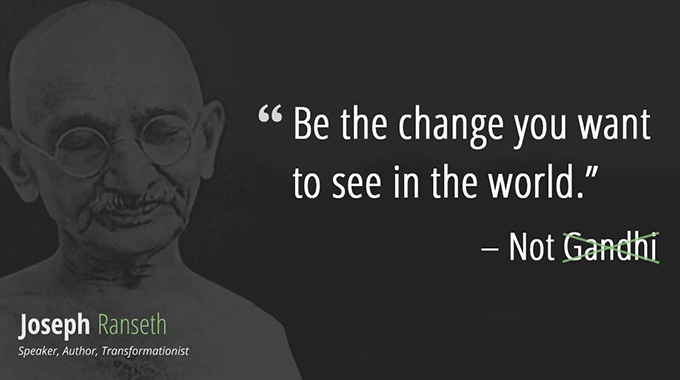
Flora Teckie Correspondent
We start a new year with new resolutions, new hopes and dreams for change, and for the betterment of our families, communities and humanity.
The betterment at home and in the world starts with you and me — by being the change we want to see.
There is, obviously, need for fundamental change — change in moral values, in the way we relate to one another and in our sense of responsibility for the well-being of others.
Change in moral values, in the Bahá’í view, is achievable through maintaining a balance between the spiritual and material aspects of our lives, while allowing our spiritual nature to take control. It is possible when spiritual progress keeps pace with material advancement.
We can each contribute to making the world a better place through focusing attention on spiritual transformation and the development of our spiritual capacities.
Through the acquisition of moral and spiritual virtues, we can effect transformation in ourselves, our families and our communities.
Bahá’u’lláh, the founder of the Bahá’í Faith states that “The betterment of the world can be accomplished through pure and goodly deeds, through commendable and seemly conduct”. He places emphasis on purity of intention and sincerity when we perform good deeds. Because that is when the greatest results can be achieved.
Moral maturity comes from spiritual awareness, and the moral code that has transformative power for action originates from the guidance given to us by our Almighty Creator.
And of course, the need for a sustained effort to develop our spiritual capacities cannot be overemphasized.
According to the Bahá’í Writings: “One can hardly imagine what a great influence genuine love, truthfulness and purity of motives exert on the souls of men. But these traits cannot be acquired by any believer unless he makes a daily effort to gain them”.
Changes at individual and collective levels
In order to be the change we want to see, there is a need to try and be a social actor, who, having effected change in himself or herself, also feels the responsibility of contributing towards the transformation of the social order.
Such responsibility, however, should be towards the human race, and not only towards one’s own race, ethnic group or religion.
Bahá’u’lláh says:
“Let your vision be world-embracing, rather than confined to your own self”, and “Do not busy yourselves in your own concerns; let your thoughts be fixed upon that which will rehabilitate the fortunes of mankind and sanctify the hearts and souls of men.
This can best be achieved through pure and holy deeds, through a virtuous life and a goodly behaviour”.
There are spiritual principles by which solutions can be found for global problems. Decency and integrity of individual and collective conduct; belief in the oneness of humanity; and the practice of consultation in a spirit of unity, are some of these principles.
Belief and practice of the principle of the oneness of humanity will provide a unifying vision and the foundation for a new system of values.
When we, as individuals, see ourselves as members of one human family, sharing one common global homeland, we will be able to commit ourselves to the far-reaching changes, on both individual and collective levels, which an interdependent and rapidly changing world necessitates.
Reflection of belief in actions
Our belief in the Almighty God should reflect in our actions. It should reflect in treating every member of our family, our community or humanity equally and with love and respect.
According to the Bahá’í Writings: “… true faith is no mere acknowledgement of the unity of God, but rather the living of a life that will manifest all the perfections and virtues implied in such belief”, and ” true spirituality is like unto a lake of clear water which reflects the divine. … There is another kind which is like a mirage, seeming to be spiritual when it is not. That which is truly spiritual must light the path to God, and must result in deeds. We cannot believe the call to be spiritual when there is no result”, and that “Every progress depends on two things, knowledge and practice. First acquire knowledge, and, when conviction is reached, put it into practice.”
Our heart is like a mirror that is capable of reflecting spiritual qualities.
The same way a mirror needs to be cleansed from dust before it can reflect the rays of the sun, so the mirror of our heart needs to be cleansed from ego, and from harmful passions and desires, such as envy, hatred and malice, which hinder our spiritual growth and development.
As we set new resolutions for the New Year, let us have the determination and perseverance to carry them into action.
As we refresh our physical lives for the new year, let us also beautify and adorn our souls.
Bahá’u’lláh says: “Beautify your tongues, O people, with truthfulness, and adorn your souls with the ornament of honesty. Beware, O people, that ye deal not treacherously with any one. Be ye the trustees of God amongst His creatures, and the emblems of His generosity amidst His people.” He further emphasises “Let deeds, not words, be your adorning!”
◆ For feedback please contact: [email protected] or [email protected] mailto:[email protected]
Website: www.bahai.org http://www.bahai.org



 Online Reporter