

 Chronicle Editor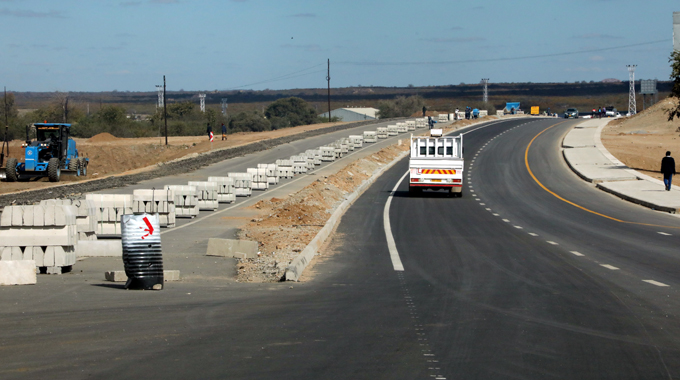
Business Reporter
FINANCIAL services institution Stanbic Bank Zimbabwe says the Beitbridge-Chirundu Highway upgrading project, which is being implemented by the Government is impacting positively on the economy through job creation and boosting incomes for rural communities.
The project is being rolled out under the country’s Road Development Programme and the Emergency Roads Rehabilitation Programme (ERRPII) and has created job opportunities for businesses and scores of locals in surrounding areas.
Government has said the rehabilitation works are progressing well and is focused on meeting set targets with the Treasury allocating an additional amount of $33,2 billion in the Mid-Term Budget Policy Statement to enable completion of 100km during the year 2022.
Harare-Masvingo-Beitbridge Highway widening, reconstruction and rehabilitation project is one of the top priorities and so far, 326,9km out of the target of 520km have been done.
Completed portions have also been opened to traffic of which 51,9km was done during the period January to June 2022, recent Government reports show.
Stanbic Bank Zimbabwe chief executive, Mr Solomon Nyanhongo, said as part of support for its customers they were also disbursing funding towards financing of national projects such as roads and health facilities.
Some of the availed funds went towards purchase of additional road construction equipment and working capital to fulfil Government’s road rehabilitation programme, which will improve the efficiencies with which goods and services are transported within Zimbabwe and into the region, he said in a statement accompanying the bank’s financial results for the half-year ended 30 June 2022.
“The repaving of the Beitbridge-Chirundu Highway, which is the main trade facilitation route between Durban, South Africa and the Northern countries — Zimbabwe, Zambia and DRC — is providing employment to communities around the project thus improving rural incomes,” said Mr Nyanhongo.
When complete, the highway is expected to have eight toll plazas and result in increased and more efficient movement of cargo and passenger travel for the benefit of Zimbabwe and the entire Sadc region.
Projected to cost US$650 million, the project is key towards attainment of Vision 2030, which seeks to transform the country into an upper middle-income economy.

The project is being undertaken by five local companies and is wholly funded by the Government. The companies are Bitumen World, Fossil Contracting, Masimba Construction, Exodus and Company and Tensor Systems.
“Stanbic disbursed facilities amounting to US$100 000 for the purchase and installation of MRI machines in public hospitals, which will go a long way in alleviating the shortage of radiology services in the country,” said Mr Nyanhongo.
He said Stanbic has also provided funding in the form of a letter of credit facility to an electrical company to support development of the Green Economy (Renewable Energy and Water Management). The project is of national importance as it will improve the availability of piped water in the country.



 Blessing Chizhande
 Online Reporter