Online Reporter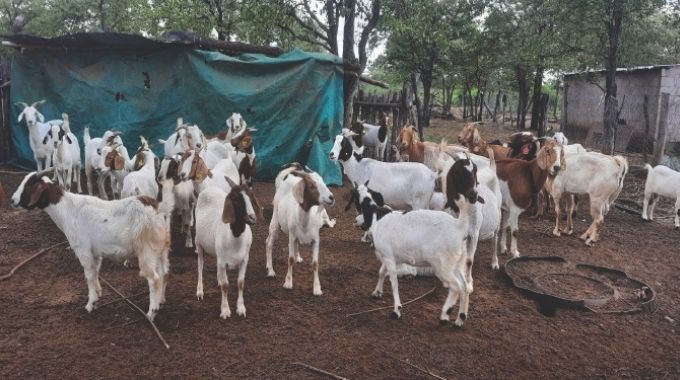
Thupeyo Muleya, [email protected]
A quiet but significant shift is taking place in Beitbridge’s communal areas, where farmers are moving away from keeping goats mainly for cultural purposes and prestige, and are instead beginning to treat goat rearing as a serious business.
This change is slowly transforming livelihoods across the district. Families are no longer keeping goats simply for ceremonies or status, but are now using them as a reliable source of income, food and financial security. As a result, communities are starting to benefit from improved nutrition, better incomes and growing economic activity in rural areas.
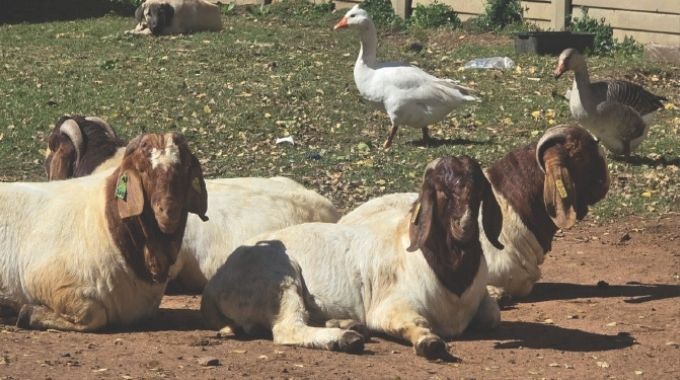
The transition is being driven in part by the Department of Agriculture Extension Services (Agritex), working with support from the Zimbabwe Resilience Building Fund (ZRBF). Together, they are training livestock farmers to adopt high-value goat breeds such as Boer and Kalahari Red, which grow faster, fetch better prices and are better suited to dry conditions.
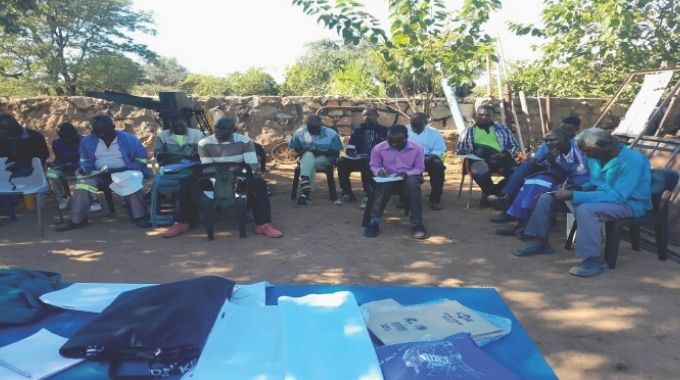
Between 11 May and 10 June this year, Agritex rolled out training sessions under the “Goat Production Management System” programme. The initiative reached an average of 23 farmers at each Farmer Learning Centre in Wards 3, 5, 7 and 12, with strong attendance reported across the district.
Agritex livestock specialist for Beitbridge, Ms Cecilia Chakanyuka, said the response from farmers had been encouraging, with many showing interest in improving how they manage their herds.
“Farmers are learning how to manage breeding, feeding, health and marketing. High-value breeds give bigger carcasses and mature faster. Even a 4-month-old Boer cross can sell for more than an adult local goat,” Ms Chakanyuka said.
She said farmers were being encouraged to start preparing early for the winter season, which can be harsh on livestock in dry regions such as Beitbridge.
“Also stock pods from nearby bush to feed goats during the lean season. ZRBF will assist with building model sheds at goat farmer learning centres and create model fodder fields there,” said Ms Chakanyuka.
Under the programme, model goat shelters and fodder production plots are expected to be established at Farmer Learning Centres. These sites will act as practical demonstration units where farmers can learn how to properly house and feed their goats during dry periods.
Ms Chakanyuka said Beitbridge already has a large population of indigenous Matabele goats, which are hardy but small in size. The programme aims to improve these through crossbreeding with exotic breeds.
She said the ZRBF project would supply Boer bucks (male goats) to act as breeding stock within communities.
“The training also targeted traditional and other community leaders, so that there is a whole of community approach. The idea is to create model centres and centralised places where community members may be able to sell their goats to better markets at one place just like what happens with cattle farmers.
“In addition, the creation of fodder fields of gardens helps boost stock feeds during the lean season between now and August. At the same time, we are creating better market linkages for the communal farmers so that they get value for their livestock to boost the rural economy”.
She said these interventions are meant to help farmers see goat rearing as a business that requires planning, investment and proper management, rather than as a side activity.
She emphasised that the model sheds and fodder fields would demonstrate simple and practical ways of protecting goats from harsh weather and ensuring they have enough feed during drought periods.
Ms Chakanyuka noted that high-value goat breeds are opening up better market opportunities for farmers and improving returns.
Crossbreeding Boer and Kalahari Red bucks with local Matabele does produces stronger animals. These crossbreeds combine the fast growth and large body size of exotic breeds with the disease resistance and drought tolerance of indigenous goats.
“The future of Beitbridge livestock is business, not just tradition,” she stressed.
For many years, communal farmers in Beitbridge kept goats mainly for cultural purposes such as marriages, ceremonies and social obligations. In some cases, owning large numbers of goats was a sign of status within the community.
However, changing weather patterns, particularly repeated droughts and low rainfall, have forced farmers to rethink their approach. Crop farming has become increasingly difficult in the district, which lies in Natural Region Five — the driest region in Zimbabwe.
On average, Beitbridge receives far less rainfall than what is required for reliable crop production. While about 400mm of rain is needed for viable cropping, the area experiences severe rainfall shortages, with frequent dry spells and poor harvests.
As a result, many farmers have shifted their focus to livestock production, especially goats, which are more resilient in harsh conditions.
The district is estimated to have about 220 000 cattle, 200 000 goats, 90 000 sheep and 40 000 donkeys. However, successive droughts in recent years have severely reduced cattle numbers, making goats an even more important asset for rural households.
Development worker Mr Enock Kwinika said the shift towards improved goat production is already beginning to pay off for farmers who have adopted new breeds and better management practices.
“These goats are bigger than traditional goats. Even if you sell 4-month-old kids, you get more money than selling an adult traditional goat,” he said.
Chairperson of the Goat Breeders Association of Zimbabwe (GBAZ), Mr Ntandoyenkosi Ndhlovu, who is also an agricultural economist, said crossbreeding was helping to increase both meat and milk production.
“These new breeds fetch better money on the market and their growth rate is faster and they are drought tolerant,” Mr Ndhlovu said in an interview recently.
He said the rising demand for goat meat, both locally and regionally, is also helping to drive interest in improved goat farming.
What is emerging in Beitbridge is a gradual transformation of the rural economy. An area that once struggled with declining cattle herds and limited agricultural productivity is now beginning to show signs of growth, driven by new ideas and farming methods.
Many families still rely heavily on agriculture for their livelihoods, but they are now adopting a mix of approaches to cope with climate challenges. These include small-scale irrigation schemes powered by solar energy and drip systems, which allow farmers to grow crops even in dry conditions.
Despite these efforts, livestock farming, particularly goats, cattle and sheep, remains the backbone of the economy in Beitbridge.
The ongoing shift from traditional goat keeping to commercial production is therefore not just about changing farming methods. It represents a broader adjustment to climate change, economic pressure and new market opportunities.
If sustained, this shift could help build more resilient communities, improve incomes and strengthen food security in one of Zimbabwe’s driest regions.