Online Reporter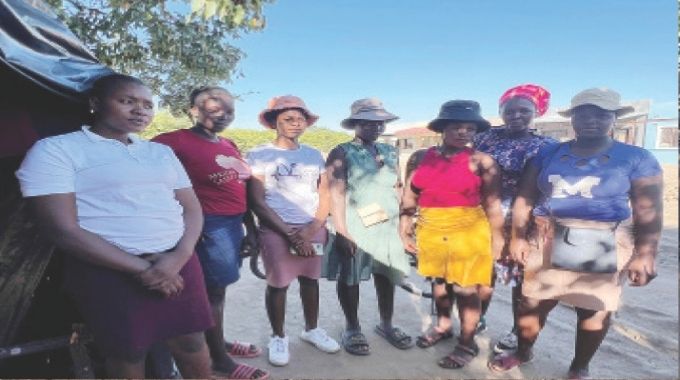
Sukulwenkosi Dube-Matutu, [email protected]
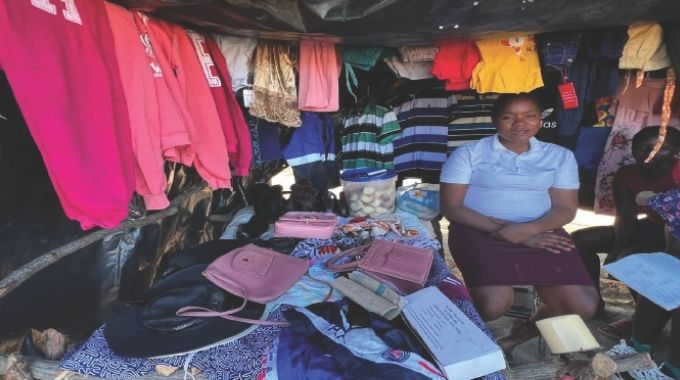
ON any given afternoon, the air at Simphane Business Centre in Ward 4, Matobo district carries the scent of warm scones and ambition. Behind a makeshift stall stacked with second-hand jeans and dresses, 22-year-old Lethukukhanya Mlilo counts change, while two younger girls pull trays of golden scones from a small gas oven.
This is Hloniphani Group – 10 teenage girls and young women aged 15 to 25 who resolved that their bodies and futures would not be traded for R50.
In a rural district where poverty and limited opportunities often push young women into transactional sex, they chose entrepreneurship, sport and sisterhood instead.
The group’s journey began last year with a simple contribution. They are beneficiaries of Sista2Sista, a programme implemented by the National AIDS Council (NAC) targeting adolescent girls and young women.
This peer-led model creates safe spaces where girls meet weekly with trained mentors to discuss sexual and reproductive health, financial literacy, gender-based violence and life skills.
After a year of training, graduates become peer mentors themselves, cascading knowledge to 50 more girls.
Matobo district has recorded a decline in HIV prevalence from 12.2 percent in 2020 to 10.4 percent in 2024 as NAC intensifies HIV intervention programmes in the area.
“We started off by contributing R50 each over two months and raised R1 800,” says Ms Mlilo, chairperson of Hloniphani Group.
“We used the money to buy kit for our netball team and entered our first competition. We won some money.”
That small victory was the seed. The tournament winnings were reinvested.
The group bought their first stock of clothes worth R2 300 and set up a stall at the local business centre.
“From there we decided to venture into baking. We buy ingredients and bake scones. Introducing the bakery project also gave some of our members the chance to learn how to bake,” Miss Mlilo said.
Today the stall displays neatly folded clothes, and at weekends the aroma of scones draws customers from as far as Maphisa Growth Point. Profits are not hoarded.
“We also share the profits to cater for our basic needs such as sanitary wear. We are able to assist our parents and guardians financially,” said Miss Mlilo.
For girls in a community where sanitary pads are often a luxury, that sharing is dignity.
The group’s newest venture is poultry. Using profits from clothes and scones, they recently bought 50 day-old layer chicks.
Miss Mlilo said they look forward to producing eggs that will provide a daily income stream and teach them animal husbandry, record-keeping and patience.
So far, they have managed to buy kitchen utensils from the money.
“Each project builds on the last. Netball taught us teamwork and discipline, while the clothing project taught us stock control and customer service.
“Now the baking venture has taught us production and timing, and poultry is teaching us investment and long-term planning.
“We want our project to serve as a reliable source of income for members and to incorporate more girls,” said Miss Mlilo.
Behind the business lies a harder truth. Many girls in Simphane drop out of school early and, without income, become vulnerable to older men who offer cash for sex – a practice known locally as transactional sex.
The health consequences are immediate: HIV, STIs, teenage pregnancy, school dropout.
Miss Langelihle Moyo, 24, a mother in the group, said the motivation to embark on these projects came from the education they acquired through Sista2Sista.
She said they had been taught the importance of being economically empowered as adolescent girls and young women.
“Some among us are school dropouts and if we don’t have any source of income we may be influenced by men who have cash. They can give us money to buy basics in exchange for sex. This puts us at risk of HIV, STIs or falling pregnant,” said Miss Moyo.
She emphasised that their stall and oven were not just business tools but shields.
Another 16-year-old member said she dropped out of school two years ago and once felt she had no options.
“I have learnt a lot from interacting with my age mates and older ladies in the group. I have been equipped to take charge of my life and escape sexual exploitation,” she said.
She now keeps the group’s sales notebook and dreams of enrolling in a tailoring course.
Matobo’s District AIDS Coordinator, Mr Lawrence Ncube, said they had heightened awareness programmes and engaged community and traditional leaders to change behaviour and attitudes towards HIV testing and treatment.
Interventions include Sista2Sista and Behaviour Change Community Motivation (BCCM), among others.
He said the district’s adult population aged 15 and above living with HIV stands at 9 638, with antiretroviral therapy coverage at 93.38 percent.
“There was a noted HIV incidence decline from 2020 to 2024. This decline may suggest improvements in public health initiatives, increased access to treatment, or effective prevention strategies within the province. Continued efforts will be important to maintain this downward trend,” said Mr Ncube.
He highlighted that HIV incidence among people aged 15-49 had declined to 0.18 percent, while AIDS-related deaths stood at 172 in 2024.
Mr Ncube attributed the drop in prevalence and incidence to improved access to healthcare, expanded ART services and community health interventions.
Despite the gains, he warned that strong traditional cultural norms still limit women’s decision-making power on health and safe sex.
“Our district’s economy is driven by irrigation schemes, ARDA projects, livestock and small-scale gold mining. At the moment, strong traditional cultural norms often limit women’s decision-making power, including on health and safe sex,” added Mr Ncube.
He also mentioned that rising teenage pregnancies, girl child school dropouts and child-headed families, largely linked to migration and poverty, remain major concerns.
Mr Ncube added that high mobility around transport hubs was increasing exposure to STI and HIV transmission, while drug and substance abuse among youth was heightening vulnerability to risky sexual behaviour.
“As NAC we are doing our best as we drift towards Vision 2030. We will continue with sustained community engagement, targeted youth interventions and stronger involvement of traditional leaders, which are key to maintaining progress and reducing new infections in the district,” said Mr Ncube.
Matabeleland South’s NAC manager, Mr Mgcini Sibanda, said adolescent girls and young women are among populations most at risk of HIV infection.
“Our efforts are to reach key populations with an evidence-based package that addresses their individual vulnerabilities. We have the Sista2Sista model targeting adolescent girls and young women,” he said.
Mr Sibanda said Sista2Sista does not stop at health education. It deliberately adds economic empowerment, noting that poverty is a driver of risk.
“The programme has helped to cover a huge gap that existed in limited knowledge of HIV-related issues, STI education, sexual and reproductive health and economic empowerment,” he added.
The girls’ efforts, he said, were complemented by the BCCM, which targets young men and boys.
“These programmes complement each other because these young girls get involved with these males,” Mr Sibanda explained.
He said the BCCM promotes responsible behaviour, encourages HIV testing, and challenges harmful masculinity. The logic is simple: you cannot protect girls if you ignore the boys they date.
In Simphane, that dual approach of visible economic empowerment has given adolescent girls and young women a voice.
The group also challenges stigma. In rural communities, young women who run businesses are sometimes mocked as too forward.
The Hloniphani group answers by showing results. They pay school fees for younger siblings, buy mealie-meal for elderly guardians, and wear their netball kits with pride, even when the kits are faded. Success, for them, is not measured in millions but in choices.
Follow on X: @DubeMatutu