Online Reporter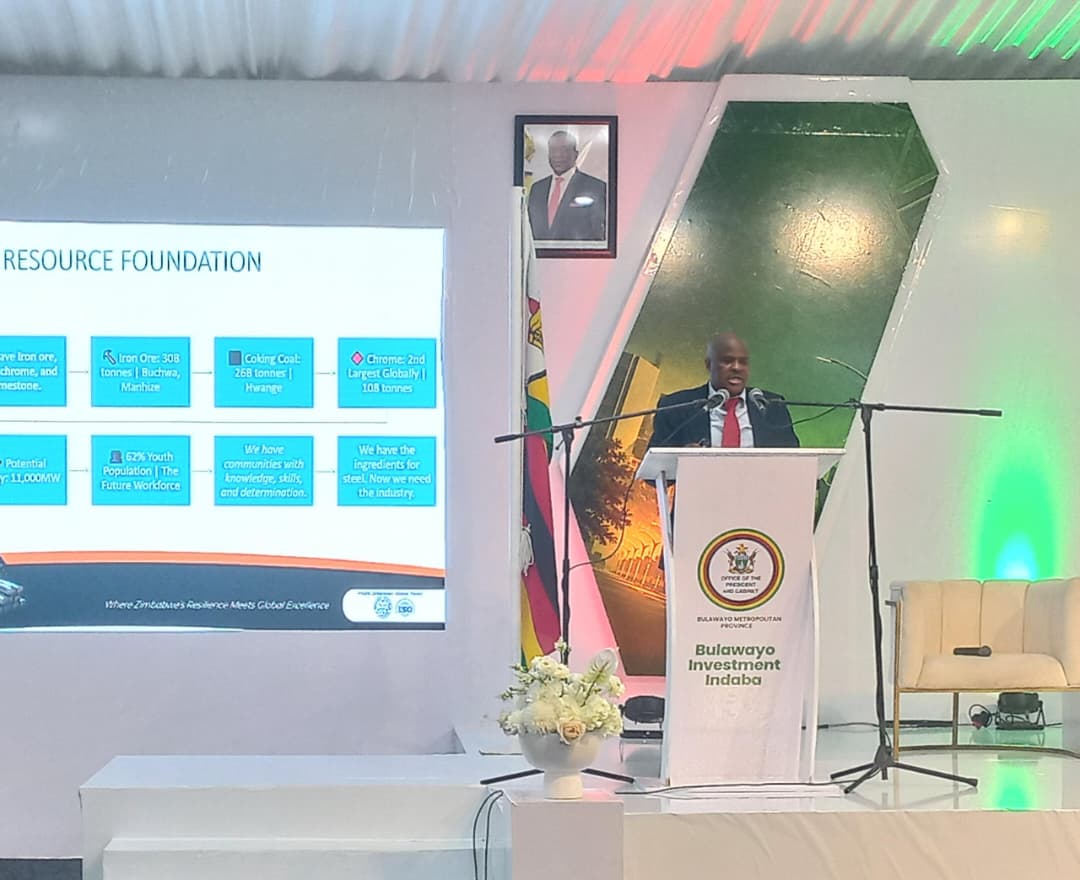
Judith Phiri [email protected]
DINSON Iron and Steel Company (DISCO) has said beneficiation of minerals is key to unlocking value for industrialisation through the development of strong downstream industries.
DISCO is a subsidiary of Tsingshan Holding Group of China, one of the world’s largest stainless steel producers. It is an integrated steel plant located at Manhize near Mvuma, equipped with a carbon steel plant and an iron ore mine with the capacity to produce tonnes of iron and steel products per year.
Speaking at the Bulawayo Investment Indaba on Thursday, Dinson Iron and Steel chief project manager Mr Wilfred Motsi, who was representing chief executive officer (CEO) Mr Benson Xu, said the company believes processing minerals locally, rather than exporting them in raw form, will enable the country to maximise returns from its natural resources.
“This also creates employment, reduces reliance on imports and strengthens domestic manufacturing. Zimbabwe has never lacked resources but local beneficiation is what is important. We have steel, what will we make with the steel?” he said.
He said steel production was key to industrial transformation and unlocking downstream manufacturing opportunities in Zimbabwe.
Mr Motsi said the company continued to expand its plant through the acquisition of new machinery for value addition and beneficiation, while looking forward to working with Bulawayo, which has facilities and market linkages through its road network.
He said: “We produce a variety of iron and steel products, including pig iron, steel billets, reinforcing bars (rebars), wire rods, round bars, steel balls, coke, and electricity pylons, among others, while we have also set up a 50 megawatt (MW) power plant to achieve energy self-sufficiency and decrease the company’s dependence on the national grid.”
Mr Motsi said the project was in line with Zimbabwe’s Vision 2030, launched by the Second Republic under President Mnangagwa, which aims to transform the country into an empowered and prosperous Upper Middle-Income Economy by 2030.
He said the company was contributing to the National Development Strategy 2 and was also aligned with Government policies, particularly the thrust towards rural industrialisation.



 Bongani Ndlovu