admin
admin
Herald Correspondent
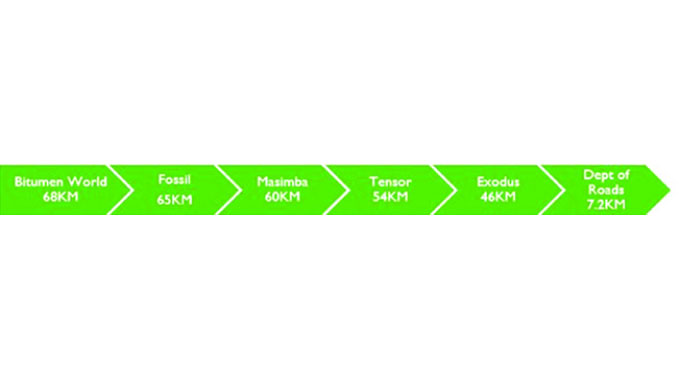
Transport and Infrastructural Development Permanent Secretary Engineer TK Chinyanga this week announced that rehabilitation and upgrading of the Harare-Beitbridge Highway is 60 percent complete.
Sections totalling 300km are open to traffic against the 500km yearend target.
Allocation of 20km phases have allowed each construction company to define its best capacity
The highway is among the projects expected to be completed with funding from the Zimbabwe National Road Administration’s recently announced a budget of $17 billion and other funding sources under Emergency Road Rehabilitation Programme (ERRP2).
Zimbabwe’s ambitious plan to reclaim roads that were declared a state of disaster is a growth curve that is benefitting the nation in various ways.
This article explores six of them.
Experience
Wisdom says experience is the best teacher. In every field, there is a very marked nuance between textbook learning and practical application.
Being the first time that local engineering companies have taken on a job of this magnitude, it is inevitable that there have been many lessons learnt.
This is a good thing as it means the country is building a solid base of experienced individuals who can be relied on for invaluable skills and knowledge on future projects.
The intrinsic and outright monetary value of institutional knowledge being gained each day cannot be overstated.
Forex saving
Prior to the decision to contract local players, the Government of Zimbabwe was paying road contractors in foreign currency.
With localisation of roadworks and payment in local currency, this has eased pressure on forex currency.
This means more can be done at any given time as shown by the magnitude of the roadworks.
Economy stimulation
The injection of capital at local level into roadworks has resulted in benefits upstream and downstream of the construction industry.
Local manufacturers and distributors of various equipment and consumable products used in construction have benefitted from increased demand.
Downstream, accommodation and portable toilet service provision are two examples of business opportunities created.
Faster progress
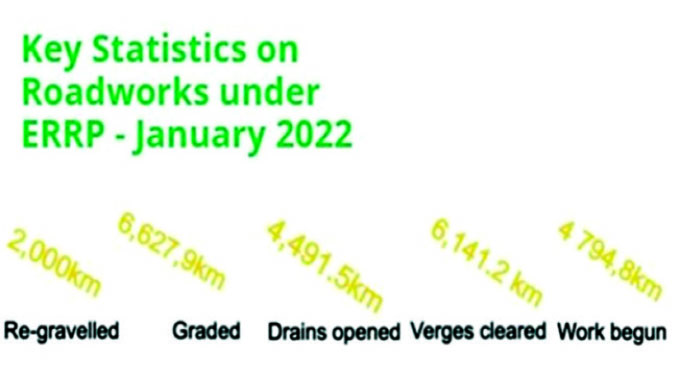
Roadworks are going on at a pace not experienced before in the country
While the issue of resource marshalling remains a challenge that Government of Zimbabwe has to constantly overcome, payment of contractors in local currency has made things much easier.
As a result, progress on the roadworks all over has been much faster than previously ever experienced in the country.
Also because of the system of allocating jobs in manageable bytes that must be completed and inspection passed for a contractor to earn the next lot, there is self-generated urgency to work fast and well.
Domestic capacity building
Local construction companies have had to grow in order to rise to the challenge presented to them.
It is worth noting that while big players with capacity to bid for projects get the tenders, they subcontract work to smaller contractors, thus ensuring that all organisations in the industry get a chance to play their part.
Equipment procurement is one area where marked progress has been seen in the industry.
In addition, the human capital base is also improving rapidly as industry workers gain practical experience and acquire new skills.
Zimbabwean construction players are being positioned to compete with international players for jobs in the region as few other countries have the capacity that is being created.
Employment creation
At a time when the world over, most college graduates are facing stiff challenges in finding jobs, Zimbabwe has been in worse circumstances than most.
With the industry boom created by the massive roadwork contracts, the civil engineering field and related sectors are offering much increased opportunities for college graduates and experienced staff.
Fossil Contracting now has a staff headcount of almost 900.
Bitumen World has a minimum of 700 employees at any given time with numbers going up depending on current projects.
Tensor, Masimba and Exodus all have head counts in the hundreds.
Other players also have significant employee figures. The industry has created hundreds of new jobs with hiring happening all the time.
The downstream and upstream industries are also increasing capacity to meet the rising demand.
Conclusion
The awarding of contracts to local players has not been without its challenges.
There are certainly lessons that have been learnt. But benefits accruing to the nation are many and of high impact indeed.
While there is still a lot of work still to be done on the roads, there is discernible progress to be seen all over.
The construction companies have also been very active corporate citizens with social responsibility programs like education funding, borehole drilling and other interventions meaningfully impacting on communities.
Construction sector players were a significant part of the corporate response to the Cyclone Idai tragedy.
Other players also have significant employee figures.
The industry has created hundreds of new jobs with hires happening all the time.
The downstream and upstream industries are also increasing capacity to meet the rising demand.



 Online Reporter