Online Reporter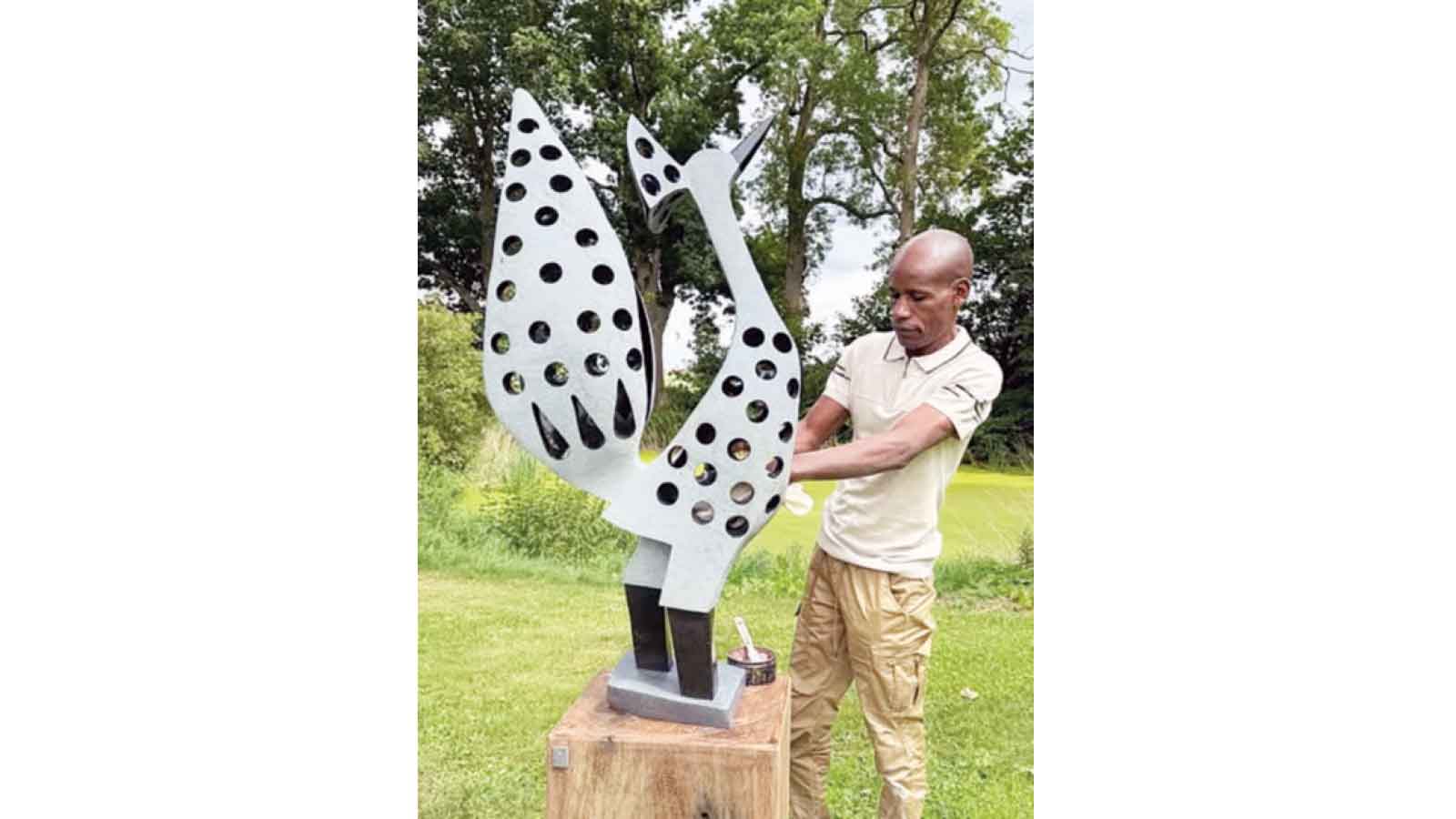
Trust Khosa-Zimpapers Arts and Entertainment Hub
ACCLAIMED sculptor Dominic Benhura, who has exhibited and auctioned his artworks across the US and much of Europe, is spreading tentacles into the Asian market.
Already, he has won the hearts of Asian art collectors, including Chinese President Xi Jinping, who has bought two of his pieces.
This remarkable endorsement from President Xi Jinping is not only a remarkable achievement for Benhura, but also a boost for the creative community that has been craving recognition. With artists of Benhura’s calibre exploring new markets, this shift is encouraging, especially as many sculptors have shifted away from traditional techniques.
Some have transitioned to designing tombstones or headstones, while others are now mining granite to create modern kitchens.
A few, like David Ngwerume and Benhura, continue to make an impression through their impactful connections and collaborative efforts. The rest have fallen by the wayside, as they used to target tourists visiting our shores. However, the low influx of tourists has left them stranded, with some moving away from sculpting.
Benhura, a multiple award-winning advocate of Shona sculpture, has emerged as a game-changer. He starred in the documentary “Zimbabwe-China Relations @45,” released last week by a local think tank, where he shared how he has managed to penetrate China, a country with a population exceeding 1.4 billion. Being the second-most populous country after India, China represents 17 percent of the world’s population, and Benhura sees potential in this market.
“As you know, the President of China, His Excellency Xi Jinping, has two of my pieces,” he shared with the documentary producer. The pieces in question were given to the Chinese leader as gifts.
In a statement, Benhura continued: “After the President’s gifts, I created additional pieces that were presented to various Chinese officials. I received significant coverage from Chinese journalists stationed in different parts of Africa; they all came here for interviews and features in numerous platforms and newspapers. As a result, I have gained many friends and clients from China.”
Almost 50 years after breaking onto the scene and becoming one of Zimbabwe’s globally recognised cultural figures, the internationally acclaimed Benhura has exhibited in China in recent years, including at the 9th Beijing International Arts Biennale held in 2022, which promotes global harmony through contemporary artwork exhibitions featuring over 5,000 artists from 114 countries.
Benhura’s new strategic focus on the Chinese market represents a transformative shift for the arts industry, building on strong bilateral ties, cultural exchange, and people-to-people interactions. The National Arts Council of Zimbabwe’s CEO, Napoleon Nyanhi, revealed that Zimbabwe and China are widely cooperating in arts and cultural ex-change, noting that many opportunities exist to transform the local sector.
“The National Arts Council of Zimbabwe has been at the forefront of facilitating exchange programmes for young people, artists, and practitioners with their Chinese counterparts,” Nyanhi stated. “These exchange programmes have significantly benefited our artists in the country.”
He noted that China, through its cultural department, has also sponsored DreamStar over the years.
This programme is a nationwide talent search competition that show-cases and empowers young Zimbabwean creatives in fields such as music, dance, and beat-boxing. It exemplifies close cultural collaboration between the two countries, with winners receiving prizes, recording contracts, and opportunities to tour and showcase in China.
The talent show has unearthed many talented Zimbabweans in the arts sector, including the award-winning Afro-contemporary musical group, Fusion 5 Mangwiro.
Ruzivo Media & Resource Centre team leader and documentary producer Tichaona Zindoga said: “This arts and cul-tural exchange highlights the important, yet sometimes overlooked, aspects of relations between Zimbabwe and China. Art and music are universal languages that have the potential to unite people and deepen friendships. It is in the interest of stakeholders to invest in this to promote camaraderie between Zimbabweans and the Chinese, especially among the younger generation.”
According to his biography, Benhura is one of Zimbabwe’s most decorated contemporary sculptors within the Shona sculpture art movement. In 2003, he met Nelson Mandela when one of his sculptures, “Swing Me, Mama,” was installed in a display commemorating the former South African president in Johannesburg. Born in Murewa, Mashonaland East, in 1968, he moved to Harare in 1980 to attend secondary school, where he stayed with his uncle, Sekuru Gutsa, and his cousin, Tapfuma Gutsa, who was already a well-known young sculptor.
The two Gutsas introduced Benhura to stone sculpture, propelling him to international acclaim.