Online Reporter
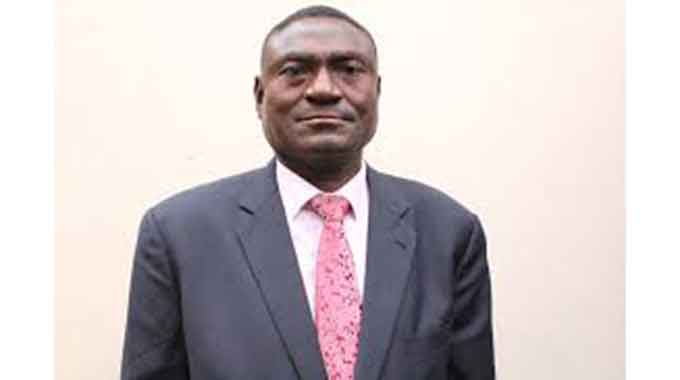
FRANCIS Zimunya does not rate himself among the best players of his era but says there was greatness all around during his career.
He is of the view that better football was played in the yesteryear and feels strongly about Zimbabwe’s poor ranking in the Fifa rankings.
In a wide-ranging interview on Friday evening about his football journey, Zimunya, who coached several teams and worked with some of the biggest names in the local game, believes Peter Nyama and Paul Tsumbe have been the country’s best strikers.
“Shaky Tauro and other guys were very good, but these two were exceptional talents. They were streets ahead and ranked at the top there.
“They did everything a striker had to do and probably packed the hottest shots any goalkeeper could want to face,” said Zimunya, who has worn many hats in the game.
A goalkeeper from his formative years in Chivhu right through to Kadoma, where he grew up. He proceeded to St Francis Secondary School, still showcasing outstanding talent between the goalposts.
At secondary school, he was able to play for an amateur team.
His biggest achievement was being named the best goalkeeper in the nationwide Gibbs Trophy, sponsored by the former Governor of Rhodesia and Nyasaland, Sir Humphrey Gibbs.
“I starred in the tournament. In the final, we faced Chirodzo of Harare. I was the goalkeeper for Kuredza of Chegutu. I remember some players from my early years who went on to become big names, among them former Rio Tinto right-back Phineas Mutyavaviri and Richard Manda,” said Zimunya.
While at St Francis, he was selected to play for Hartley Elephants, who would later be named Chegutu Pirates.
“They are a team with a good history and legacy. In the late 1960s, they joined the national association of football, playing in the Second Division alongside teams like Kambasha Brothers Rockets (KB Rockets). I was with Raphael Phiri at St Francis, he was my junior and we did not play together in the school team because of that and we were at Rio Tinto at different times,” said Zimunya.
Phiri went on to be a national team goalkeeper after independence.
In 1970, after writing his O-levels, Zimunya taught for several years and was always the football man in charge at his schools. He continued playing. His dream was to proceed to Kutama, but the priests at his former school looked for a teaching place for him, seeing his strength in that area.
He said he was fortunate in being identified for coaching clinics under John Rugg at the Chamber of Mines and the Chibuku clinics run by former national team coach Mick Poole.
He was eventually persuaded by Rugg to join Rio Tinto.
“There were very good players around me at the club back then — Mutyavaviri, Peter Phiri, Gibson Sibanda, Victor Mapanda, Robert Godoka, David Chisambi, Barnabas Likombola were some of the players at the club,” he said.
One of his most memorable moments was saving poster boy George Rollo’s penalty in a league match in 1978.
“He was man of the moment. To save his penalty was something I savoured for a while. I remember at some stage Labani Kandi, who went on to play for Dynamos and Zimbabwe Saints, was at the club,” said the veteran administrator, who wishes to see social and amateur football gaining better recognition.
His employer (the Ministry of Education) posted him to Marondera, where he became player/assistant coach at Proton Stars, a club that Raphael Phiri had just left.
Before the end of the year, Zimunya joined Black Aces of Harare, lining up with some of the biggest names in the pre-independence era, such as Booker Muchenu, who made his name at Mangula alongside the Chieza brothers, Rodrick Mugahiri, David Muchineripi, Fresh Chamarenga, Charles Gwaze, Simon Mudzudzu, Richard Nyamuchena, Daniel Chikanda, Peter Manyara, Double Charles, July Sharara and the Kuwana brothers, George and Bernard.
“That was a very good team with great players, some of whom played for the national team. I enjoyed my time with Aces,” said Zimunya.
He recalls one match that he has never forgotten.
He was beaten to the near post by a powerful shot from the late Zimbabwe Saints striker Onias Musana.
“It is a cardinal sin to concede on the near post. It was a hard shot by Musana that flew past me with such speed that I could do nothing to stop the ball except to pick it up from behind me,” said Zimunya.
They lost 3-2 to a very strong Zimbabwe Saints side at Gwanzura.
“Haaa, that Zimbabwe Saints team was very good. It had Gibson Homela, Musa Muzanenhamo, William Sibanda, Douglas Maneto, Max Tshuma and Emmanuel Sibanda,” said Zimunya.
He recalls another game in Bulawayo when Black Aces played Highlanders in the Ingwebu Charity Shield.
“Highlanders had Josiah Nxumalo, Douglas Mloyi and Tymon Mabaleka. The people of the city and Highlanders’ hospitality were top-notch,” said the former Zifa Northern Region chairman.
Zimunya returned to Proton Stars, helping them to the top of the league table, but could not get the team to play in the elite league as promotion was halted, with the top six teams in the North and South Regions playing in the top division in 1980.
Like a rolling stone that does not gather moss, Zimunya secured a job with Mashonaland Co-op and was trained as a manager, then moved to Shamva. He lasted six months with the company before being headhunted for a role at Lonhro’s Shamva Gold Mine.
“I started as a community development officer and rose to personnel manager. I was sponsored to attend several short courses and eventually transferred to Harare to work at the head office. At that time, there was often industrial action and I visited many mines with the late Minister of Labour, Kumbirai Kangai.
But before that, I was at Zifa Mashonaland Central and in 1982, we won the Coca-Cola Under-18 Cup. Some of the players I had were Biggie and Garikai Zuze and Stephen Shamuyarira,” said Zimunya.
A large construction company then recruited him from Lonhro to manage personnel and industrial relations.
Once in Harare, he joined Wightmans, which he led to the Northern Region title. He coached players like Dickson Ngwanya (ex-Caps United), William Cranborne, a talented player, Kumbirai Mutimba and brought Max Makaknza to Harare to play for them.
“He was later influenced by his elder brother to switch from Wightmans to play for Dynamos. I also identified Johannes Tshuma from Bulawayo Wanderers, I’m not sure if he came to stay briefly with us,” said Zimunya.
He said Wightmans, later known as Blue Ribbons, paid players well and even flew them to away matches, such as to Hwange.
Zimunya explained that uniformed services teams were formed in 1983, with Black Rhinos for the army, Chapungu for the Air Force of Zimbabwe, Black Mambas for the police and Tornados for the Presidential Guard unit based at State House.
“There was a playoff that deliberately included these new teams and Wightmans. After two games, Wightmans was at the top and was surprised to see a convoy arrive at their premises.
Peter Nyama, Lovemore Nyabeze, Ashton Nyazika and Shepherd Murape were among the top coaches assigned to these teams. But after defeating them — considering that Tornados under Nyama and Clever Hunda had played in the CECAFA tournament in Zanzibar alongside stars like Bethal Salis, Machona Sibanda, Perkins Nyamutsamba — I must have made an impression. As the convoy arrived at Wightmans, managers were told I was wanted at State House. I was told I was taking over as coach, worked with the team and left at the end of 1984,” said Zimunya.
He claims he was the first coach to be bought in Zimbabwe.
His move to Cone Textiles saw Tornados acquire a bus, floodlights for their pitch and some terracing.
In 1986, after back-to-back losses to Dynamos, Caps United appointed Zimunya and his first major achievement was beating DeMbare to lift the 1987 BAT Rosebowl Trophy.
He credits himself with unearthing young talents like Joe Mugabe, Maxwell Cheche Billiat, Gift Mudangwe, Tobias Sibanda from Bestobell and others, including Ephraim Dzimbiri in defence with Paddington Zhanje and Clever Muzuva.
“The team was aging. I pushed Shaky Tauro to the wing, had Friday Phiri play at the top with Brenna Msiska in goal and used Joel Shambos’ stabilising presence in midfield with Anthony Kambani.”
The following year, he moved to Arcadia and recalls taking a gamble by making basketballer Peter Fanwell a regular in goal.
“Yaa, I had some good players there — Carlos Max, David Zulu, Archieford Chimutanda, Alban Mafikeni, Maxwell Joseph, George Kondowe and Ernest Katanha,” said Zimunya.
Having gained extensive experience working in construction, Zimunya soon started his own business in the same field, owning some shops and a garage in Zvishavane.
“I could no longer continue chasing peanuts in football. I was getting tenders to build schools and other large projects, so I had no time. I then started a social team of my former players (called Old Friends), which eventually registered in Division Three, later renaming it Zimbabwe Crackers.
“It performed well, reaching Division One and we began loaning out players. Some stars who emerged from that include Tinashe Nengomasha, Tapuwa Kapini, Vusi Laher, Rowen Nenzou, Rabson Chisango, Oscar Molife, Mike Teamwanjira, David Kutyauripo and Roy Muchuchu. Our structures are no longer producing good players,” said the former Zifa technical chairman, under whom the Warriors won two Castle Cosafa titles in 2000 and 2003 and qualified for the Africa Cup of Nations in 2004.
“It has been a great football journey. I still believe that with the right structures and personnel, the glory days can return,” said the man who served two terms as Northern Region chairman.