admin
adminadolescents by duping them into face-to-face meetings or by tracking their physical locations through information posted online.
Information from countries such as the United States and Britain shows that the increase in online users has resulted in an upsurge in sex crimes on the Internet.
Generally, the information shows that a wider pool of vulnerable targets is likely to attract a bigger mob of online sex criminals. Authorities in the West have responded by pushing through legislation aimed specifically at monitoring, identifying, prosecuting and punishing the misbehaving adults.
As an added measure, a “sex offenders’” book that lists all known, convicted online predators is systematically updated and made available to the public. Data on some of the most widely employed tactics by the criminals is also availed to a wide audience.
Information passed on to the public helps both the parents and potential victims to at least see the warning signs whenever danger is lurking.
Of course, would-be repeat offenders and new “apprentices” of the old tend to change tactics, including using pseudonyms and posting fake photos online, but measures put in place in those countries ensure that suspicious online activities are quickly uncovered.
Social networks such as Facebook have been susceptible to wide scale attacks by criminals looking for sex with underage boys and girls. Though online sex offences are clearly less in developing countries such as ours, this does not mean Zimbabwe and other developed countries are immune.
All it shows is that either cases are not being reported, or that Internet usage is still so low that our own online criminals are yet to identify a way through to the innocent children that use the Internet.
Certainly, there are loads of twisted-minded individuals in our midst with the potential to prematurely and abruptly end the innocence of childhood.
Local media reports are showing that there are people in our society that are willing to put everything on the line by soliciting for sex from juveniles that are as young as a few months old. On any given day, our sister paper, H-Metro, carries numerous sex crime reports, showing that the moral fabric of a nation is at its lowest.
And judging from prevailing trends, it could go even lower.
Now if a baby left in the care of an uncle is not safe, how about a slightly older girl given unlimited Internet access and freedom to interact with whoever is available online? If high-risk individuals called prostitutes continue to attract a clientele willing to have sex with any available stranger, then the threat posed to innocent children likely to accept much less in payment cannot be underestimated.
For Zimbabwe, it is important for whoever is responsible to put pressure for the enactment of appropriate laws to protect vulnerable individuals that spend time on the Internet. The reality is that online predators are on their way.
They could be local sex criminals that have been plying their trade the “analogue” way and now seeking new frontiers. They could be new offenders only realising that the Internet offers such opportunities.
They could also be overseas predators seeking to escape strict legislation in their own country. To a traumatised victim or to his or her disheartened parent, it will not matter where the perpetrator would be coming from.
The parents may ask, “How did this happen?” “Will we get justice?” and “Is the State certain something similar will not happen again to our child or by the same person?”
With the Internet now so complex and uncontrolled, it is difficult to stop online predators altogether. Even in countries where strict laws are in place, sex criminals are finding new ways to lure their victims.
However, when something that horrible takes place, there must be some form of legislation that ensures that the maximum possible punishment is administered.
To achieve this, the country needs to craft specific laws for online activity and ensure that support measures such as Internet monitoring and publication of offenders’ list becomes both a deterrent and a legal framework for prosecuting these paedophiles.
Current sex education dwells mostly on dangers of unprotected sex. Who will tell the young ones about online predation? The ministry responsible for information technology is on the right path with the drive to increase Zimbabwe’s online presence because the world is increasingly becoming more electronic minded.
The drive, however, should not ignore the hard facts that there are dangers associated with surfing the world wide web.
The attainment of a billion users by Facebook earlier in the month is a testament that social networking is becoming a big part of our culture. Among the people hooked on the social network phenomenon are juveniles. And social networking is like a department store with a tavern in it. Anyone can walk up to someone and strike a conversation.
It is an ideal situation for online predators because there is no supervision and red flags are not immediately apparent.
While most chats are innocent and based on what two or more people have in common, there is a gang of sex criminals with far more sinister motives than knowing what type of music juveniles like to listen to.


Online Reporter
- Herald
- July 31, 2026
- 3 views
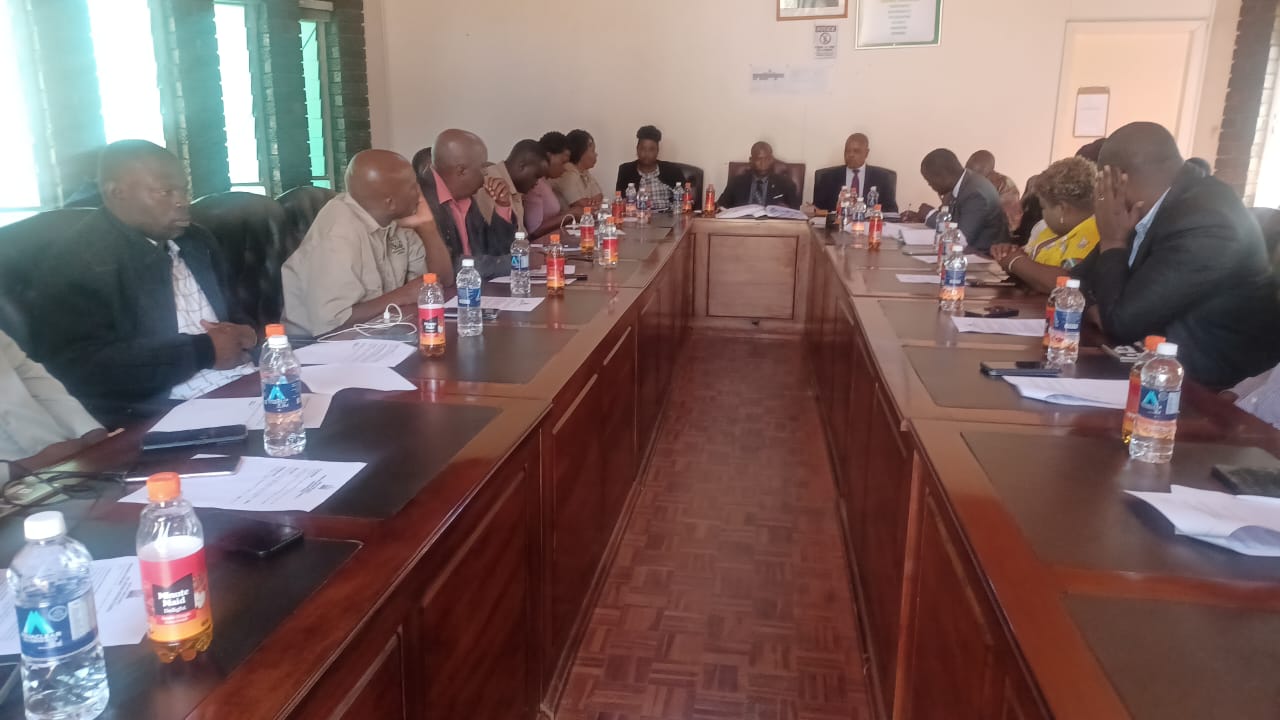
Norton Town Council renews integrity pledges
Diana Nherera Norton Town Council councillors and management on Thursday renewed their integrity pledges as part of the local authority’s commitment to promoting ethical conduct and combating corruption. Speaking…