Online Reporter
Thupeyo Muleya, [email protected]
THERE is a certain kind of hope that rises quietly in a town like Beitbridge, the kind that does not arrive with grand fanfare but rather takes shape, brick by brick, in places where it is needed most.
The completion of a new clinic being constructed by the Beitbridge Municipality with the support of Devolution and Constituency Development funds is set to go a long way in addressing service delivery issues affecting women in the border town.
For a community that has long struggled with access to nearby healthcare, particularly for mothers and children, the promise of this clinic carries a weight that goes far beyond its walls. It speaks of relief, of dignity, and of lives that will be eased in ways both small and profound. So far the local authority has budgeted a total of US$178 000 to complete the project.
Yet, like many meaningful projects in growing towns, progress has not been as swift as many would have hoped. Work on the clinic located near White Lodge along the road leading to Bulawayo from Beitbridge town began in 2023 but has been progressing at a snail’s pace due to limited funding on the part of the Beitbridge Municipality. The structure, slowly taking shape, has stood as both a promise and a reminder of the challenges that often accompany development.
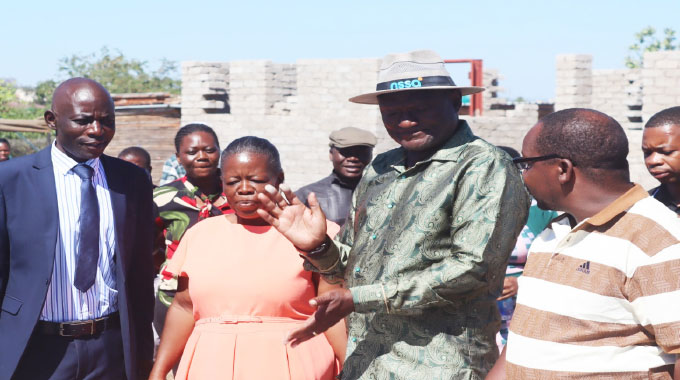
In a move that has breathed new life into the effort, Matabeleland South’s Minister of State for Provincial Affairs and Devolution, Albert Nguluvhe, stepped in with renewed support, mobilising much-needed resources to help push the project forward. To support the project, Matabeleland South’s Minister of State for Provincial Affairs and Devolution, Albert Nguluvhe has mobilised resources for the completion of a new clinic that is set to cater for new suburbs north of the border town and travellers in transit through the town.
The gesture was not merely symbolic. It brought with it tangible materials – building blocks of both structure and possibility. The Minister has since mobilised 100 bags of cement and 20 000 standard bricks procured under the Beitbridge East constituency Development Fund (CDF) to support the completion of the health facility.
The clinic itself is expected to serve a wide and growing community. Mabidi Clinic is also expected to service suburbs including Tshitaudze (Ha Mangavha, PWD, Hlalani Khuhle area), Madinginye (New Medium Density) and Mabidi (Medium and Low Density) located west along the Beitbridge to Bulawayo Road. These are areas where expansion has outpaced infrastructure, leaving residents to navigate long distances in search of even the most basic medical attention.
At the handover ceremony, there was a palpable sense of purpose as Minister Nguluvhe addressed those gathered, his words carrying both urgency and conviction.
“This event is not just about infrastructure; it is about improving lives, strengthening communities, and advancing equitable access to essential services for our people,” said Minister Nguluvhe while officiating at the handover ceremony.
His remarks reflected a broader national vision—one that seeks to place communities at the centre of development. He said the resource mobilisation and support of the clinic construction reflects the Government’s unwavering commitment to inclusive development under the Devolution Agenda.
“Through the Constituency Development Fund (CDF), we are empowering local communities to identify and address their most pressing needs. The construction of this clinic stands as a testament to what can be achieved when Government, local authorities, and communities work together with a shared vision.
“Access to healthcare is a fundamental right, and no citizen should be left behind due to distance or lack of facilities. The establishment of Mabidi Clinic will bring healthcare services closer to the people of this area. It will reduce travel distances, ease the burden on existing health institutions, and improve response times in emergencies,” said Minister Nguluvhe.
It is, in many ways, a vision that aligns neatly with the country’s broader aspirations. He added that the construction of Mabidi Clinic aligns with the national development priorities and Vision 2030, which seeks to transform Zimbabwe into an upper-middle-income society.
There was also recognition of the collective effort behind the project. The Minister also commended the Beitbridge East Constituency Development Fund Committee and all stakeholders involved for prioritizing allocating resources to the vital health services project. But even as resources are mobilised and structures rise, there remains a quiet understanding that the life of such a facility will depend on the people it serves.
“I urge residents to take ownership of this facility, safeguard it against vandalism and support healthcare workers who will serve here. Development is most successful when communities are active participants, not just beneficiaries,” said Minister Nguluvhe.
On the ground, local leadership sees the clinic as a necessary response to a town that is changing faster than its infrastructure can keep up. Acting Mayor, Councillor Emanuel Takutaku said the town’s population was rapidly growing and hence the need to match its growth with the provision of critical services.
“For years, our mothers and children from this particular area have walked long distances to Dulivhadzimu clinic and or the district hospital to seek treatment. Some had complications on their way, so when this clinic is completed, that narrative is going to change,” he said.
His words capture the quiet hardships that have defined daily life for many – long walks, delayed care, and the risks that come with both.
“We want to sincerely welcome this donation towards this project. Hon Minister this is not just cement and bricks-it is hope, it is dignity, and it is life for our people. To our Municipality, let me remind you that accountability starts now. This donation must build the clinic walls we promised our people. We will keep a register and every bag of cement and every brick must be accounted for”.
Town Clerk, Mr Loud Ramakgapola also noted that the town’s population was rapidly growing and hence the need to match its growth with the provision of critical services.
“The town’s population is growing and this calls for us to increase the access of key services including primary health care in the town. So with the help of Devolution Funds we have been able to address service delivery challenges and at the moment we are now building a new clinic north of the town to cater for new suburbs,” said Mr Ramakgapola.
At present, the strain on existing facilities is evident. Currently the local authority has one clinic near Dulivhadzimu bus terminus and there are at least six private surgeries and the Premier Medical Services polyclinic. These facilities are catering for the over 100 000 town population and 15 000 others in transit through the town daily who may need medical attention.
For many, especially women, the gaps in access have been deeply felt.
“This is a welcome development. You will note that women face challenges when they are expecting (pregnant) and travelling long distances at times may lead to complications,” said Ward 2 representative, Councillor Portia Shumba.
She spoke of realities that are often hidden in statistics but lived daily by families. She said in some instances when due for delivery expecting mothers living in areas with limited health facilities end up giving birth without the help of trained nurses.
Others even deliver from their homesteads or houses which causes more diseases like cervix cancer.
“Most of the time, mothers are the ones who take children to hospital hence there is need for more health facilities in our areas especially in the town where the population growth is rapid,” added Clr Shumba.
The expectation, then, is that this clinic will begin to change those stories. This clinic, she said will help the Beitbridge community to reduce mortality rates and ease the access of health facilities, reducing walking long distances and serving on transport costs.
Among residents, there is a cautious optimism – an understanding of what such a facility could mean if completed and maintained properly. Beitbridge Residents Association representative, Mrs Ester Muzata lauded the construction of the new Mabidi clinic.
She pointed to the inequalities that have quietly taken root in new suburbs. She said there were limited public health facilities in new suburbs where the community was largely relying on private clinics with some struggling to afford medical services beyond their reach.
“For a new suburb to be fully established there must be at least a public medical facility among other social amenities. So, the construction of a clinic is a positive move towards the establishment of the new suburbs,” said Mrs Muzata.
Elders in the community, too, have weighed in, seeing the project as part of a broader shift towards more inclusive planning. A senior citizen, Mr Mlaleli Ndlovu commended the local authority supported by the Minister of State (Nguluvhe) to roll out a gender sensitive budgeting model in the town.
He said the Mabidi clinic will address gender disparities in the area with regards to access to primary health care by all community members in the Beitbridge town.
For many women, the hope is simple yet deeply felt – a chance at easier, safer access to care. Another resident Mrs Lucia Khumalo said the facility would relieve most women in the new suburbs considering that mothers have a lot of responsibilities considering that they carry the social burden.
“They encounter challenges which include walking for long distances to the few affordable public health facilities, where most of them often spend a lot of time in long queues at the clinics. We look forward to the completion of the new clinic project to address some of the challenges women are facing in this town,” she said.