Online Reporter
Mkhululi Ncube, [email protected]
BEITBRIDGE and Bulilima carry a kind of quiet resilience that anyone from the region will recognise. Life has never been easy in these parts of Matabeleland South, where the rain is unreliable and the land often looks tired. For years, young people have grown up watching their parents struggle with droughts, poor harvests, and shrinking opportunities. Now, a new chapter is beginning to take shape, one that promises not just relief, but a sense of purpose. The two districts are set to benefit from a US$30 million climate resilience project that aims to equip young people with skills, restore damaged land, and open doors to green jobs.
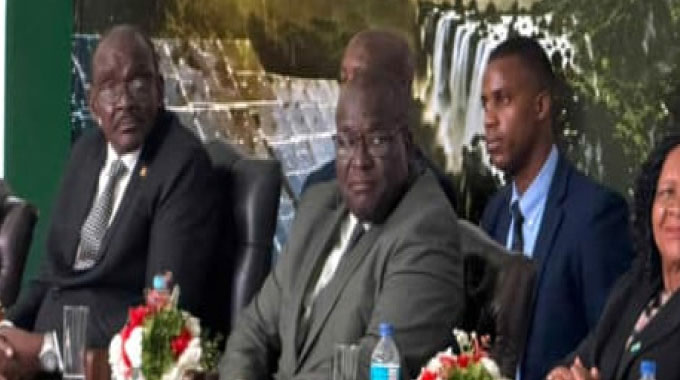
The Adolescent and Youth for a Sustainable Future Project was officially launched in Bulawayo on Thursday by Vice President Kembo Mohadi, signalling a shift in how communities facing climate challenges are supported. It is not just about reacting to problems anymore, but about preparing for the future in a practical and meaningful way.
“This programme represents more than the beginning of a project. It marks a decisive step in our collective journey towards building a climate-resilient, inclusive and sustainable Zimbabwe,” VP Mohadi said at the launch.
The funding behind the programme reflects a shared commitment. The Green Climate Fund has contributed US$25 million, Save the Children Italy has added US$2 million, and the Government of Zimbabwe, through the Ministry of Agriculture, has put forward another US$2 million. While Beitbridge and Bulilima are key beneficiaries, the programme will also extend to two districts in Matabeleland North and two in the Midlands, spreading its impact across several vulnerable areas.
Communities across Zimbabwe are already living with the effects of climate change. Seasons are no longer predictable. One year brings too little rain, another brings too much at once. Crops fail, livestock suffer, and families are forced to adapt in whatever ways they can. Young people, in particular, have felt the weight of this uncertainty, often with limited options.
“The fund must do more to prepare youth to deal with climate change impacts,” VP Mohadi said.
This project is built on the idea that young people should not just cope with these challenges but lead the response. Save the Children has made it clear that youth will be placed at the centre of the programme, trusted to shape solutions within their own communities.
“Communities will develop Local Adaptation Plans to guide climate resilience actions. Youth will be trained as climate champions to lead adaptation planning and community resilience initiatives,” Save the Children said in a statement.
Part of the work will focus on restoring land that has been worn down over time. About 56 750 hectares across the six districts are targeted for recovery. This will involve planting trees, protecting wetlands, improving soil quality, and managing water more carefully. These steps may sound simple, but they can make a lasting difference, helping land hold moisture better and remain productive even during dry periods.
In many cases, restoration means going back to basics — looking after the soil, conserving water, and allowing nature to recover. Done properly, this can bring back life to areas that once seemed beyond repair, making them usable again for farming and grazing.
Farming itself will also change under the programme. Climate-smart methods will be introduced, including growing crops that can survive harsh conditions, combining crops with trees, managing livestock more sustainably, and improving access to water. These are practical solutions that fit the reality on the ground.
Young people will not be left out of the economic side of things either. Training, mentorship, and financial support will be provided to help them start green businesses. Opportunities such as beekeeping, running tree nurseries, working with forest products, and adding value to farm produce will be encouraged. For many, this is a chance to earn a living in ways that also protect the environment.
The results expected from the programme go beyond numbers. Communities are likely to become stronger, land more productive, and systems more reliable. More young people will have a voice in issues that affect their future, especially when it comes to climate and development. Employment through green jobs is another key goal, offering hope in areas where work has been scarce.
The programme has been warmly received at provincial level. Minister of State for Provincial Affairs and Devolution for Matabeleland South, Albert Nguluvhe, expressed confidence in the initiative through a speech delivered by Provincial Director Mrs Lathiso Dhlamini Maseko.
“We are convinced that this investment is not merely financial assistance. It is a vote of confidence in Zimbabwe’s developmental vision and an important gesture of global solidarity with vulnerable communities facing the harsh realities of climate change,” Mrs Maseko said, reading Nguluvhe’s speech.
Timing makes this intervention especially important. Matabeleland South continues to face repeated droughts, water shortages, and land degradation. These challenges have made it harder for young people to build stable lives. With focused support now coming to places like Beitbridge and Bulilima, many are hopeful that things will begin to improve.
Climate change itself is no longer something people talk about in abstract terms. It is visible in everyday life. It refers to the gradual rise in global temperatures and changes in weather patterns caused largely by human activities like burning fossil fuels. These changes have led to extreme weather and shifting seasons, forcing communities to adjust how they live and work.
Some farmers have already started adapting. In Beitbridge, a growing number are turning to solar-powered irrigation, moving away from diesel pumps and unreliable electricity. This shift is proving to be both practical and cost-effective. It is also changing what can be grown, with farmers now producing crops like chilli, okra, and cabbage, improving both incomes and food security.
Support from the Government and organisations such as the Food and Agriculture Organisation has helped make this possible. Irrigation schemes are being revived, and solar systems introduced where they are needed most. The Jalukange irrigation scheme in Beitbridge West is now fully operational again, benefiting 141 families. The Tshikwalakwala scheme has also been upgraded, with solar plants generating 129 kilowatts of power.
These improvements fall under the Enhanced Resilience for Vulnerable Households in Zimbabwe (ERVHIZ) project, which focuses on helping rural families cope with climate shocks and food shortages. Techniques like drip irrigation, which delivers water slowly and directly to plant roots, are helping farmers use less water while getting better results.
In the past, irrigation depended heavily on electricity from the national grid or diesel pumps, often making it expensive and unreliable. Now, many farmers are seeing the value of solar-powered systems, which are easier to maintain and last longer.
Another important development has been the introduction of Village Business Units. These are small, community-run enterprises built around agriculture and livestock. They are helping people move from simply growing food for survival to running small businesses.
Through these units, communities are producing fresh food for local markets, schools, and hospitals, creating steady sources of income even during tough seasons. Food is becoming more available and easier to access, and rural areas are slowly becoming more economically active.

What is unfolding is not dramatic or sudden, but it is steady. Bit by bit, communities are finding ways to adapt and move forward. Young people, who once faced an uncertain future shaped by climate challenges, are now beginning to see new opportunities. With the right support, they are not just coping anymore — they are learning how to stand up, take charge, and shape what comes next.