Online Reporter
Gibson Mhaka, Zimpapers Politics Hub
WHILE Matabeleland South’s confirmation as the host for Zimbabwe’s main Independence Day celebrations and the Children’s Party in 2026, highlights the nation’s commitment to the devolution policy, it is important to note that this choice also casts a spotlight on the broader Matabeleland region’s profound historical significance, extending far beyond contemporary governance.
At its sitting on 20 May, the Cabinet confirmed Matabeleland South as the host for next year’s Uhuru celebrations.
Indeed, Matabeleland holds a pivotal place in Zimbabwe’s pre-colonial narrative and played an indelible role in the arduous journey towards liberation, making its selection as the next host for these flagship national events a deeply resonant decision.
It was the heartland of the Ndebele Kingdom, playing a crucial role in the First Chimurenga (also known as the Second Matabele War), which took place between 1896 and 1897 against colonial rule, and was a key region in the broader struggle for independence.
This conflict initially pitted the British South Africa Company against the Ndebele people, later expanding to include the Shona people in the rest of the country.
Although the location of the celebrations is driven by development goals, the historical context of the wider region adds a layer of symbolic importance to any national event held there.
Indeed, Matabeleland South Province, much like every other province in Zimbabwe, holds a profound and unique significance in the struggle for independence.
The decision to host the national celebrations here in 2026, is a powerful call for people from all ten provinces to converge, not just to witness, but to actively participate in celebrating the birth of the nation from colonial rule, recognising the collective sacrifices and triumphs that forged Zimbabwe.
Matabeleland South Province, like other regions in Zimbabwe, has a significant number of fallen heroes, who made immense sacrifices during the country’s liberation struggle.
These individuals, who are honoured and remembered for their contributions to Zimbabwe’s independence, include the late Vice-President, Dr Joshua Mqabuko Nkomo, a revered figure in the nation’s political history.
Other are Lieutenant-General Lookout “Mafela” Khalisabantu Vumindaba Masuku, who was a freedom fighter par excellence, Comrade Jack Mpofu (General (Rtd) Makhethi Ndebele), a former ZPRA High Command member and pioneer liberation fighter; Moffat Hadebe, recognised for commanding a guerilla stick that fired the first gunshot in 1964 at the Zidube Ranch in Kezi, marking the start of the armed struggle against colonial rule.
Cde Hadebe was to later on become the commander of the joint ZPRA and Umkhonto WeSizwe forces in the Sipolilo (Guruve) battles. He has since been honoured with the Grand Officer of the Zimbabwe Order of Merit and Comrade Rabelani Choeni, former Zanu-PF Matabeleland South provincial chairman, who joined the liberation struggle under ZPRA in 1974 and was posthumously declared a national hero.
Their legacies are deeply woven into the fabric of the province and the nation as a whole, and they continue to be honoured as fallen heroes.
Moreover, any comprehensive recollection of the story of the liberation struggle, which ultimately brought Zimbabwe’s independence in 1980, would be incomplete without acknowledging the pivotal role of Manama Mission in Gwanda District, Matabeleland South.
This historic institution served as one of the critical recruiting sites during Zimbabwe’s liberation struggle, underscoring the province’s significant contribution to the nation’s emancipation.
The mass recruitment from Manama, which saw over 400 pupils, along with teachers, school staffers and nurses from the nearby Manama Mission Hospital, being taken to neighbouring Botswana, notably made international headlines as such a vast group had never before been mobilised to join the armed struggle.
This event is often regarded as a turning point for the armed struggle, particularly on the Zapu side, as it subsequently inspired thousands more Zimbabweans to cross into Zambia, to train as freedom fighters.
Among the prominent figures recruited during this impactful period were the late Lieutenant General (Retired) Dr Sibusiso Moyo, his cousin, former Air Force of Zimbabwe (AFZ) Commander Air Marshal Elson Moyo, former Cabinet Minister Chiratidzo Mabuwa her sister Dr Chipo Mabuwa, Cde Mercy Sibanda nee Hove (the wife of the Commander Zimbabwe Defence Forces General Philip Valerio Sibanda), Beitbridge East legislator Cde Albert Nguluvhe and Zimbabwe Elections Commission (ZEC) chief elections officer Mr Utoile Silaigwana, among many others.
The scale of the Manama Mission recruitment, with over 400 pupils, teachers and healthcare workers joining the armed struggle and making international headlines, unequivocally showcases the vital role Matabeleland South Province played in Zimbabwe’s liberation.
This mass exodus was not merely an isolated incident; it became a symbol of the widespread desire for freedom and served as a powerful catalyst.
It demonstrated the profound impact and commitment of ordinary citizens from the region to the cause of independence, directly contributing a significant number of cadres, who would go on to shape the future of the nation.
The fact that prominent figures, who later became national leaders emerged from this very group, further solidifies Matabeleland South’s immense and undeniable contribution to the country’s freedom.
This rich history, embedded in the very fabric of the province, makes it a fitting and deeply symbolic location for the nation’s Independence Day celebrations, inviting all Zimbabweans to reflect on the collective journey to self-determination.
According to political analyst and media academic Mr Methuseli Moyo, another point, which solidifies Matabeleland South Province as one of the melting pots of Zimbabwe’s liberation struggle is its notably high number of war veterans.
These war veterans, largely affiliated with the ruling party, have consistently preserved their vote for Zanu-PF, driven by a collective desire to safeguard the hard-won gains of the liberation struggle.
Their enduring presence and political allegiance underscore the province’s deep-rooted connection to the fight for independence and its ongoing commitment to the revolutionary ideals that shaped the nation.
“What people should know is that Matabeleland South was the gateway via Botswana, for young people to cross to Botswana and then Zambia, to join the war of liberation. It was much easier for those in Matabeleland South to cross into Botswana to join the war.”
He further explained, “As a result, there is a higher density of war veterans in Matabeleland South compared to other provinces like Matabeleland North. Those hundreds of war veterans in Matabeleland South are affiliated with Zanu-PF and by extension, are commissars for the party, together with their families. This will always give the ruling party an upper hand in that province.”
This significant demographic of war veterans within Matabeleland South highlights not only their continued influence, but also the province’s historical role as a fertile ground for revolutionary fervour.
Their unwavering support for the ruling party is often interpreted as a commitment to upholding the legacy of the struggle and ensuring that its sacrifices were not in vain.
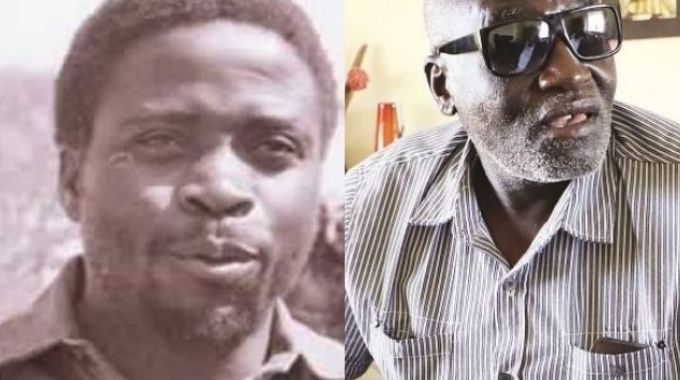
Minister Albert Nguluvhe
Thus, the province’s strong electoral preference for Zanu-PF becomes another testament to its profound and indelible contribution to Zimbabwe’s journey to freedom.
With Matabeleland South’s significant historical ties and its demonstrated commitment to the principles of liberation, the province is now poised for another momentous occasion.
In a recent interview, the Minister of State for Matabeleland South Provincial Affairs and Devolution, Cde Albert Nguluvhe, conveyed the deep honour felt by the province and affirmed its full commitment to the task ahead of hosting the nation’s main Independence Day celebrations and Children’s Party in 2026.
“We appreciate the mantra of His Excellency President Dr Emmerson Mnangagwa of leaving no place behind, as it seeks to give equal opportunities to all regions. Hosting Independence celebrations is one way of fulfilling that vision,” he said.
Minister Nguluvhe noted that the commemorations will not only unite communities and celebrate the country’s hard-won independence, but also bring tangible development to the host district.
“We’ve witnessed the Government roll out major development projects in districts that previously hosted the celebrations. This opportunity will help us market Matabeleland South and unlock investment opportunities,” he said.
Minister Nguluvhe revealed that provincial leaders will soon convene a meeting with stakeholders, who include Zanu-PF senior members from the province, representatives of local authorities and traditional leaders, who include chiefs, to work on the preparation programme.
“We want to begin the planning process as soon as possible. Through teamwork and unity, I’m confident we will deliver a memorable event.
“I urge every stakeholder to play their part. My wish is for us to strategically choose a host district, where the event can leave behind a lasting legacy in the form of development projects,” he said.
Minister Nguluvhe also called on citizens across the province to embrace the historic moment and prepare to actively participate in the celebrations.
Matabeleland South’s selection to host the 2026 main Independence Day celebrations, is a direct outcome of the Second Republic’s Devolution Agenda, which introduced a rotational hosting system in 2021.
This progressive initiative marks a significant departure from the long-standing tradition of confining national celebrations exclusively to the capital, Harare.
By decentralising these momentous events, the Government aims to foster greater inclusivity, strengthen national unity and stimulate development across all of Zimbabwe’s provinces, truly making the spirit of independence accessible and celebrated by every citizen.