

 Online Reporter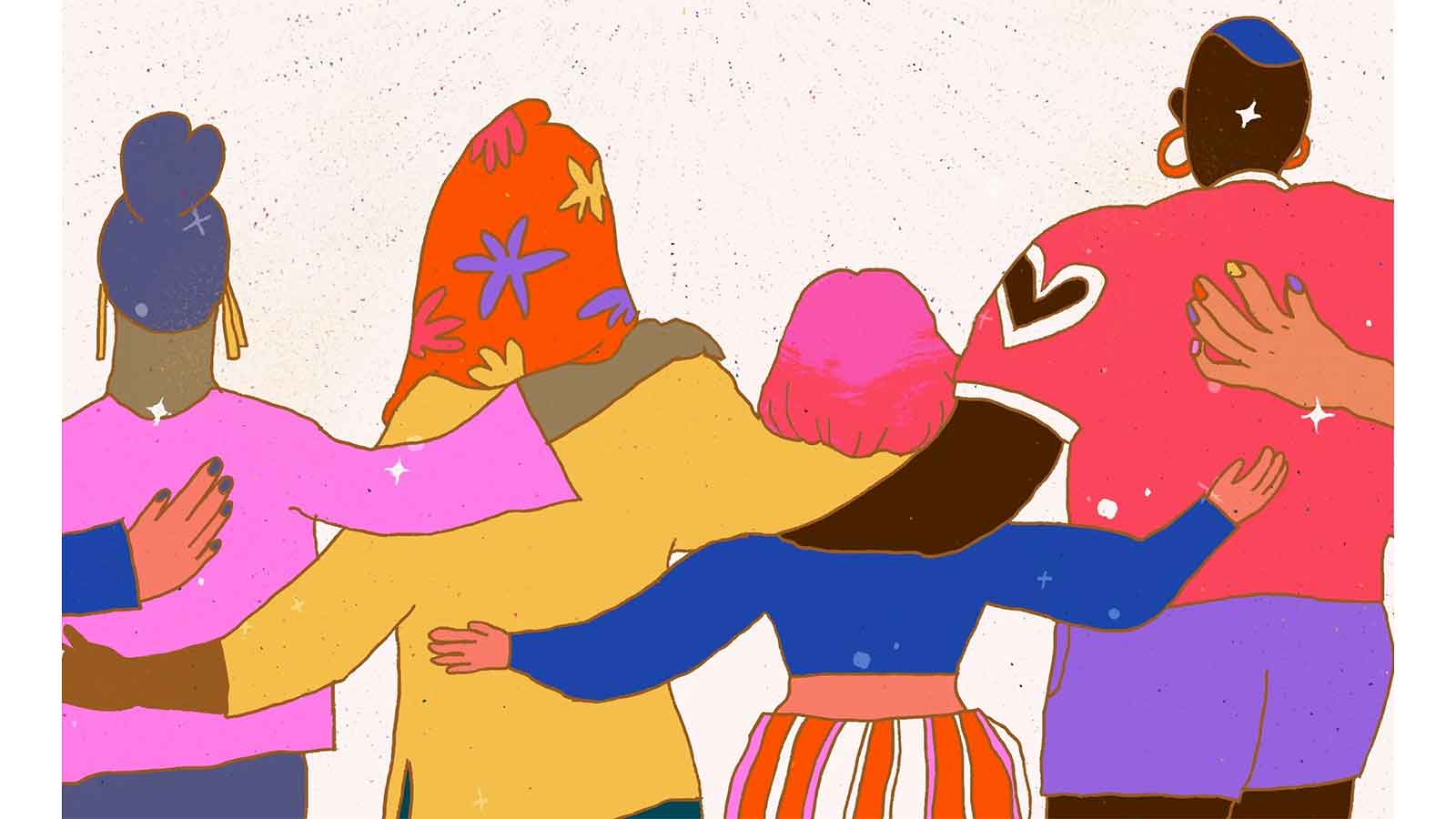
Alice Tagwira-Beyond Boundaries
For centuries, classical political thought has treated power as a tool of dominance—the ability of one group to impose its will upon another, dictate terms, and control outcomes.
From early statecraft to modern governance, this model of “power-over” has shaped how society understands authority, success, and influence. In this traditional framework, power is viewed as a zero-sum game: for one group to gain it, another must surrender it.
However, when we critically examine society through a feminist lens, this narrow definition breaks down.
Power is far more complex, dynamic, and multidimensional than mere control.
To build truly equitable societies, we must rethink what power actually is, how it operates within our institutions, and how it can be transformed from an instrument of oppression into a engine for collective liberation.
To understand how power functions, we must first look at the traditional reformist view, which treats power primarily as a social resource to be redistributed.
In this model, power is seen as a tangible asset—much like wealth, land, or education—that is currently hoarded by a privileged few.
The solution offered by this perspective is straight forward: increase representation. If women and marginalised groups secure more seats in Parliament, more positions in corporate boardrooms, and greater access to financial resources, the imbalance will naturally correct itself.
While gaining access to these spaces is undeniable progress, treating power merely as a resource misses a deeper, more troubling reality.
It assumes that the structures themselves are neutral and that simply adding diverse faces to existing systems will lead to equality. It ignores the reality that these institutions were built on foundational biases that continue to enforce hierarchy, regardless of who sits at the table.
This brings us to the reality of structural domination. Power does not operate in a vacuum; it is deeply embedded in our social, economic, and cultural architectures.
Radical and socialist perspectives remind us that systemic inequality is sustained by interwoven structures, including patriarchy, economic exploitation, and the unacknowledged burden of domestic and caregiving labour placed upon women.
Furthermore, an intersectional approach demonstrates that power is never experienced through a single identity.
A woman’s experience of privilege or marginalisation is simultaneously shaped by her economic standing, race, geographic location, and social class.
A wealthy corporate executive in a capital city navigates a vastly different matrix of opportunity and constraint than a rural woman struggling for land rights.
Power systems overlap, reinforce one another, and create distinct tiers of vulnerability that cannot be solved by one-size-fits-all policy solutions.
Beyond explicit laws and economic structures, power also operates silently through culture, language, and social expectations. Influenced by post-structuralist thought, we see that power is constitutive — it actively shapes our self-perception, our desires, and what we consider “normal” or acceptable behaviour.
Long before an individual makes a conscious choice, cultural narratives have already laid out the boundaries of what is possible.
When societal scripts consistently frame leadership, authority, and decisive decision-making as inherently male traits, while framing care, passivity, and compliance as female traits, they quietly limit women’s agency.
Unpacking these invisible narratives and challenging the language used in media, policy, and everyday discourse is therefore a vital battleground for structural change.
If traditional systems rely on “power-over” as a mechanism of control, the true feminist contribution to political thought lies in articulating alternative dimensions of power: “power-to,” “power-with,” and “power-within.”
“Power-to” centres on human capability and agency. It is the cultivated ability of individuals to act, to make meaningful choices, and to shape their own destinies.
“It shifts the focus away from dominating others toward building the capacity to achieve personal and community goals.
“Power-with” is the transformative force of collective action and solidarity.
“History demonstrates that real social progress has rarely been handed down by benevolent elites; it has been demanded and built by organised movements.
“When individuals unite around shared values, cross-border networks, and mutual support, they generate a collective strength capable of confronting even the most entrenched regimes of privilege.
“Power-with demonstrates that collaboration, not competition, is the ultimate driver of lasting societal reform.”
Finally, “power-within” touches on the psychological foundation of liberation. It is the internal recognition of one’s own dignity, self-worth, and fundamental human rights. In societies that repeatedly signal to marginalised groups that their voices matter less, cultivating power-within is an act of resistance. It is the catalyst that transforms quiet awareness into active, public demands for justice.
Ultimately, reshaping our understanding of power is not an academic exercise; it is a practical necessity for national development and social justice.
If we remain trapped in the belief that power is only about control, our efforts will remain limited to minor adjustments within unfair systems.
True equity requires a transition from mere inclusion to structural redesign. We must dismantle the institutional barriers that perpetuate inequality, validate the economic contributions of all citizens, and actively cultivate environments where collective agency can thrive.
Media platforms, public columnists, and civic leaders hold a crucial responsibility in this movement.
By continuously challenging the status quo, unmasking structural biases, and highlighting the strength of community solidarity, we help rewrite the narrative.
Power is not a finite resource to be fought over or used to subjugate others.
Re-engineered as a force for agency, solidarity, and self-determination, power becomes the very means by which we build a world where every individual can thrive in dignity and freedom.



