Chronicle Editor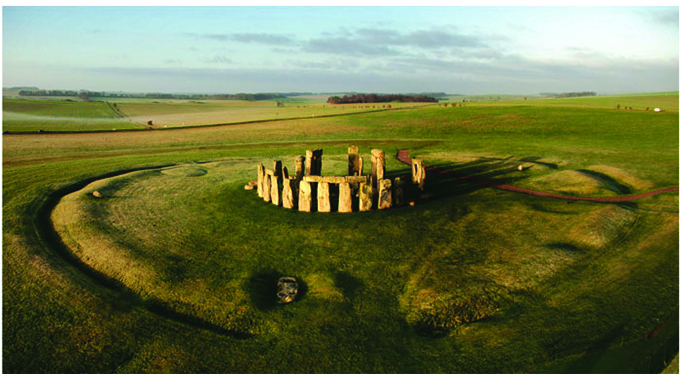
Cultural Heritage with Pathisa Nyathi
FOR us to get a fuller and more comprehensive appreciation of Stonehenge and its purpose we need to interrogate a lot more aspects of it. However, what will always be clear is that the cultural landscape was developed for a purpose.
There would be glowing inadequacy on our part if we merely state what went on at the site without saying or at least postulating the purposes that the ancients sought to derive from their effort. Identified purpose will depend on a number of factors such as the worldview of the community concerned. Purpose is related to needs and how they are met within the confines of knowledge available, technology and skills at the disposal of the community.
If I were asked to identify three aspects or factors at the universal level that impact on the operation and behaviour of the universe I would identify movement, rhythm within the said movement and relatedness of the various cosmic components. Whatever purposes were served by Stonehenge depended on these three factors and of course a lot more others. The bottom line though is that there were purposes that Stonehenge served through its cultural and natural attributes.
Utility or functionality were critically important for the ancients. Even where religion is identified, in the final analysis we must explain what benefits derived from religion since religion or spirituality could not have been ends in themselves. What lies beyond religion, which religion facilitates is of a utilitarian value for those espousing and practicing that religion. It just can’t be religion for its intrinsic value, least of all for ancients who the environment burdened them. So far there are various theories being advanced relating to what Stonehenge was all about.
Some argue that Stonehenge captured the movement of celestial bodies. It was a holy site built around celestial movement. It is difficult to argue that Stonehenge did not monitor the movement of celestial bodies. It certainly did.
Structurally Stonehenge captured the summer and winter solstices. It also probably predicted eclipses. A stone outside the circle, known as the Heel Stone was aligned to the rising sun on the day of the summer solstice. There was further alignment with the Altar Stone and the Slaughter Stone. Unfortunately, there is a dearth of research findings regarding the attributes of these three stones.
Interpretation of their roles or purposes within the broader overarching purpose become difficult to figure out. What is the lithology of the three stones? What are their critical dimensions? How do the three stones relate to the cultural structures at Stonehenge? Where are they positioned in relation to the ley lines that form a vortex or hub around Stonehenge? What links are there between the stones and the movement of cosmic bodies at certain times of the year? Is there any relationship between the stones and the geological features within Stonehenge?
The question of holiness has dual complementary aspects. There the natural aspects. These for example could be geological attributes. In addition, there are spiritual, metaphysical or supernatural attributes. The two aspects interface and interact to bequeath a site, now a cultural site with holiness of sacredness. Nature alone can’t create holiness. Human beings with their perceptions and knowledge seek sites that fit their ideas and expectations and thus infuse holiness around a particular site with spiritual dimensions and attributes.
For example, it is believed that Stonehenge sits on the cross point of one of the most prominent ley lines in Britain. It is at the centre of a hub or network of alignment ley lines and making Stonehenge an energy portal or a place of power. It is thought there are 14 ley lines that converge at Stonehenge making a powerful vortex.
Ley lines or lines of energy exist on ancient sites and by and large churches were built on these. The term ley lines was coined by Alfred Watkins in his acclaimed book, “The Old Straight Track,” published in 1925. This alignment is what I have termed relatedness. The three stones, Heel Stone, Slaughter Stone and the Altar Stone are aligned to the position of the sun during the day the sun rises on the summer solstice.
The question is what did the ancients attach to the summer solstice? It was that belief which explains one of the functional values of Stonehenge. However, there is a missing ingredient when it comes to holiness-the graves with bones that relate to the departed spirits. Other cultural features, the Durrington Walls and Woodhenge are astronomically aligned.
There is a view too that says Stonehenge is a calendar that was made to track the seasons. I consider this just another way of phrasing the same phenomenon given above. Is it not movement of celestial bodies, in particular the sun, which result in the different seasons? Changing seasons are manifestations of changes which are in sync with the movement of celestial bodies. The ancients may have been tracking much more than the sun alone, but also tracked other cosmic bodies seeing they were able to identify ley lines which most of us can’t.
This idea though has the advantage in that it gives the reason for monitoring the seasons, themselves indirect ways of monitoring the movement of celestial bodies. Agriculture seems to be the reason so that the people knew when to plant, when to harvest etc. But agriculture then had several ritual aspects to it. It was not just technology and agricultural extension, it had spiritual dimensions.
The timing for these had to be known and predictable. Celestial bodies on the basis of their attributes make it possible for the humans to make predictions. This is because their movements are periodic which means events that they herald are predictable. Celestial bodies keep time, on account of constant speed of travel and determine functional time.
Distance to travel and the constant speed of the moving body make it possible to know with precision the arrival time at the ‘destination’ and other stations along the orbit. The various related rituals may thus be worked out by merely monitoring the movement of a celestial body which is never late.
Professor Mike Parker Pearson on the other hand attaches greater importance to Stonehenge as a cemetery plot where a prehistoric ruling dynasty used the site for burial. My view is that all these are different sides of the same coin. For example, the fact that Stonehenge is a cemetery is without doubt correct and this is where holiness stems from. Tracking the movement of celestial bodies could easily be done with stone circles without the site having graves. Agriculture would proceed when the movement of celestial bodies is monitored.
My view from an African Thought perspective is that all what is being advanced adds up to reinforce, reiterate and complement the same thrust. The question whether Stonehenge is a religious site, a cemetery or just a plain calendar should not arise at all. All the three are related and in the final analysis are about the same phenomenon. Without bones, obviously found in a cemetery, holiness become a dodgy and hollow issue.
Agriculture in the minds of ancients was facilitated by spirituality resident within the context of bones and what they stand for. The religion of ancients was astral and unworkable in the absence of celestial bodies.
Bones in a cemetery, celestial bodies and their movement lie at the core for the timing of the agricultural seasons. The ruling dynasty that Mike postulates depended on power, much more than mere physical power, by spiritual energy and the siting of Stonehenge on the crossing point of ley lines guaranteed the requisite energy, and power to perpetuate the said dynasty.



 Online Reporter