malvernmugadzikwa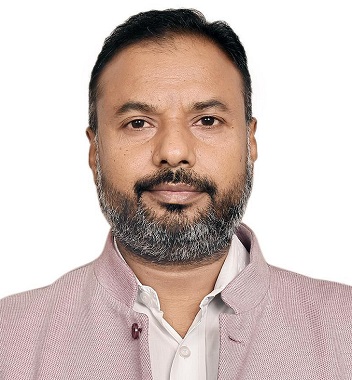
India is fast becoming one of the biggest sources of foreign direct investment into Zimbabwe, particularly into sectors such as mining, power development and food and beverages. The Sunday Mail’s TANYARADZWA RUSIKE recently interviewed the new Indian Ambassador to Zimbabwe, MR BRAMHA KUMAR, on the state of bilateral relations between Harare and New Delhi.
******************
Q: Can you outline the state of bilateral trade between Zimbabwe and India?
A: For the last few years, bilateral trade between India and Zimbabwe has been in the range of US$150 to US$200 million.
Iron, steel, manufactured tobacco, tobacco substitutes, dyeing extracts, tannins and their derivatives, dyes, pigments and other colouring matter, paints, putty and other mastics, inks, natural or cultured pearls, precious and semi-precious stones, coffee, tea, mate and spices form major areas of exports from Zimbabwe to India.
On the other hand, major imports of Zimbabwe from India are in pharmaceutical products, boilers, machinery, mechanical appliances, plastics, vehicles and their parts, electrical machinery and equipment, textile items, et cetera. In addition, traders in both countries are also engaging through third countries such as South Africa, Mozambique, United Arab Emirates and Hong Kong.
Given our strong and friendly bilateral relations, the present status of bilateral trade does not reflect its true potential.
I am happy to note that the Government of the Republic of Zimbabwe has shown interest to engage India for enhancing trade and commerce. Vice President of the Republic of Zimbabwe Dr Constantino Chiwenga has been visiting India to participate in CII-Exim Bank Africa Conclave.
Similarly, the Mission is encouraging Indian businesses to visit Zimbabwe to explore possibilities and new opportunities in trade and commerce. Departments and agencies concerning trade and commerce are working in this regard.
Q: Which specific areas of cooperation would you say are showing the most promise?
A: The Indian private sector has already made good investments into Zimbabwe, estimated at US$600 million, in sectors like food processing, beverages, mining, textiles, agricultural equipment, polymers, and this remains on an upward trajectory. Indian investors employ some 5 000 people in Zimbabwe. Similarly, the number of Indian companies operating in Zimbabwe is rising gradually. It will be good if the Government of Zimbabwe interacts with Indian companies through an institutional mechanism and responds to their needs.
It may be an encouraging move and may attract more Indian companies.
Further investments from India will directly benefit Zimbabwean youths who would be trained and employed by Indian companies. Capacity building is an important pillar of our development partnership with Zimbabwe, with training extending across several areas both in civilian and defence domains.
India also stands with Zimbabwe in providing modern technical training and skilling to local youths. It is estimated that around 5 000 Zimbabwean students are already enrolled in various Indian colleges and universities.
India established 17 Indo-Zim Technology Centres in Zimbabwe through a grant of US$5 million, a project inaugurated by (former) President Robert Mugabe on August 4, 2008.
These centres were upgraded in Phase II, with the supply of the latest machines worth US$2,9 million and completed in 2023. I recently visited the Harare Institute of Technology to witness HMT machines deployed at the institution’s Indo-Zim Technology Centre.
India offers more than 250 scholarships to Zimbabwe under Indian Technical and Economic Cooperation (ITEC) programme.
The ITEC programme was launched in 1964 to share India’s expertise with friendly countries under the South-South cooperation. Separately, Indian Council for Cultural Relations (ICCR) has also offered around 56 fully funded courses (for PhD and postgraduate courses in various fields) in the last five years.
Recently, a customised training course was organised for the Zimbabwean police officers in public order management and riot control in the year 2020. Under the Solar Mama Programme, 11 rural women from Zimbabwe have been trained so far. We look forward to further extending our cooperation in skilling and capacity building.
Around 5 000 Zimbabwean students are in India pursuing their higher education at various universities. The two countries envisage further deepening cooperation in areas such as healthcare, pharmaceuticals, mining, minerals, engineering, infrastructure, connectivity projects and agriculture.
Q: How do you plan to increase economic and trade cooperation between Harare and New Delhi?
A: I am focusing on enhancing trade relations between India and Zimbabwe through more government-to-government and business-to-business interactions.
During my stint in Harare, I shall be taking up these matters with relevant ministries and Government agencies to further our cooperation. We are expecting a visit of a high-level business delegation led by the Confederation of Indian Industries (CII), the apex chamber of prominent industries of India.
I seek full support from the Zimbabwean Government and relevant agencies to utilise this opportunity to further bilateral trade, commerce and investments.
Q: How have Indian investors responded to Zimbabwe’s open-for-business call?
A: Recently, Rail India Technical and Economic Service (RITES), a government of India undertaking; Jindal Group; Varun Beverages; and PKG have announced new investments and expansions in Zimbabwe.
This is welcome news for Zimbabwe.
I am sure of the full support of the Government of Zimbabwe for the new deals as well as for further expansion by Indian companies.
The recently concluded Joint Trade Committee meeting in May 2024 identified several sectors of the economy where we can enhance our bilateral relations.
The promising areas include institutional framework in pharmaceuticals and healthcare, minerals and mining with training and capacity building in diamond sector, textiles and fashion industry for employment generation, and new collaborations in ICT and geospatial sectors …Ministry of Micro, Small and Medium Enterprises development and rural crafts are other important mechanisms which are being explored for engaging authorities and businesses from the two countries …
Further engagements in identified sectors would surely attract more Indian companies to Zimbabwe.
Q: Can you outline India’s position on Zimbabwe’s engagement and re-engagement drive?
A: While our bilateral relations are steadfast, close and friendly, India and Zimbabwe have collaborated very well on issues of mutual interests in multilateral and international bodies such as the United Nations, Non-Aligned Movement, World Trade Organisation and G-15. Zimbabwe supported India’s candidature for a non-permanent seat in the UN Security Council elections held in June 2020.
During India’s G20 Presidency last year, African Union (AU) was admitted as a fully fledged member of the G20.
India appreciates Zimbabwe for her support in various international and multilateral fora such as International Solar Alliance.
India and Zimbabwe have been active supporters of South-South cooperation, and our bilateral relations have reflected strong bonding between the peoples of our countries.
I congratulate Zimbabwe for successfully hosting the 44th Southern African Development Community (SADC) Summit in Harare. India takes note of the member states’ commitment for regional development through industrialisation and peoples’ empowerment.
India reiterates her commitment to partnering friendly countries in Africa to extend all possible support in regional development. We look forward to having Zimbabwe in the international Coalition for Disaster Resilient Infrastructure. India has been advocating for disaster risk-resilient infrastructure and has been ready to assist Zimbabwe.
We look forward to sharing our best practices in climate change-related initiatives.
Under India’s initiative, a US$1 million grant project announced in 2021 from the India-UN Development Partnership Fund for climate resilient agriculture in the districts of Chiredzi and Mangwe was completed and delivered.
Q: Can you outline how the two countries are cooperating in the health sector?
A: In the health sector, cooperation is flourishing. India has been a preferable choice for cost-effective and quality healthcare services.
It is estimated that around 400 people from Zimbabwe are visiting India every year to receive medical treatment.
India appreciates Zimbabwe for being the first country in Africa to give authorisation for use of Covaxin, a vaccine produced in India during the time of Covid-19 pandemic.
India donated 75 000 doses of Covaxin vaccines and 10 state-of-the-art ambulances in May 2021. During India’s Minister of State for External Affairs Mr Vellamvelly Muraleedharan’s visit in June 2022, India gifted anti-TB medicines worth US$100 000.
There are several memoranda of understanding on health cooperation under consideration. We are also setting up an AYUSH (traditional Indian medicine system) chair at Chinhoyi University of Technology.
Q: An Indian firm Jindal is facilitating the repowering of old power generation units at Hwange Thermal Power Station. Can you outline progress made so far in implementing that deal?
A: This is a very positive and encouraging initiative by Jindal Group to invest in Zimbabwe’s infrastructural development.
I take the pleasure to inform you that the work on Deka Pumping and River Water Intake System, with the help of a line of credit of US$48,1 million, has been completed.
India is looking for continuation of meaningful contribution to Zimbabwe’s infrastructure and connectivity development.
It holds immense potential to enhance engagements between SMEs from the two countries. Several big companies are looking to invest in Zimbabwe’s infrastructural development. RITES and the National Railways of Zimbabwe (NRZ) entered into contract arrangements in June 2023 for the acquisition of nine locomotives and 315 wagons, valued at around US$82 million.
I urge the Ministry of Finance (Economic Development and Investment Promotion) and the Mutapa Investment Fund to finalise the funding mechanism for an early implementation of this arrangement.
Q: Varun Beverages Zimbabwe is currently expanding its capacity in Harare, a development that is set to further increase its production and job creation. Of what significance is this development?
A: Setting up of Varun Beverages in 2018 coincided with the launch of Vision 2030 by His Excellency, President Mnangagwa. In fact, Varun Beverages’ plant was inaugurated by the President himself.
Today, Varun Beverages have increased their capacity to 100 million units of beverages in a month, including bottled water — Aquaclear. They are the second-largest bottler of Pepsi in the world. For me, it is a shining example of the response of Indian businesses to Zimbabwe’s open-for-business call.
In 2024, the company made further investment to build a plant and warehouse for its snacks business in Zimbabwe.
Presently, Varun Beverages provides direct employment to 2 000 people and indirect employment to around 13 000 people in Zimbabwe. The new investment for 2024 and 2025 is likely to create another 3 500 to 4 000 direct and indirect jobs.



 Online Reporter