Online Reporter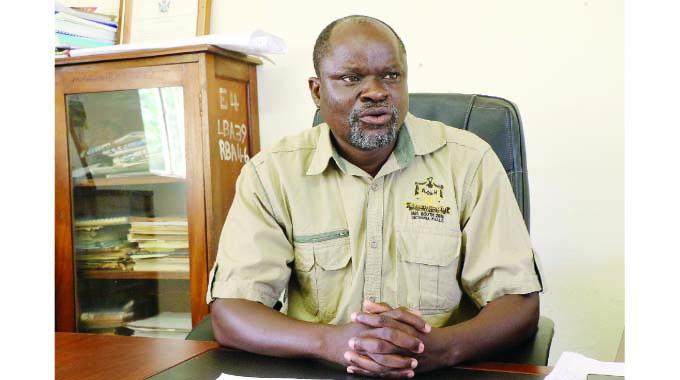
Zimpapers Writer
THE Binga School of Nursing, a key component of the Binga Development Initiative launched to fulfil President Mnangagwa’s pledge to modernise the district, is set to start offering lessons this year as the Government accelerates efforts to uplift the historically marginalised area.
In March 2021, Cabinet approved a comprehensive package of infrastructure interventions for Binga, which included the construction of a nursing school, rehabilitation of roads, establishment of a vocational training centre, construction of a civil registry office, refurbishment of Binga Hospital mortuary, rehabilitation of the district airstrip and the establishment of a border post, among other projects.
President Mnangagwa has consistently highlighted that the Second Republic is committed to inclusive development, with Binga prioritised after decades of limited investment.

The interventions, aligned with Vision 2030, focus on completing stalled projects while rolling out new initiatives aimed at transforming livelihoods and stimulating sustainable economic growth in the district.
In an interview, Binga District Development Co-ordinator Mr Land Kabome said the district had formally requested Government to allow the nursing school to begin operations this year.
“The President proclaimed that there should be a nursing school in Binga as part of the district development initiative. Our request as a district is for the school to start offering lessons this year so that our own local people can be trained,” said Mr Kabome.
He said the opening of the nursing school was expected to significantly reduce staff turnover at health institutions across the district.
“We have several clinics where there is a shortage of nurses. Often, nurses deployed from other districts leave due to climatic conditions and other challenges. Training locals will ensure continuity of service because they are more likely to stay,” he said.
Mr Kabome also revealed that the district was engaging Government to increase staffing levels at Binga Polytechnic, citing growing enrolment by local students.
“We have Binga Polytechnic, but while students are enrolling, there is a shortage of lecturers. We are pushing for Government to deploy more lecturers to ensure effective learning,” he said.
Beyond education and health infrastructure, the Government has completed several major development projects in the district, including the construction of civil registry offices and the refurbishment of the Binga District Hospital mortuary, which has been expanded to accommodate 12 bodies, up from six.
Accessibility to the district has also improved following the expansion of Binga Airstrip, which can now accommodate up to six light aircraft. The upgrade forms part of a nationwide programme launched in 2021 to improve access to remote tourism destinations.
Binga boasts significant tourism potential, including hot springs, wildlife, fishing, boating, crocodile farming and a rich cultural heritage. The Government has moved to unlock this potential through the Integrated Development Programme and the Conceptual Development Framework for the Victoria Falls–Hwange–Binga Special Economic Zone (SEZ).
The long-term vision is to establish a thriving tourism corridor stretching from Kazungula near Victoria Falls, through Hwange, Binga, Sijalila and Kariba, with linkages to the Lake Gwayi-Shangani area, in line with Vision 2030’s goal of transforming Zimbabwe into an upper-middle-income economy.
Other ongoing and completed projects include the drilling of solar-powered boreholes in communities and at chiefs’ homesteads, rehabilitation of the Binga–Siabuwa Road, establishment of Twasumpuka Community Radio Station, refurbishment of the Binga Craft Centre, installation of an electricity transformer at Manjolo and provision of internet connectivity at Binga High School to support e-learning.
Recently, Vice-President Dr Kembo Mohadi commissioned 37 newly constructed houses in Nsungwale Village under a Government programme to permanently resettle families displaced by the devastating floods of February 2020.
The floods, caused by the convergence of the Sibwambwa, Sikanda, Namapande and Manyenyengwa rivers, left 181 families homeless. In response, Government launched the Binga Housing Recovery Project, targeting the relocation and provision of safe housing for 81 of the worst-affected households.



 derick.khumalo